


French Gold Devotional Pendant
When you search for a french gold devotional pendant, you enter a world of fine medals and charms worn close to the heart.
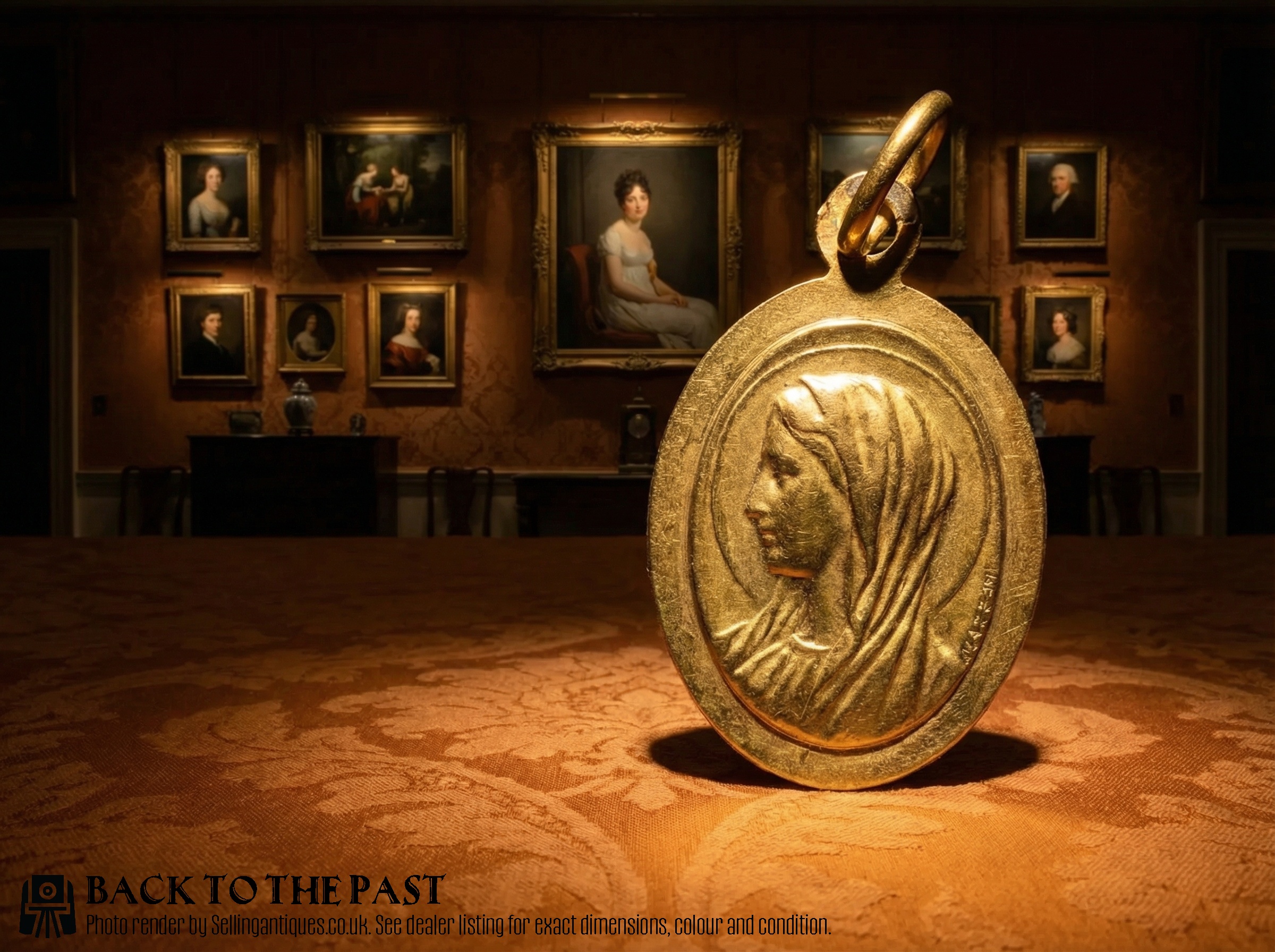
French Gold Devotional Pendant
A french gold devotional pendant takes the form of a small religious medal or charm intended for personal wear. These items originate predominantly from the late nineteenth century and span through the middle decades of the twentieth century, capturing distinct devotional imagery.
The versions most commonly met on this page depict the Virgin Mary, the Madonna and Child, or the Sacred Heart of Jesus. They appear in oval or circular formats, often framed in warm yellow or rose gold and linked to French religious art traditions.
Makers and artists signed many of these pieces, recording names such as Emile Monier, Dropsy, Sellier, and Tairac on the metal surface. Collectors encounter variations featuring saintly figures, floral motifs, and specialised travel medals dedicated to Saint Christopher or Saint Joseph.
Materials and technique
Craftsmen utilised 18-carat yellow gold, rose gold, and occasionally white gold to strike or cast these devotional items. The metal provides a durable foundation for intricate relief work depicting sacred figures and inscriptions.
Specialised techniques include fine hand engraving, plique-à-jour enamel work that allows light to pass through translucent colour, and the incorporation of seed pearls or mother-of-pearl accents. These methods demanded high skill from French medallists working in established workshops.
Saint Christopher travels safely in miniature form, watching over early twentieth-century journeys from the face of a tiny gold disc.
Distinctions in standard
Quality separates pieces by the crispness of the metallic relief and the clarity of the facial expressions on the figures of Mary and Christ. Finer examples display deep, sharp engraving strokes that retain fine details in hair, drapery, and lettering.
Emile Monier·Mazzoni·Pageli Perriat·Dropsy·Vernon·Sellier·Tairac·Pageri Perroud·Perriat·Charl·Arnault·Grün·Monet·Ruffony·Serraz
The French Gold Devotional Pendant Glossary
- Medal
- A small flat piece of metal bearing a sacred image or inscription, designed to be worn as a pendant or charm. These objects served devotional and commemorative purposes.
- Plique-a-jour enamel
- A vitreous enamelling technique where the enamel has no backing, resembling miniature stained glass. Light shines directly through the translucent coloured sections.
- Sacred Heart
- A traditional Christian devotion representing the heart of Jesus Christ as a symbol of divine love. It frequently appears alongside flames, crowns of thorns, or rays of light.
- Seed pearl
- A very small natural pearl, often utilised to border a devotional medal or accent floral motifs. These tiny pearls add subtle texture and luminosity.
- Virgo Virginum
- Latin for Virgin of Virgins, an ancient title for the Virgin Mary often inscribed on devotional medals. It connects the piece to broader liturgical traditions.
French Gold Devotional Pendant: Frequently Asked Questions
What do these pendants typically depict?
These items predominantly portray the Virgin Mary, the Madonna and Child, or the Sacred Heart of Jesus. Other examples feature specific figures such as Saint Christopher, Saint Joseph, and Saint Isabelle of France.
The imagery reflects traditional French religious art, serving both decorative and personal devotional functions for the original wearers.
How can I tell who made a medal?
Many medals bear the signature or surname of the artist engraved directly into the metal surface near the edge. Names like Dropsy, Sellier, and Tairac frequently appear on the face of the piece.
Studying these signatures allows collectors to attribute works to specific French medallists and workshops operating during the late nineteenth and early twentieth centuries.
How were these pendants worn historically?
Owners typically suspended these medals from fine gold chains or attached them to charm bracelets as personal talismans. They were worn close to the heart as expressions of faith and protection.
Today, collectors continue to wear them on chains or incorporate them into modern jewellery arrangements.