
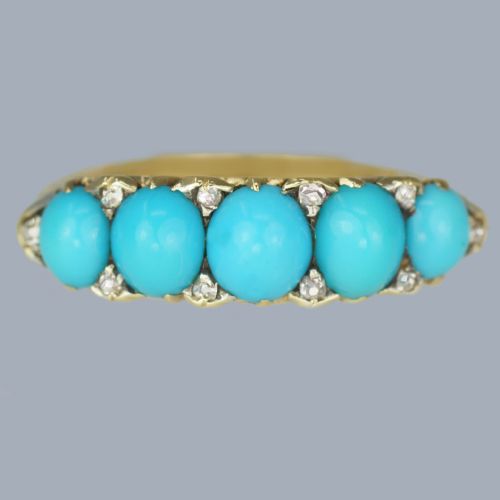


18ct Gold Turquoise Ring
An 18ct gold turquoise ring brings together bright blue gemstones and rich metal, offering Victorian and Edwardian craftsmanship for everyday wear.
18ct Gold Turquoise Ring
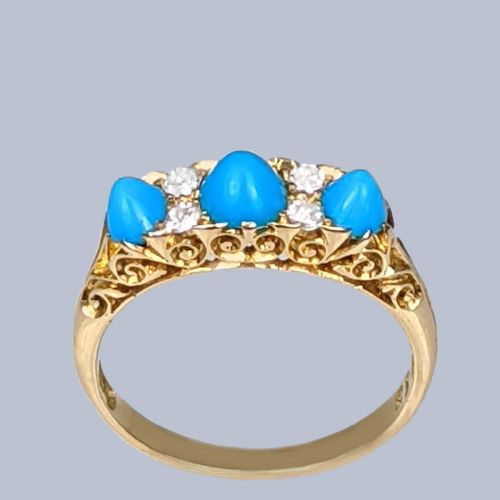
An 18ct gold turquoise ring combines the distinctive robin-egg or sky-blue hue of turquoise with high-karat gold settings. Buyers seeking these pieces encounter an array of period designs ranging from the mid-nineteenth century through the early twentieth century.
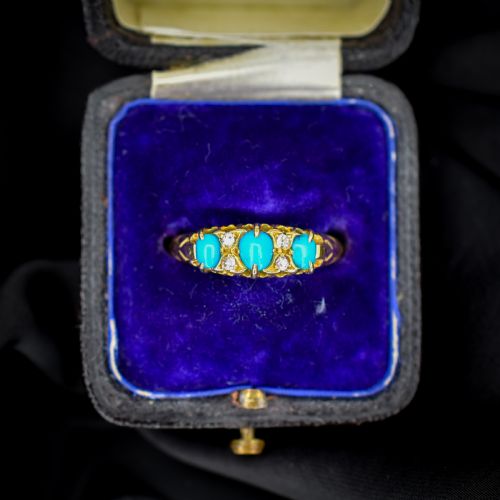
The selections available on this page lean heavily towards Victorian and Edwardian examples. Common configurations include multi-stone bands, clusters, and ornate scrollwork settings featuring diamonds or pearls alongside the central blue stones.
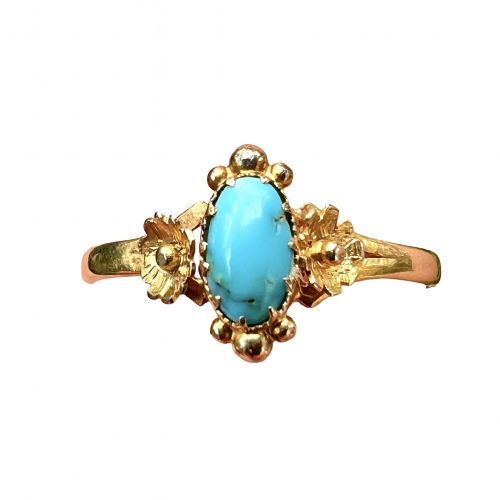
Most pieces date from the nineteenth century, utilising yellow or rose gold tones. Styles span from simple five-stone rows and gypsy mounts to intricate floral motifs and buckle designs.
What varies in quality
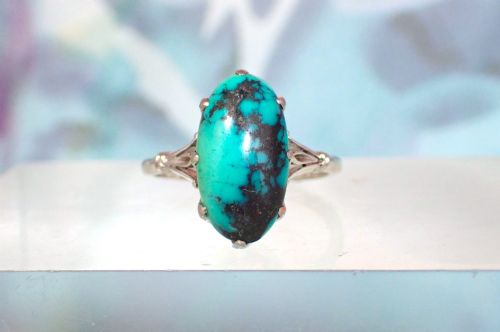
The distinction between tiers rests upon the natural matrix and colour consistency of the turquoise stones. Uniform sky-blue surfaces command greater attention than stones altered by heavy matrix veining or environmental discoloration.
Execution of the metalwork separates standard production from superior output. Crisp hand-engraving on scroll settings, substantial gold weight in the shank, and precise matching of accompanying diamonds or pearls elevate the overall stature of a ring.
18ct Gold Turquoise Ring Retail Price Guide 2026
Typical asking prices for 18ct gold turquoise ring among the pieces listed under this phrase on Sellingantiques today, from the lower quarter to the upper quarter. They describe what is for sale here now, not the wider market.
Listings feature 18ct yellow gold and 18ct rose gold alongside turquoise, diamonds, and pearls across Victorian and Edwardian periods.
The 18ct Gold Turquoise Ring Glossary
- Cabochon
- A gemstone shaped and polished with a smooth, convex top rather than faceted edges. This style highlights the natural colour and opaque finish of turquoise.
- Gypsy ring
- A design where stones are flush-set directly into a thick, tapering band of solid metal. The smooth shoulders create a continuous profile around the finger.
- Old-cut diamond
- A hand-faceted diamond cut before modern machine precision, typically featuring a small table and a high crown. These stones display distinctive broad facets under candlelight.
- Navette
- A boat-shaped gemstone arrangement that tapers to pointed ends on the finger. This elongated silhouette was popular during the late Victorian period.
18ct Gold Turquoise Ring: Frequently Asked Questions
How do I care for my ring?
Turquoise is a relatively soft and porous gemstone that requires gentle handling. Avoid exposing the ring to harsh chemicals, cosmetics, ultrasonic cleaners, or prolonged immersion in water.
Store the piece separately from harder gemstones to prevent scratching the gold surface and the polished stone.
Can I wear an antique ring daily?
Many of these rings were built with heavy 18ct gold shanks designed for regular wear. However, due to their age and the delicate nature of turquoise, removing the ring during physical work or sports is advisable.
Routine inspection by a jeweller ensures the prongs and flush settings remain secure over time.
How do I distinguish Victorian from Edwardian pieces?
Victorian pieces often utilise heavier yellow or rose gold with substantial multi-stone rows, gypsy mounts, or intricate scrollwork. The era spans from eighteen thirty-seven to nineteen hundred and one.
Edwardian rings, dating from nineteen hundred to nineteen ten, frequently incorporate lighter openwork settings, delicate floral motifs, and brighter diamond clusters alongside the turquoise.