


18ct Gold Pendant Brooch
An 18ct gold pendant brooch combines dual wearability with precious metal, offering the versatility of both a breast ornament and a neck pendant.
18ct Gold Pendant Brooch
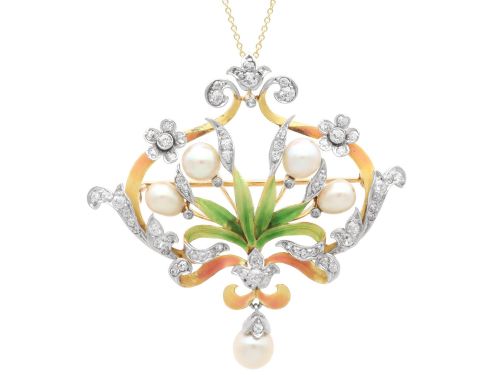
An 18ct gold pendant brooch is a versatile item of fine jewellery designed to function as both a brooch and a pendant, allowing the wearer to pin it to clothing or suspend it from a chain. The examples seen on this page span the Victorian and Edwardian eras, encompassing periods such as 1870, 1880, 1890, 1900, and the wider nineteenth century.
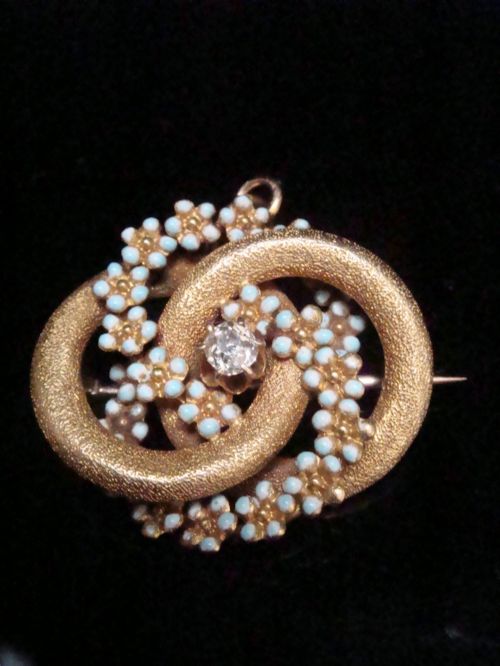
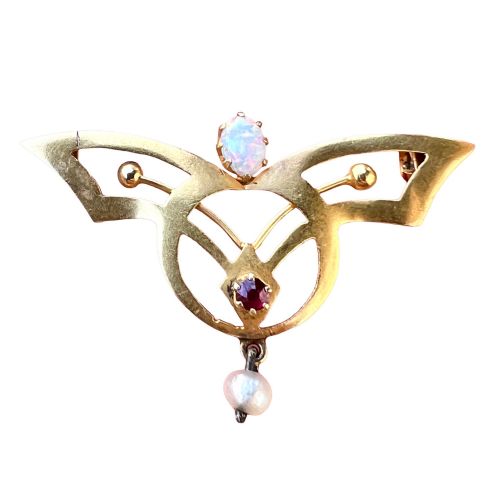
The forms vary from floral and botanical motifs to celestial designs including sunbursts, starbursts, and crescents, alongside love knots and bows. You will frequently encounter combinations featuring pearls, diamonds, rubies, sapphires, opals, garnets, enamel, agate, and sodalite set within 18ct yellow gold or occasionally paired with silver and platinum.
Victorian and Edwardian versions dominate the selection, showcasing distinct stylistic shifts from ornate floral and acanthus scrollwork to flowing Art Nouveau lines. These dual-purpose items reflect the Victorian preference for multifunctional jewellery that could transition seamlessly from day wear to evening attire.
How they were made
The foundation of these pieces is 18ct gold, often worked as yellow gold or combined with platinum and silver settings to enhance the brilliance of old cut diamonds. Jewellers utilised traditional casting, hand fabrication, and delicate wirework to construct secure settings for gemstones.
Gems such as diamonds, natural saltwater pearls, opals, rubies, and sapphires were hand-set using claw, bezel, or flush techniques suited to the particular stone. Enamel work and carved hardstones like agate were integrated into the gold framework to provide colourful focal points.
The convertible mechanism typically involves a folding or removable pin combined with a discreet loop or bale, allowing the piece to switch between a brooch fastening and a pendant suspension without compromising the symmetrical design.
Some pieces double as love tokens, shaped permanently as forget-me-knot ribbons to keep someone close to your heart or fastened to your lapel.
What varies in quality
Quality in an 18ct gold pendant brooch rests upon the harmony of the design and the calibre of the set gemstones, such as the orient of natural pearls or the cut and clarity of old cut diamonds. Superior pieces display meticulous attention to detail in the metalwork, whether executing intricate acanthus leaves, delicate forget-me-knot ribbons, or complex starburst rays.
The ingenuity of the conversion mechanism also dictates the grade of the piece, separating standard production from master craftsmanship where the transition between pendant and brooch is achieved with absolute seamlessness. The inclusion of rarer materials like solid opals, sodalite, or polychrome enamel elevates the sophistication of the work.
The 18ct Gold Pendant Brooch Glossary
- 18ct Gold
- An alloy containing seventy-five percent pure gold mixed with other metals to provide durability for fine jewellery settings. This standard was widely used across Victorian and Edwardian workshops.
- Old Cut Diamond
- A precursor to the modern brilliant cut, typically characterised by a smaller table, higher crown, and open culet. These stones were hand-faceted to catch candlelight.
- Natural Saltwater Pearl
- A pearl formed organically in marine molluscs without human intervention. They are prized for their unique orient and irregular organic lustre.
- Acanthus
- A classical ornamentation motif based on the foliage of the acanthus plant, rendered in swirling scrollwork on nineteenth-century pieces. It provides a sense of classical movement and depth.
- Bale
- The ring or loop attached to the top of a pendant that allows a chain to pass through. In convertible pieces, this often folds down when worn as a brooch.
18ct Gold Pendant Brooch: Frequently Asked Questions
How do I wear a pendant brooch?
These pieces feature both a secure pin mechanism on the reverse and a hidden loop or bale near the top. You can thread a chain through the loop to wear it as a necklace or fasten the pin directly onto garments.
When converting between formats, ensure the pin is fully latched down or tucked away so it does not snag clothing while suspended from your neck.
Are these pieces genuinely Victorian?
The selection includes pieces attributed to the Victorian and Edwardian eras, spanning from the 1870s through to 1900. Stylistic indicators such as acanthus scrolls, starbursts, and specific gemstone combinations help align them with these historical periods.
Examination of the metal alloy, stone-cutting techniques, and construction methods further confirms their nineteenth and early twentieth-century origins.
What gemstones are typical for these?
Diamonds and natural pearls appear frequently, often paired with coloured stones like sapphires, rubies, opals, garnets, and amethysts. Enamel and carved hardstones such as agate also feature prominently in the designs.
These gems reflect the popular palette of the late nineteenth century, where contrasting colours and mixed stone arrangements were highly favoured by jewellers.
How do I care for antique gold jewellery?
Clean your 18ct gold pieces gently with a soft cloth and warm soapy water, avoiding harsh chemical dips that can damage softer stones like pearls and opals. Store them individually in lined boxes to prevent the metal and diamonds from scratching other items.
Because antique settings can be delicate, professional inspection of the claws and pin mechanisms every few years helps ensure the stones remain secure.