

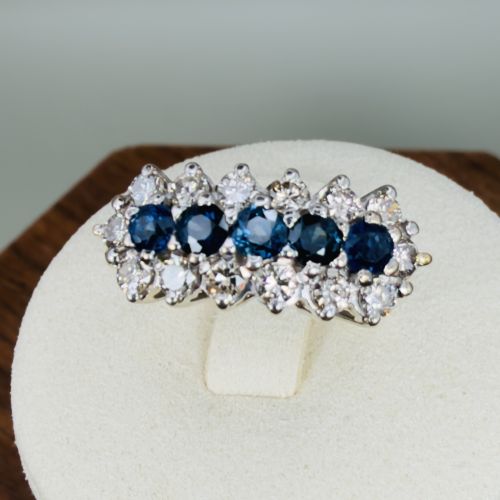
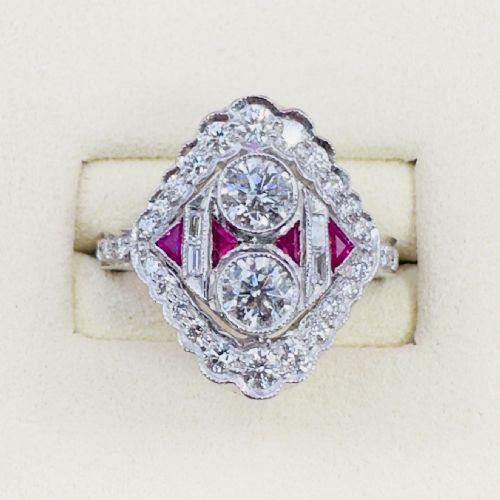


18ct Gold Navette Ring
An 18ct gold navette ring offers a distinctive boat-shaped silhouette on the finger, prized for its elongated geometry and glittering gemstone clusters.

18ct Gold Navette Ring
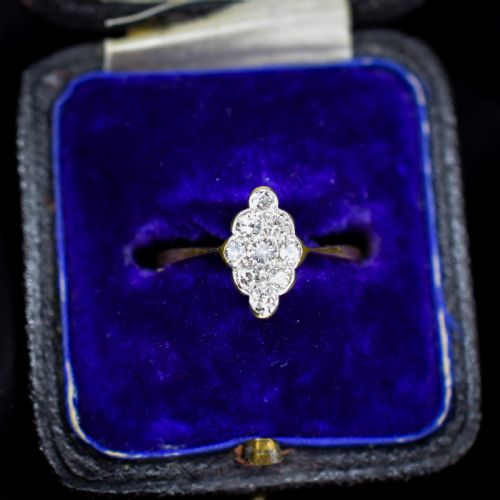
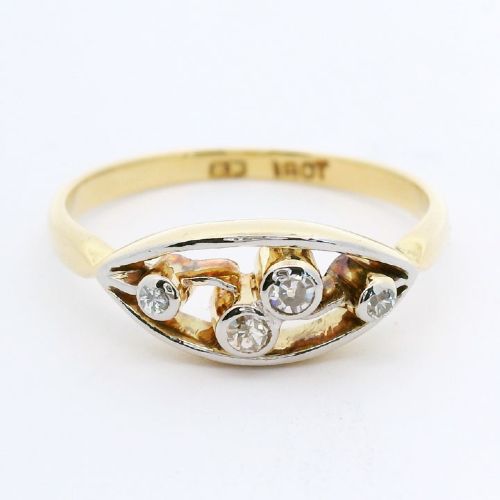
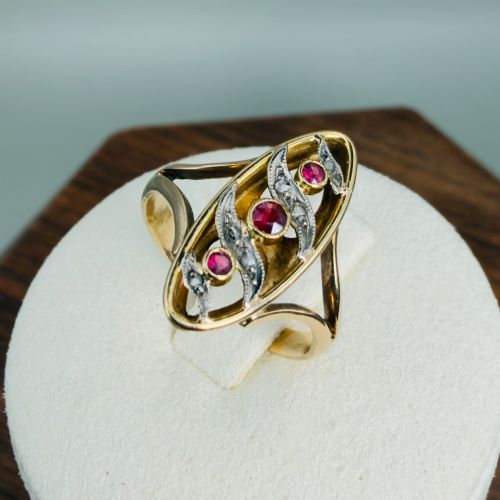
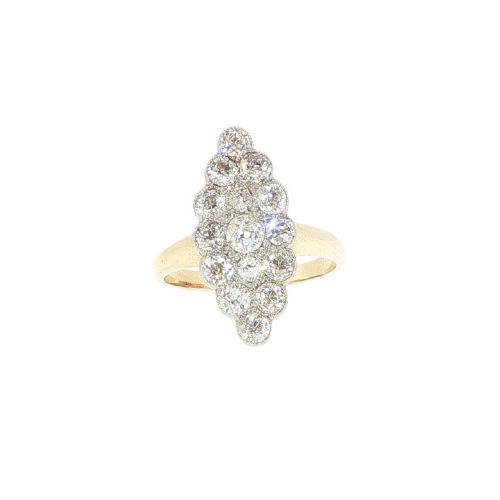
An 18ct gold navette ring displays an elongated, pointed cluster design reminiscent of a little boat or the marquise silhouette. When searching for an 18ct gold navette ring, buyers frequently encounter Victorian, Edwardian, and Art Deco examples featuring elaborate gemstone arrangements. These pieces span periods from the late nineteenth century through to the early twentieth century.
The profile stretches horizontally across the finger rather than sitting in a compact circle. Surviving rings from the Victorian era often combine diamonds with rubies, emeralds, pearls, or turquoise. Later Edwardian and Art Deco iterations lean into platinum-topped settings and sharp geometric layouts.
How They Were Made
Goldsmiths constructed these rings using 18ct yellow gold, 18ct white gold, and frequently paired the gold base with platinum settings to hold diamonds securely. The metalwork often includes delicate hand-engraved details, millegrain edges, and openwork galleries that lighten the heavy visual weight of the long cluster.
Gems such as old-cut diamonds, rubies, emeralds, pearls, and turquoise were hand-set into the intricate frameworks. Hallmarks stamped inside the bands record assay offices like Chester and Birmingham alongside the gold standard.
18ct Gold Navette Ring Retail Price Guide 2026
Typical asking prices for 18ct gold navette ring among the pieces listed under this phrase on Sellingantiques today, from the lower quarter to the upper quarter. They describe what is for sale here now, not the wider market.
The available listings demonstrate styles spanning the Victorian, Edwardian, and Art Deco periods, utilising 18ct gold, platinum, diamonds, rubies, pearls, and turquoise.
What Varies in Quality
The distinction between standard examples and the finest pieces lies in the crispness of the pierced metalwork and the uniformity of the stone matching. Superior craftsmanship ensures the elongated boat shape maintains structural integrity without feeling thin or fragile along the tapered ends.
The integration of the central cluster with the shoulders demonstrates the maker's skill. The best specimens balance the height of the cluster with comfortable finger coverage and secure, even claw or bezel settings.
The 18ct Gold Navette Ring Glossary
- Navette
- A French term meaning little boat, describing a pointed, elongated ring cluster shape also known as marquise. This outline maximises finger coverage.
- Old-cut diamond
- A hand-faceted diamond style typical of the Victorian and Edwardian eras, featuring a smaller table and higher crown than modern brilliant cuts. These stones display a softer candlelit sparkle.
- Millegrain
- A decorative technique involving a row of tiny raised metal beads along the edge of a setting. It creates a refined, textural border common in Edwardian jewellery.
- Hallmark
- An official stamp struck into the precious metal indicating the purity standard, maker, and assay office. British marks frequently show the crown and 18 for eighteen-carat gold.
18ct Gold Navette Ring: Frequently Asked Questions
What is a navette ring?
A navette ring is a piece of jewellery featuring an elongated, boat-shaped cluster that points towards the knuckles. The design extends across the finger to create a bold visual statement.
This silhouette gained immense popularity during the Victorian era and evolved through the Edwardian and Art Deco periods with sharper geometric lines.
How do I wear an antique ring safely?
Wearing an antique ring daily requires mindful care, particularly with delicate stones like pearls and turquoise. Remove the ring during heavy manual tasks to protect the setting.
Store the piece individually in a lined box to prevent scratching against other jewellery in your collection.
How do I tell Victorian from Edwardian rings?
Victorian rings often combine warm yellow gold with rich rubies, emeralds, or pearls in romantic cluster arrangements. The metalwork tends to have a substantial, organic feel.
Edwardian and later pieces frequently introduce platinum-topped settings, crisp millegrain edges, and lighter diamond-focused designs that reflect technological shifts in jewellery manufacturing.
What stones are found in these rings?
Diamonds form the primary focal point in many of these designs, often paired with coloured gemstones. Rubies, emeralds, sapphires, pearls, and turquoise frequently appear in the listings.
Combinations of diamonds with pearls and turquoise are particularly characteristic of nineteenth-century Victorian craftsmanship.