
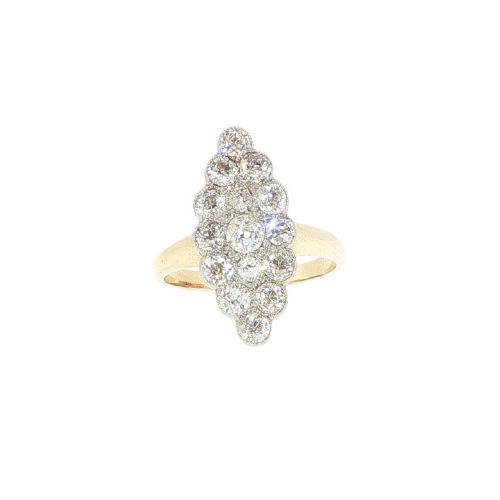

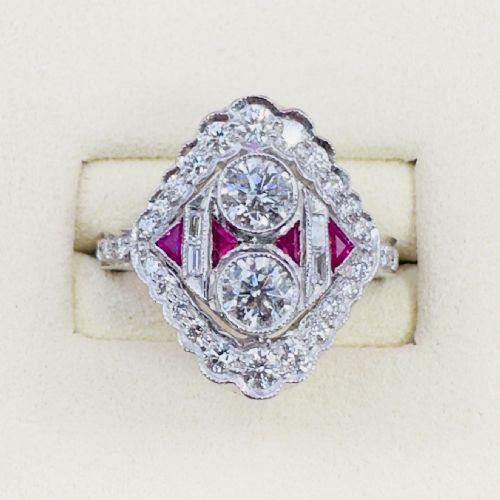


18ct Gold Marquise Ring
An 18ct gold marquise ring delivers an elongated silhouette on the finger, combining high carat gold with clustered diamonds and coloured gems from Victorian and later periods.
18ct Gold Marquise Ring
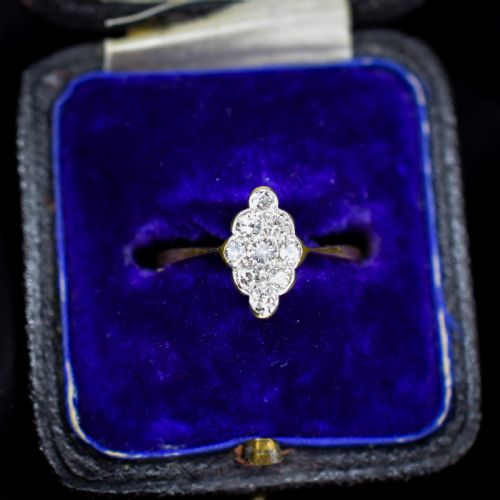
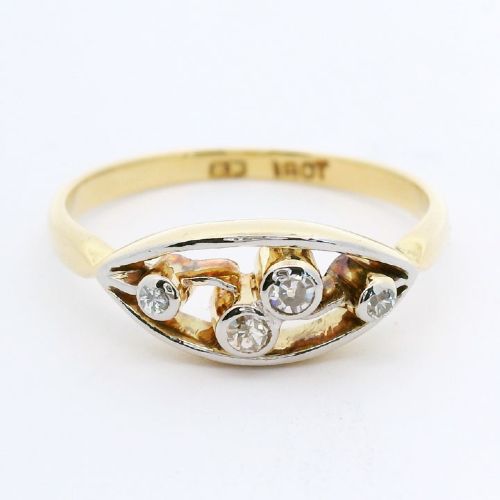
An 18ct gold marquise ring centres on an elongated, boat-shaped or navette profile designed to maximise finger coverage. These pieces span the Victorian, Edwardian, Art Deco and Mid-Century eras, appearing primarily as dress or cluster rings.
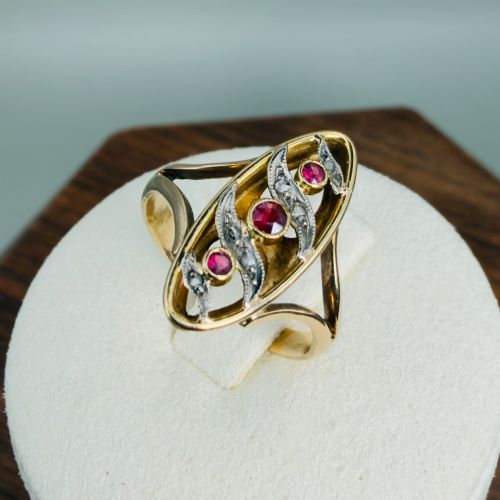
The layout typically positions a central line of diamonds or coloured stones flanked by smaller gems, creating a pointed oval silhouette. Surviving examples demonstrate how jewellers balanced length and proportion across different decades.
Makers utilised yellow gold, white gold and platinum settings to house rubies, sapphires, emeralds and pearls alongside diamonds. This page presents pieces ranging from late nineteenth-century turquoise clusters to mid-century white gold sapphire designs.
How They Were Made
Goldsmiths worked with 18ct yellow and white gold, often combining platinum on the upper face during the Edwardian and Art Deco periods to heighten contrast against diamonds. Shanks were typically forged in solid gold, while complex cluster heads required meticulous hand-pierced gallery work.
Gemstones including old cut diamonds, rubies, sapphires and emeralds were secured via claw or millegrain settings. Millegrain technique involved rolling a small textured wheel along metal edges to produce a precise beaded border around the stones.
Listings feature 18ct yellow and white gold alongside platinum, incorporating diamonds, rubies, sapphires, emeralds, pearls and turquoise across multiple decades.
What Varies In Quality
Quality rests in the precision of the cluster geometry and the matching of the stones. Finer pieces maintain crisp millegrain work and well-proportioned symmetry across the elongated navette points without metal thinning.
The selection of gemstones dictates the distinction at the upper end of the scale. High-grade examples feature lively old cut diamonds paired with naturally vivid rubies, sapphires or emeralds secured firmly in balanced mountings.
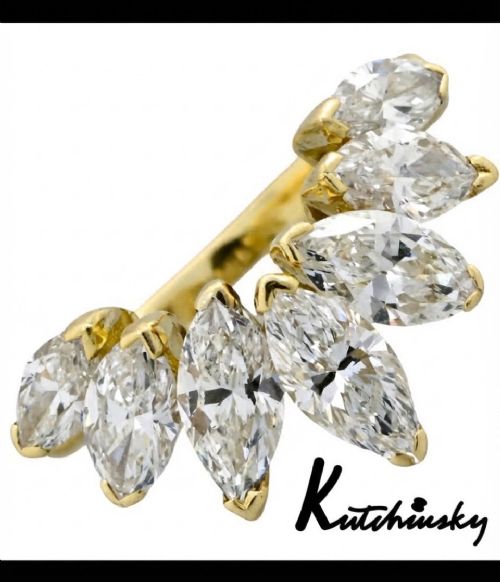
Kutchinsky
The 18ct Gold Marquise Ring Glossary
- Marquise
- A pointed, elongated oval gemstone shape or ring profile, also known as a navette. This boat-like outline was designed to stretch visually along the finger.
- Navette
- A French term meaning little ship, used interchangeably with marquise to describe boat-shaped ring heads and cluster formations. It appears frequently in Georgian, Victorian and Edwardian jewellery.
- Millegrain
- A decorative technique featuring a raised line of tiny metal beads along the edge of a setting. This method softens the transition between metal and stone with fine texture.
- Old Cut
- A hand-faceted diamond cut predating modern brilliant standards, characterised by a smaller table, higher crown and open culet. These stones display distinctive broad light flashes under candlelight.
- Cluster Ring
- A design featuring a central gemstone surrounded by a grouping of smaller stones. This arrangement maximises visual impact and light return.
18ct Gold Marquise Ring: Frequently Asked Questions
How do I care for an antique ring?
Clean these pieces gently with warm water, mild soap and a soft brush, avoiding harsh chemical dips that can damage pearls, turquoise or emeralds.
Store them separately in a fabric-lined box to prevent the 18ct gold shanks from scratching softer stones during storage.
Are these rings suitable for daily wear?
Eighteen-carat gold provides a durable foundation for everyday use, though Edwardian and Victorian settings benefit from mindful handling.
Take the ring off during heavy manual tasks to protect delicate millegrain edges and gemstone claw settings from impact.
Can an 18ct gold marquise ring be resized?
Most jewellers can adjust the band of an 18ct gold ring up or down by a few sizes without altering the structural integrity of the navette head.
Consult a specialist skilled in working with antique gold to ensure the shank thickness remains balanced after the adjustment.
How do I distinguish Edwardian from Victorian styles?
Victorian examples often utilise warmer yellow gold alongside deep rubies, garnets or seed pearls in substantial, organic mountings.
Edwardian and Art Deco pieces shift toward white gold and platinum settings, favouring lighter openwork lace designs and calibrated gemstones.