
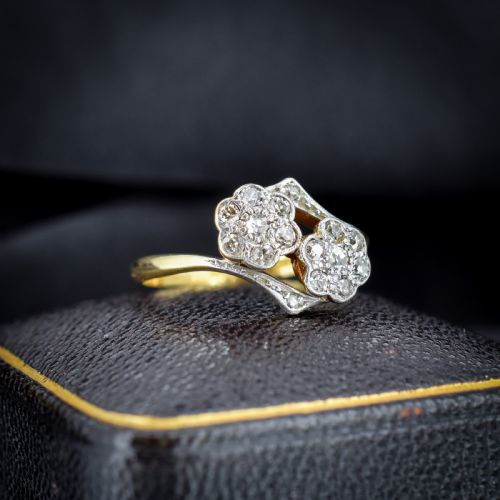


18ct Gold Crossover Ring
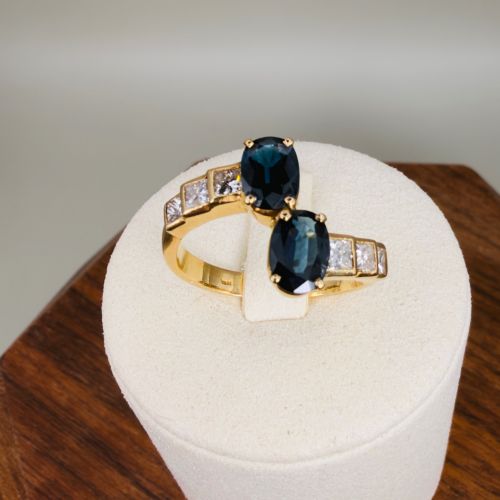
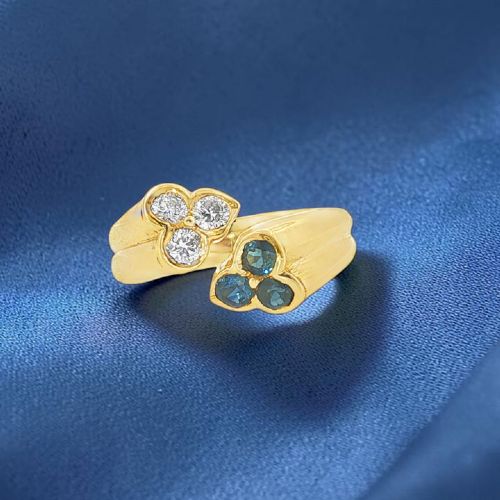
An 18ct gold crossover ring wraps the finger in curving bands of precious metal, prized for its dynamic twin-headed silhouette.
18ct Gold Crossover Ring
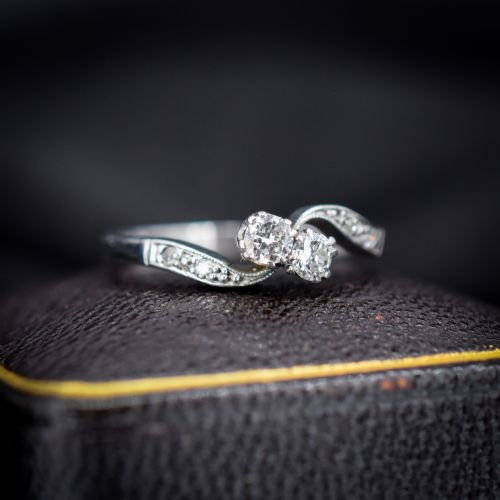
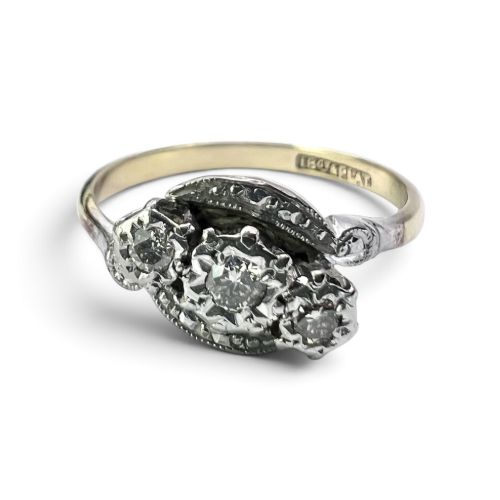
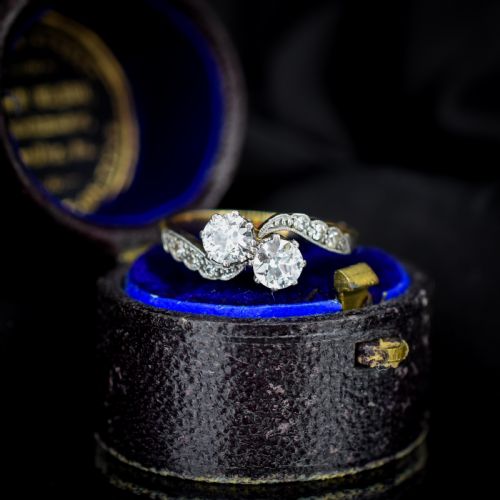
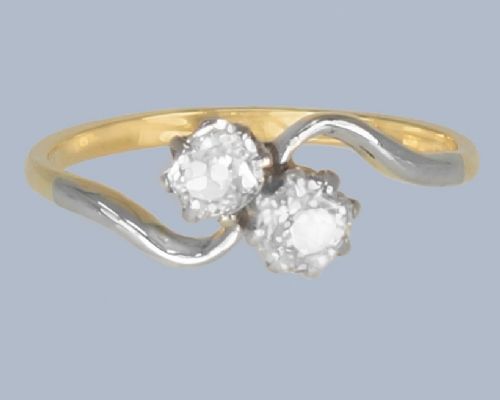
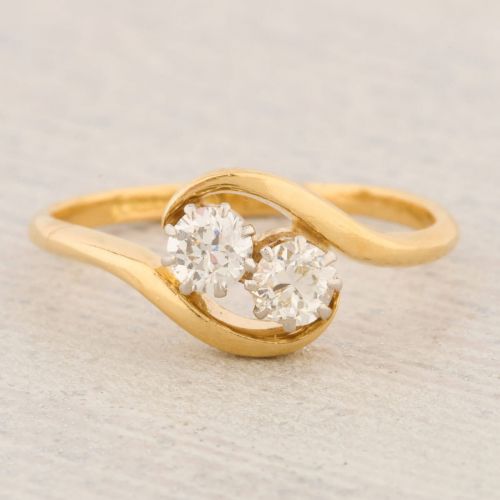
The 18ct gold crossover ring, also known as a twist or bypass ring, centres on two or more opposing shoulders that meet or cross over the finger. This design creates a fluid visual movement often associated with union and harmony.
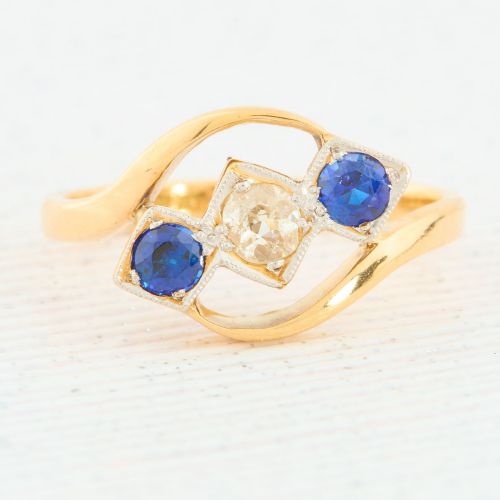
Examples on this page span the Victorian era, the Art Deco period, the 1940s, and the 1950s. Most pieces combine the warm hue of 18ct yellow gold with contrasting platinum settings to frame diamonds and sapphires.
Stones are typically set in pairs or triads, featuring old cut diamonds, square cut diamonds, and occasionally rubies or pearls. The configuration accentuates the directional flow of the band across the hand.
Materials and construction
Goldsmiths constructed these rings using solid 18ct gold, sometimes pairing yellow gold shanks with platinum settings to securely hold diamonds and sapphires. Platinum provided the strength needed for delicate claw settings without adding excessive visual weight.
The curved shanks require precise shaping to ensure the opposing ends align smoothly over the finger. Gemstones such as old cut and square cut diamonds are flush or claw-set to follow the sweeping contours of the metal.
18ct Gold Crossover Ring Retail Price Guide 2026
Typical asking prices for 18ct gold crossover ring among the pieces listed under this phrase on Sellingantiques today, from the lower quarter to the upper quarter. They describe what is for sale here now, not the wider market.
Listings feature pieces spanning from the 1890s through the 1950s, utilising yellow gold, white gold, and platinum.
Distinguishing quality
Quality rests in the balance of the crossover and the integrity of the metalwork where the bands intersect. Finer examples maintain a smooth, uninterrupted curve that shows no thinning along the shoulders.
The selection and matching of stones also define the piece, particularly in multi-stone configurations where diamond size, cut, and colour uniformity elevate the overall harmony of the design.
The 18ct Gold Crossover Ring Glossary
- Crossover ring
- A ring design where the shank splits or two bands sweep from opposite directions to cross over the top of the finger. This style is also frequently called a twist or bypass ring.
- Toi et Moi
- French for you and me, this term describes a ring featuring two principal gemstones side by side or crossing over. It represents two entities united as one.
- Old cut
- A diamond cut predating the modern brilliant cut, characterised by a smaller table, higher crown, and open culet. These stones display a softer, candlelit luminescence.
- Bypass ring
- An alternative descriptor for a crossover ring where the ends pass each other without formally meeting. The asymmetrical line creates a distinctive profile on the hand.
- Platinum
- A dense, durable white metal utilised in jewellery for its strength in secure stone settings. It allows for finer claws and mountings than gold alone.
18ct Gold Crossover Ring: Frequently Asked Questions
How do I wear a crossover ring?
A crossover ring sits comfortably as a standalone piece on the hand, where its curved lines can be fully appreciated without competing jewellery.
Because of the twisting shoulders, pairing it with a wedding band requires a contoured ring that fits snugly against the asymmetric shape.
What periods do these rings come from?
The listings include pieces originating from the Victorian era, Edwardian period, Art Deco movement, and mid-century decades.
Each period brings distinct design elements, from the flowing floral motifs of the late nineteenth century to the geometric precision of the 1920s and 1930s.
What stones are set in these rings?
Diamonds are the most common stones found in these designs, appearing alongside sapphires, rubies, and pearls.
Gemstones are frequently paired as dual stones or in three-stone trilogy arrangements that emphasise the central twist of the band.
Is 18ct gold durable for daily wear?
Eighteen-carat gold provides a high gold content while maintaining structural integrity suitable for regular use when cared for properly.
Combination pieces that incorporate platinum settings offer added security for holding diamonds and coloured stones securely in place.