


Art Deco Twist Ring
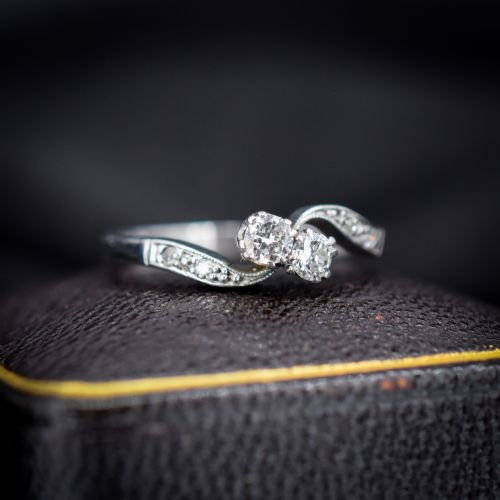
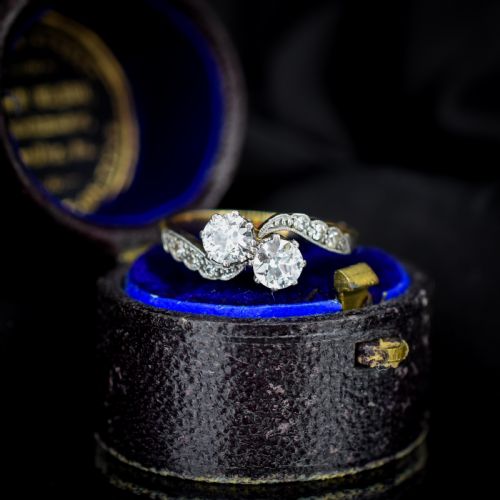
An art deco twist ring wraps the finger with dynamic lines and paired stones, bringing unmistakable geometric flair to the hand.
Art Deco Twist Ring
An art deco twist ring displays flowing crossover bands and dynamic diagonal lines that wrap the finger. These rings often pair central diamonds with coloured gemstones such as rubies, emeralds, or sapphires.
The selections here span from nineteen ten Edwardian precursors through nineteen twenty and nineteen thirty geometric creations into nineteen fortys retro pieces. The most common forms on this page feature dual stone toi et moi layouts or diamond set bypass configurations.
Makers utilised platinum alongside eighteen carat yellow, white, and standard gold to construct these swirling mounts. The resulting rings sit low on the hand, combining secure metalwork with striking optical movement.
How they were made
Goldsmiths combined platinum with eighteen carat gold, often mounting platinum heads onto yellow or white gold shanks to secure the stones safely. This dual metal technique provided the bright white surface needed for diamonds while retaining traditional warmth or structural strength in the band.
Stone settings relied on illusion techniques, claw mounts, and flush integration to accentuate the sweeping lines of the twist. Old cut diamonds and calibré cut coloured gems were shaped to follow the curving pathways of the crossover designs.
The twisted shank ensures the ring looks equally engaging when viewed upside down by someone pouring your afternoon tea.
What varies in quality
The calibre of the central stones determines the upper echelon of these rings, particularly when Burmese rubies or Colombian emeralds accompany old cut diamonds. Superior examples maintain crisp geometric edges along the crossover shoulders without thinning of the metal.
Construction precision dictates the fluidity of the twist, separating standard production from exceptional jeweller output. Original hallmarks and intact platinum settings preserve the structural integrity and historical value of each piece.
The Art Deco Twist Ring Glossary
- Twist ring
- A ring design featuring curved bands that cross over one another on the finger. This layout is also known as a crossover or bypass style.
- Toi et moi
- A French term meaning you and me, describing a ring featuring two main stones set closely side by side. These symbols of union frequently appear in twist configurations.
- Old cut
- A diamond cutting style predecessor to the modern brilliant, characterised by a small table, high crown, and open culet. These stones display softer light return under candlelight.
- Bypass
- A ring style where the shank ends pass each other rather than meeting centrally. This creates an asymmetric flow across the finger.
- Illusion set
- A mounting technique where a metal plate surrounds a diamond to make the stone appear larger. This method was widely utilised during the early twentieth century.
Art Deco Twist Ring: Frequently Asked Questions
What is an art deco twist ring?
An art deco twist ring is a finger ornament featuring swirling bands, crossover designs, or diagonal bypass structures. These pieces typically incorporate diamonds alongside rubies, sapphires, or emeralds.
The style emerged strongly during the nineteen twenties and thirties, building upon earlier Edwardian toi et moi concepts. They remain sought after for their distinctive geometric movement and low profile.
How do I care for my ring?
Care for an art deco twist ring involves gentle cleaning with warm soapy water and a soft brush to remove debris from the crossover channels. Avoid harsh ultrasonic cleaners, particularly when Colombian emeralds or Burmese rubies are present.
Store the ring in an individual fabric lined box to prevent platinum and gold shanks from scratching against other jewellery.
How can I tell the period?
Dating these rings relies on examining the metal combinations, such as platinum top mounted on eighteen carat gold, and stone cutting styles like old cut diamonds. Hallmarks and marks indicating metal purity provide direct chronological markers.
Edwardian precursors tend toward delicate wirework, while nineteen thirties pieces embrace bolder geometric sweeps and nineteen forties items show heavier retro gold construction.
Can these rings be resized?
Resizing an art deco twist ring is generally possible for skilled jewellers, though the crossover shank requires careful adjustment to preserve the symmetry of the design. Laser welding helps protect delicate platinum settings and side stones during the process.
Consult a specialist experienced in handling vintage mounts to ensure the structural integrity of the twist remains undisturbed.