
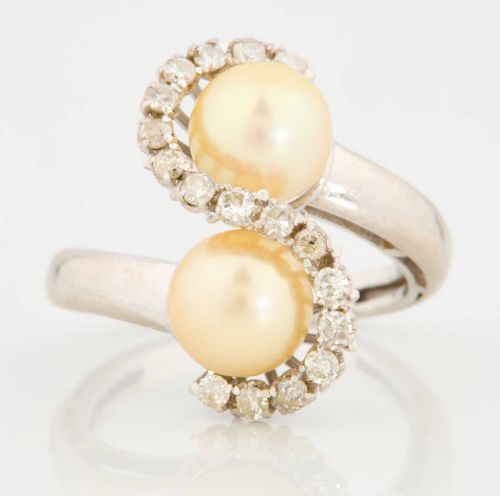
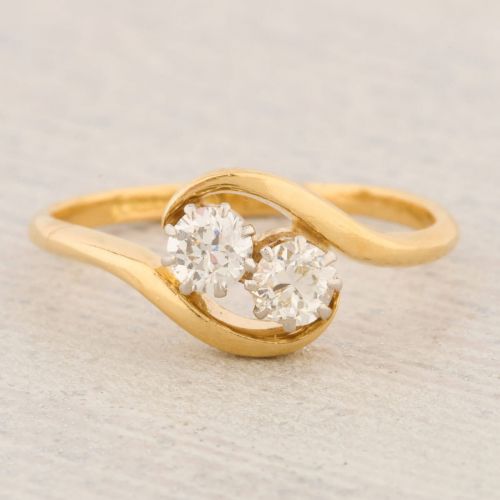


18ct Gold Bypass Ring
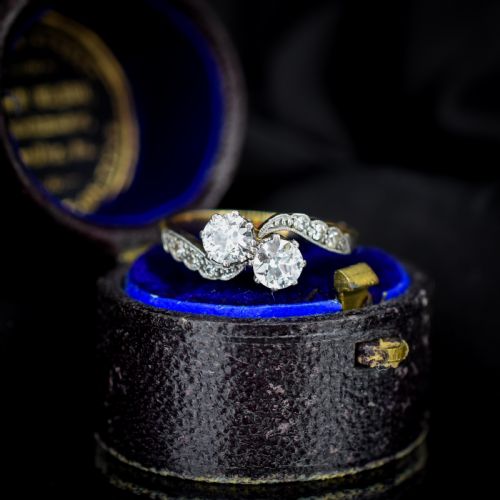
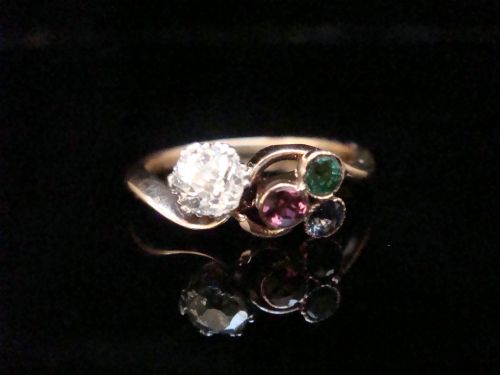
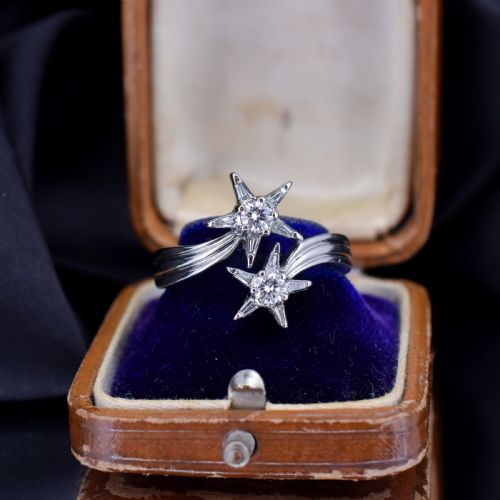
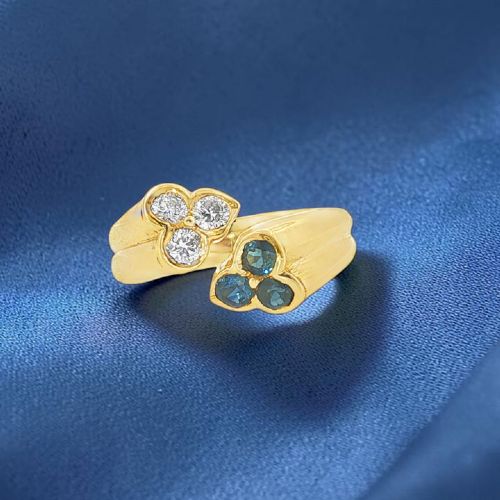
When you handle an 18ct gold bypass ring, you hold a piece designed to curve gracefully around the finger with twin or overlapping terminals.
18ct Gold Bypass Ring
An 18ct gold bypass ring forms part of a tradition of fluid, entwined jewellery designs including twist, crossover and toi et moi configurations. The pieces appearing here span periods from the Edwardian era and Art Nouveau through Art Deco and Mid-Century decades up to later than nineteen sixty.
You will encounter classic two-stone gemstone arrangements, alongside variations set with diamonds, sapphires, rubies, pearls and emeralds mounted in yellow, white or platinum combinations. The form relies on bands that bypass or wrap past one another rather than meeting in a traditional symmetrical circle.
Materials and construction methods
The foundation rests on 18ct gold, utilised in yellow or white variants, frequently accompanied by platinum settings for gemstone security. Workshops employed traditional casting and hand-working techniques to shape the sweeping shoulders and twist motifs characteristic of the style.
Gemstones including old-cut diamonds, sapphires and pearls are secured using claw, bezel or flush settings that follow the curving contours of the metal bands. Hallmarks stamped into the precious metal often record assay office origins and specific manufacturing dates.
Snakes coil around fingers just as easily as ribbons do, proving that Victorian and Edwardian makers loved a bit of reptile drama in their gold work.
Assessing quality and craftsmanship
The distinction between standard production and superior work lies in the weight of the 18ct gold and the precision with which the bypass terminals meet or cross. Heavier gauge metal maintains structural integrity along the curving shank without thinning at the crossover points.
Fine examples display careful matching of gemstones, whether pairing twin diamonds in a toi et moi design or setting coloured stones like sapphires and rubies with balanced proportions. The integration of platinum claws upon gold bands further indicates deliberate, high-grade construction.
Kutchinsky
The 18ct Gold Bypass Ring Glossary
- Bypass ring
- A ring design where the two ends of the shank cross past each other rather than meeting centrally. This configuration creates a flexible, wrapping silhouette on the hand.
- Toi et moi
- French for you and me, denoting a ring featuring two main gemstones set side by side or in a twisting embrace. The style symbolises two souls united.
- Old-cut diamond
- A diamond cut by hand before modern machinery standardised facets, typically featuring a smaller table and higher crown. These stones produce a distinctive soft candlelit gleam.
- Twist ring
- A ring style where the metal band or gemstone settings wind around each other. It shares visual traits with the bypass and crossover forms.
- Platinum
- A dense, silvery-white precious metal utilised for secure gemstone settings due to its strength and durability. It holds small claw work firmly without adding excessive bulk.
18ct Gold Bypass Ring: Frequently Asked Questions
What is a bypass ring?
A bypass ring is a style where the shank wraps around the finger with the two ends passing each other instead of joining directly.
This fluid design allows stones or metal terminals to sit side by side in a continuous, overlapping sweep.
How do I care for my ring?
Care for an 18ct gold bypass ring involves regular gentle cleaning with warm soapy water and a soft brush to remove debris from behind the stones.
Store the piece separately in a fabric-lined box to prevent the gold and gemstones from scratching against other items.
Are these rings suitable for daily wear?
Eighteen carat gold provides a durable alloy for everyday use while retaining a rich colour and substantial feel on the hand.
Settings involving softer gems like pearls or turquoise require additional care during daily activities compared to diamond or sapphire set examples.
How can I tell the period?
Periods are identified through a combination of gemstone cuts, mounting styles, and official hallmarks stamped into the inner band.
Edwardian and Art Deco pieces display distinct geometric or delicate wirework characteristics, whereas Mid-Century designs introduce bolder forms.