
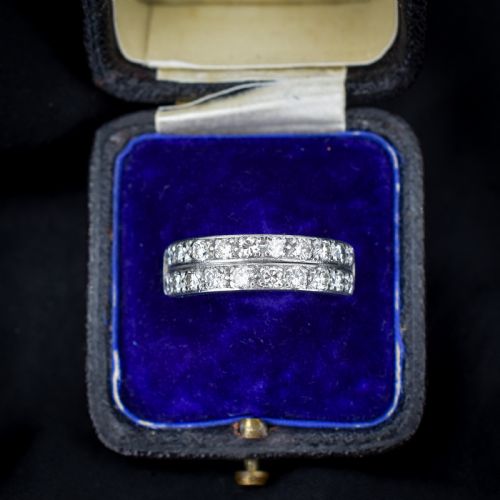
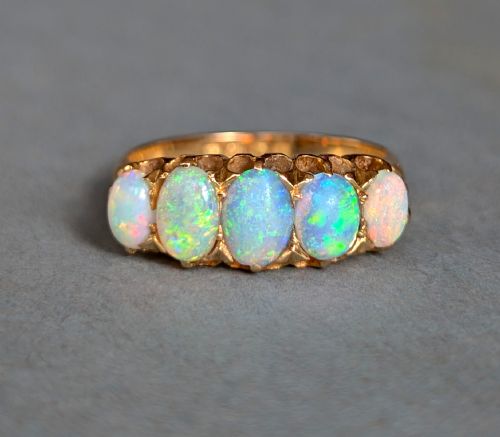


18ct Gold Anniversary Ring
An 18ct gold anniversary ring brings together enduring precious metal and selected gems across styles from the Victorian era to the mid-twentieth century.
18ct Gold Anniversary Ring
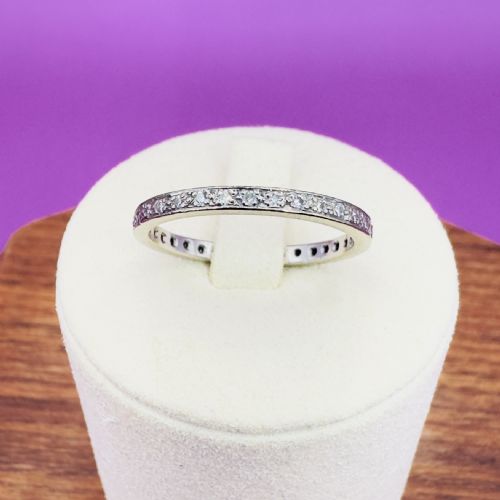
An 18ct gold anniversary ring encompasses multi-stone bands, half and full eternity designs, and traditional cluster formations created over more than a century of jewellery production. Buyers encounter pieces stretching from late Victorian and Edwardian workshops through to Art Deco creations and mid-century vintage releases.
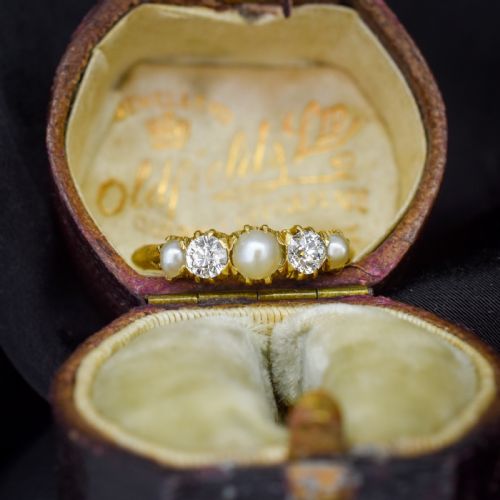
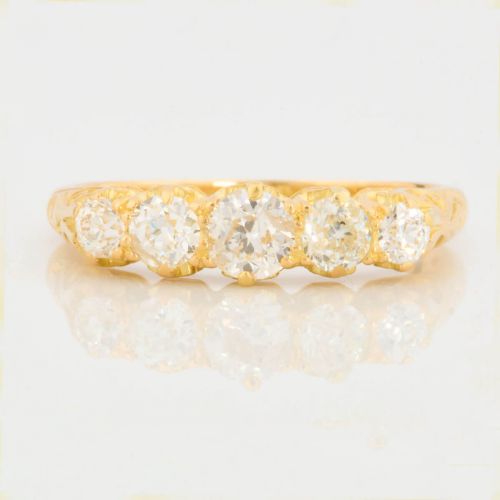
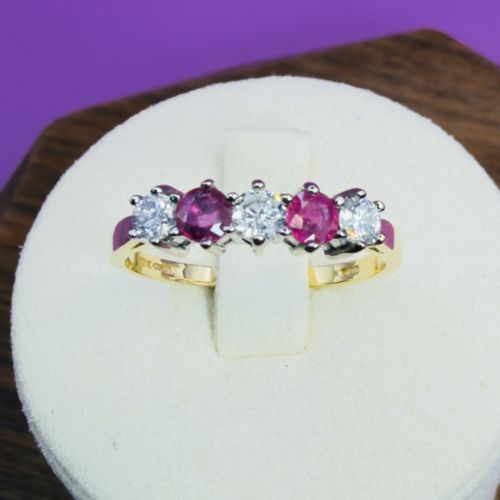
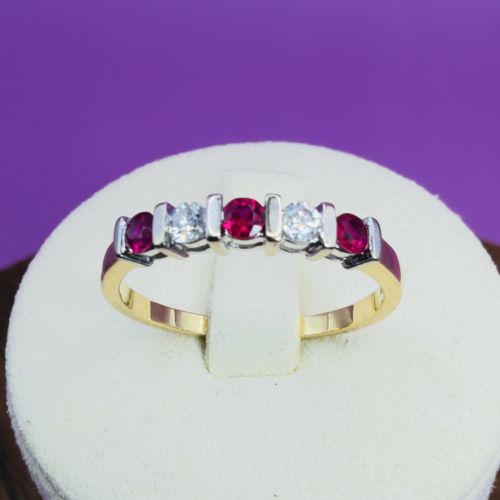
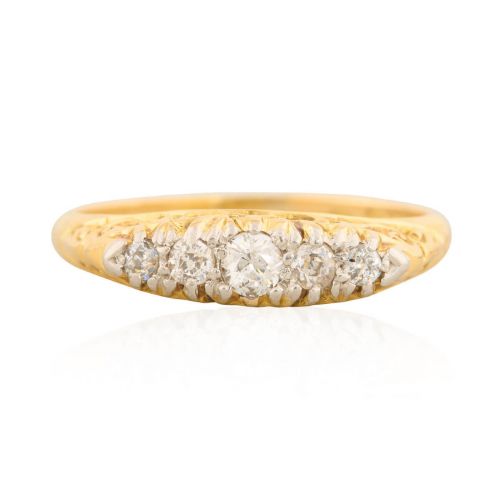
The five-stone configuration and the half eternity band appear frequently across the selection, often pairing diamonds with rubies, sapphires, or emeralds. These rings were designed to mark significant milestones, utilising durable settings suitable for daily wear.
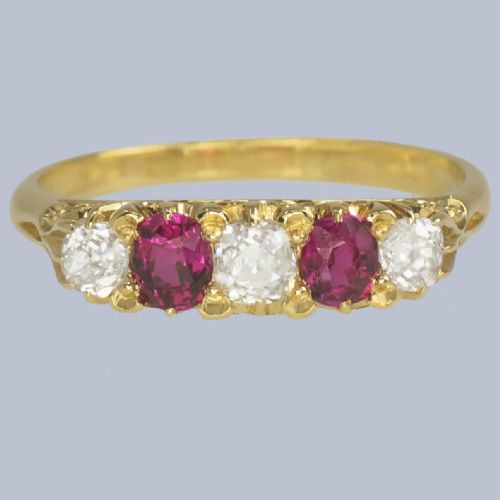
Earliest examples showcase old mine cut and old European cut diamonds set in yellow gold or early white gold alloys, while later mid-century pieces lean towards crisp platinum combinations and structured geometric layouts.
Materials and construction
Goldsmiths utilised 18ct yellow gold and 18ct white gold as the primary structural body for these rings, occasionally incorporating platinum for secure claw settings in Art Deco pieces. The alloy provides a robust foundation designed to hold multiple gemstones securely along the finger.
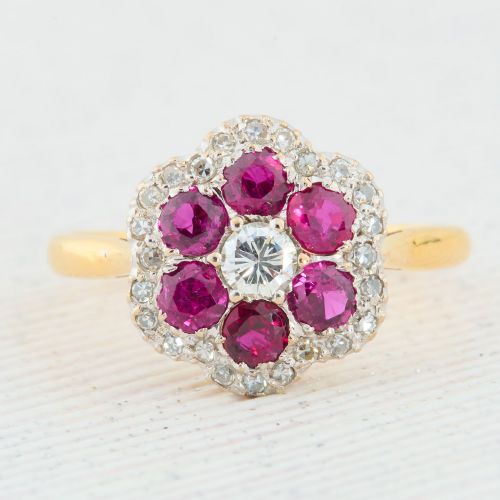
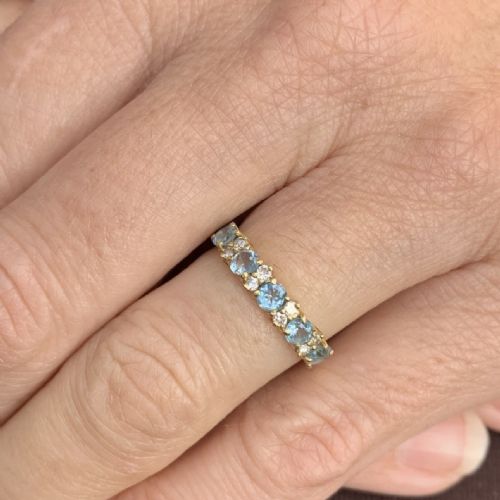
Gemstone selection relies on diamonds paired with coloured stones including rubies, sapphires, garnets, opals, and blue spinels. Stones are secured using traditional claw settings, channel settings, or delicate millegrain edges that reflect the prevailing style of their respective period.
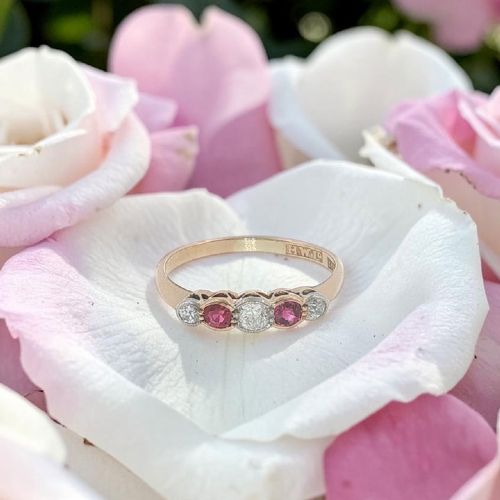
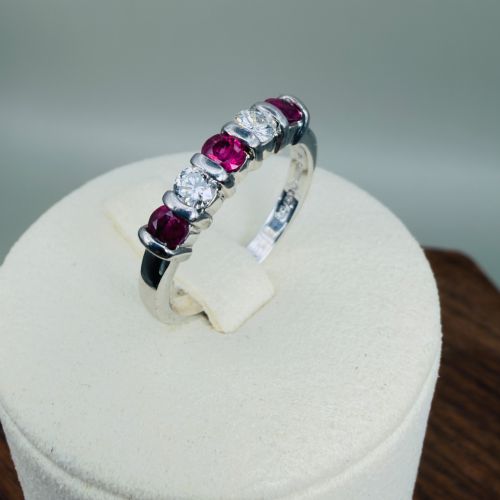
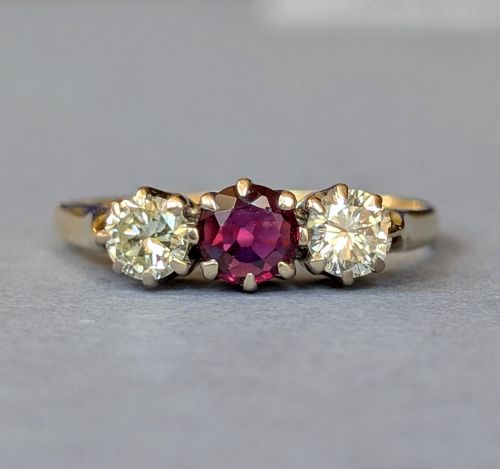
Listings feature 18ct gold anniversary rings spanning Victorian, Edwardian, Art Deco, and mid-century periods, utilising diamonds, rubies, sapphires, and opals.
Distinctions in standard
The standard of an 18ct gold anniversary ring depends heavily on the uniformity and cut quality of the incorporated diamonds and coloured gems. Hand-cut old mine stones display unique facet patterns that contrast with the more regimented brilliance of later cutting techniques.
Structural integrity of the setting claws and the retention of original shank thickness dictate longevity and wearability. Pieces that retain crisp hallmarks and minimal metal thinning at the rear of the band command higher regard among collectors.
The 18ct Gold Anniversary Ring Glossary
- Old mine cut
- An antique diamond cutting style characterised by a cushion shape, high crown, small table, and deep pavilion. These stones were shaped by hand before modern symmetrical standards were established.
- Half eternity ring
- A band featuring a single row of gemstones set across the upper half of the hoop. This design offers the visual impact of a full eternity ring while allowing the shank to be resized.
- Millegrain
- A decorative technique featuring a row of tiny raised metal beads along the edges of a setting. It was widely used during the Edwardian and Art Deco periods to soften metal borders.
- Trilogy ring
- A ring set with three stones representing the past, present, and future. Central gems are frequently flanked by two matching smaller stones in a linear arrangement.
- Cluster ring
- A central gemstone surrounded by a geometric cluster of smaller accent stones. This arrangement maximises surface sparkle and colour contrast.
18ct Gold Anniversary Ring: Frequently Asked Questions
Can an 18ct gold anniversary ring be resized?
Resizing depends primarily on the specific setting style of the band. Half eternity rings and multi-stone rings with stones running far down the shank present greater complexity for a jeweller.
Plain shanks and traditional five-stone rings with solid gold backs allow for straightforward adjustment by an experienced bench jeweller. It remains essential to check the integrity of the surrounding claws before undertaking any alteration.
How do I care for antique gemstone rings?
Regular maintenance involves gentle cleaning with warm soapy water and a soft brush to remove accumulated oils behind the stones. Ultrasonic cleaners should be avoided for rings containing pearls or softer treated gems.
Periodic inspection by a professional helps ensure that older claws have not worn down over decades of use. Storing each piece separately prevents harder stones from scratching neighbouring gold surfaces.
What is the difference between old cut and modern stones?
Old cut diamonds feature hand-polished facets tailored under candlelight, resulting in broader flashes of light rather than intense pinpoint brilliance. Their proportions typically include taller crowns and smaller tables compared to contemporary brilliant cuts.
Modern stones reflect the precision of twentieth-century mechanical cutting standards. Finding an older diamond within an Edwardian or Victorian setting preserves the authentic character of the period.
How do I identify the period of my ring?
Dating relies on a combination of gemstone cutting styles, metal alloys, and official hallmarks stamped inside the shank. Victorian and Edwardian pieces often display distinct floral motifs, yellow gold warmth, or delicate millegrain work.
Mid-century and later twentieth-century examples introduce whiter metal alloys and cleaner geometric lines. Comparing design characteristics against established historical eras clarifies the likely decade of manufacture.