





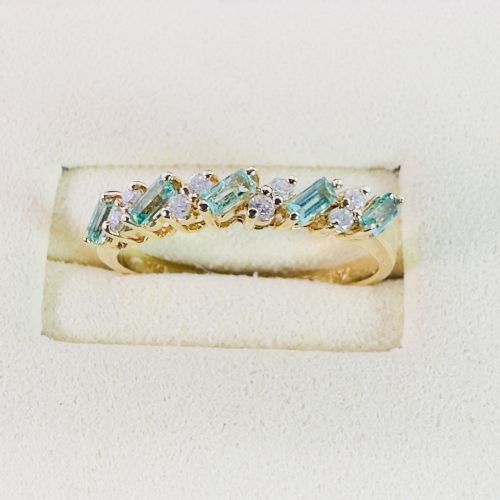
18ct Emerald Ring
An 18ct emerald ring brings together rich green beryl and bright diamonds set in durable gold, offering lasting style for everyday wear.
18ct Emerald Ring
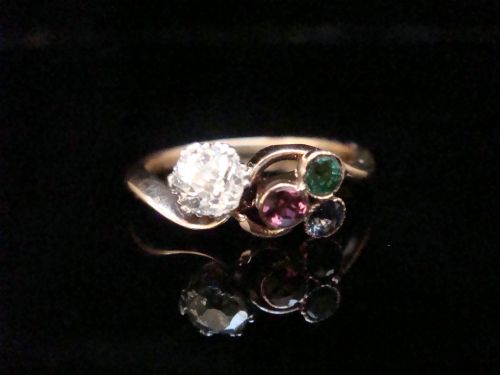
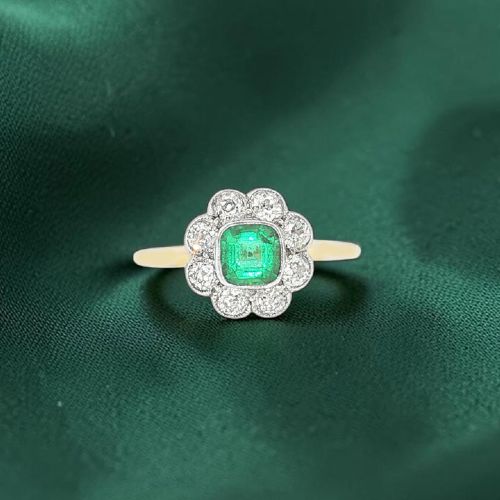
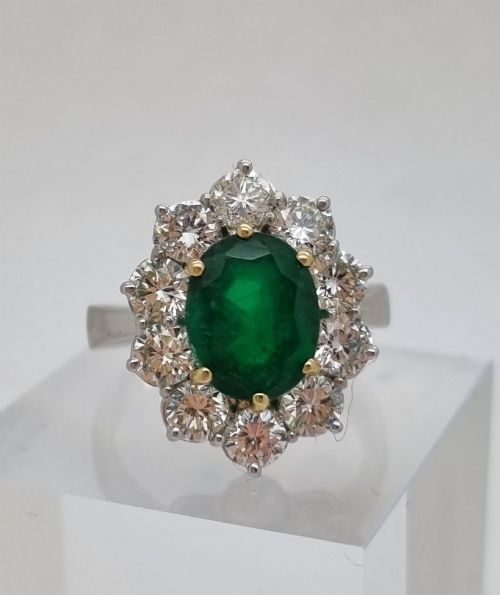
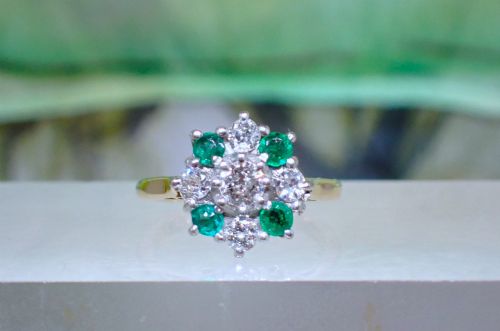
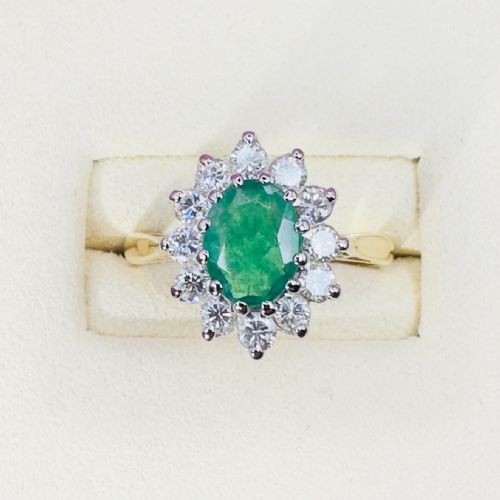
An 18ct emerald ring combines central emerald gemstones with supporting diamonds, configured in traditional cluster, multi-stone, or cocktail arrangements. These pieces span historical periods from the late Victorian and Edwardian eras through Art Deco and Mid-Century designs.
Originating across the early to mid-twentieth century, these rings reflect distinct stylistic shifts from floral motifs to geometric lines. Cluster configurations dominate the available selection, often surrounding the emerald with a halo of brilliant or old-cut diamonds.
How they were made
Goldsmiths utilised 18ct yellow and white gold to construct the foundational bands and settings, sometimes employing platinum for secure claw work. Metal purity marks and regional hallmarking indicate British production alongside continental European manufacturing methods.
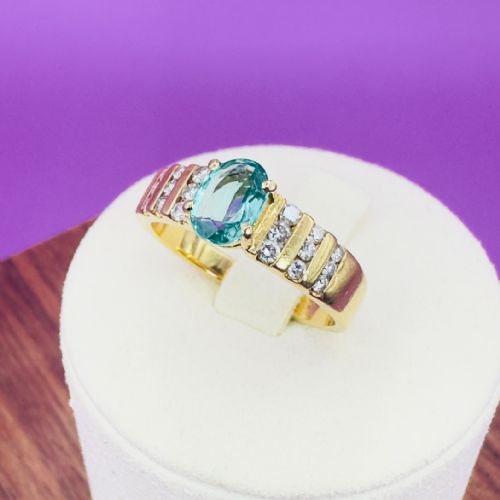
Gemstones including emeralds, diamonds, and occasional alternative stones like aquamarine or sapphire were secured using claw, bezel, or flush settings. Stones such as oval, emerald-cut, and princess-cut emeralds were paired with old-cut or brilliant-cut diamonds by period jewellers.
Listings feature 18ct gold alongside white gold and yellow gold, spanning Edwardian, Art Deco, and Mid-Century periods.
What varies in quality
The grade of the central emerald heavily influences the character of the piece, distinguished by depth of colour, natural inclusions, and clarity. Stones originating from specific regions like Colombia hold distinct recognition among collectors for their vivid saturation.
Manufacturing execution and stone matching determine overall refinement, seen in the symmetry of cluster arrangements and the precision of prong work. The weight and proportion of the supporting diamonds relative to the central emerald establish the visual balance of the ring.
The 18ct Emerald Ring Glossary
- Cluster ring
- A jewellery design featuring a central gemstone surrounded by a halo of smaller stones, typically diamonds framing an emerald. This layout maximises visual presence and light reflection.
- Emerald cut
- A rectangular or square stone cut with stepped facets and cropped corners. This geometry highlights colour saturation and internal clarity within emeralds.
- Old-cut diamond
- A vintage diamond cutting style characterised by a high crown, small table, and deep culet. These stones were shaped by hand before modern brilliant-cut standards were established.
- Toi et moi
- A ring style featuring two main stones positioned side by side, translating from French as you and me. This romantic configuration often pairs an emerald with a diamond.
- Tank ring
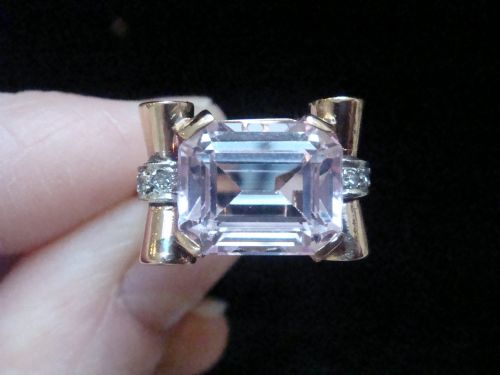
- A bold, architectural jewellery style originating in the mid-twentieth century, marked by heavy angular gold work reminiscent of military machinery. These cocktail pieces frequently incorporate natural emeralds and diamonds.
18ct Emerald Ring: Frequently Asked Questions
How do I care for an 18ct emerald ring?
Emeralds require gentle cleaning using soft cloths and warm soapy water, avoiding harsh chemical ultrasonic cleaners. Because emeralds contain natural inclusions, protecting the stone from sharp impacts preserves its structural integrity.
Storing the ring separately from harder gemstones prevents scratching on both the gold shank and the emerald facets. Periodic inspection by a jeweller ensures the claw settings remain secure around the centre stone.
What periods do these rings come from?
The available pieces span multiple eras, including Edwardian, Art Deco, Retro Modern, and Mid-Century designs. Each period brings distinct aesthetic markers, from delicate Edwardian filigree to bold geometric Art Deco clusters.
Earlier examples from the Victorian era also appear alongside later mid-century creations. Hallmarks and stylistic traits help identify the specific decade of manufacture.
What gold purity is used?
The settings utilise 18ct gold, containing seventy-five percent pure gold alloyed with other metals for durability. This composition appears in both yellow gold and white gold variations.
Certain pieces combine 18ct yellow and white gold within the same mounting, or incorporate platinum sections. Hallmarks stamped into the inner band verify this metallic standard.