




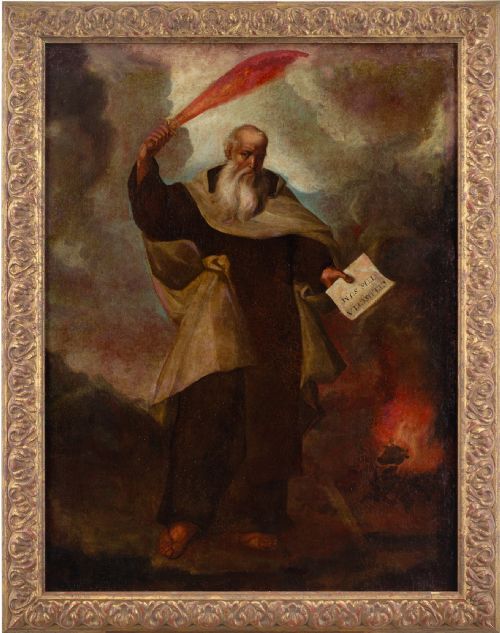


17th Century Religious Painting
These pieces of 17th century religious painting bring devotional depth, dramatic baroque shadow, and centuries of hand-rendered oil and wood into a room.
17th Century Religious Painting
A 17th century religious painting captures sacred narratives, saints, and holy figures through the lens of Baroque, Spanish Colonial, and European regional schools. Buyers seek these works for their historical weight, devotional intensity, and the direct connection they provide to centuries of artistic and spiritual practice.
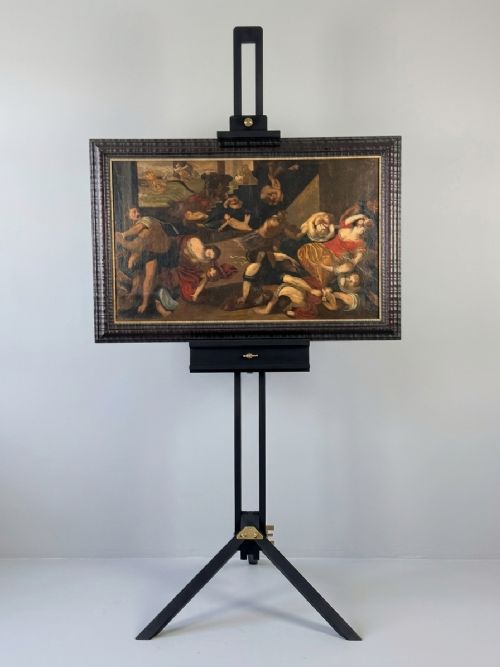
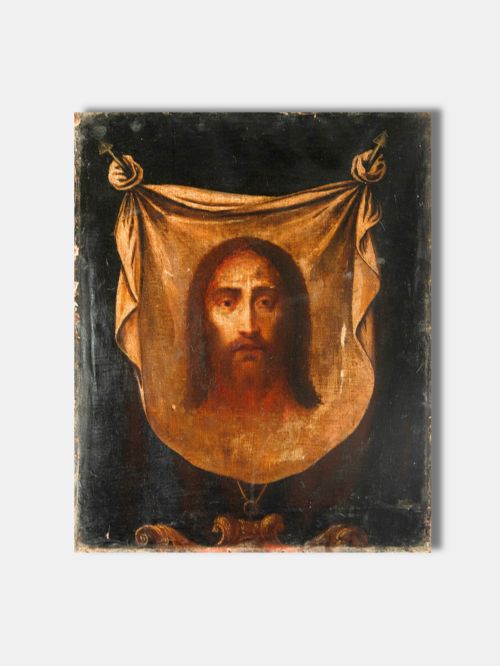
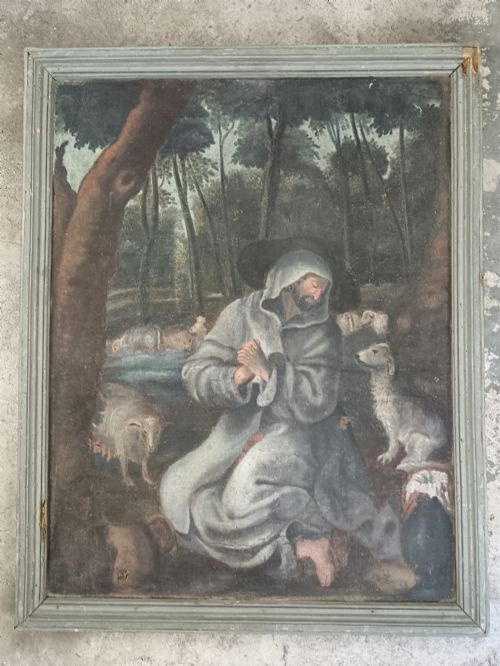
The versions met most frequently on this page include oil on canvas portraits of saints, depictions of the Madonna and Child, and dramatic scriptural scenes housed in period frames. These works originate from Italian, Spanish, Hessian, and English schools, often showing the distinctive dark palette and emotive lighting characteristic of the period.
Materials and construction
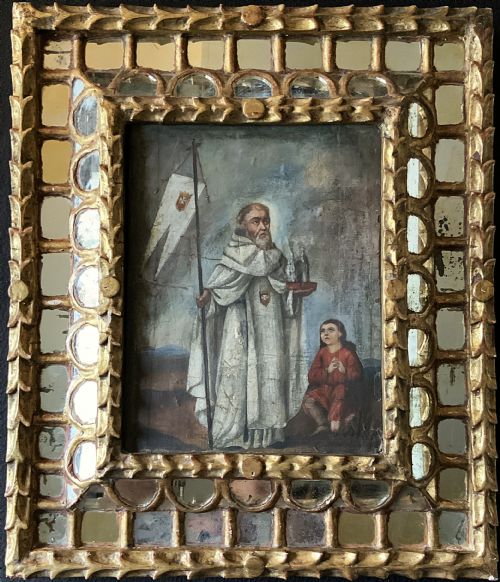
Painters of this era applied oil paint to prepared canvas, fruitwood panels, or occasionally copper supports, working with pigments bound in oil to achieve rich depth and gradual tonal transitions. Many works retain their original giltwood frames, which were carved and gilded to complement the sacred subject matter.
Surviving examples frequently show the physical evidence of their creation, such as visible pentimenti where artists altered compositions during painting, or the hand-carved polychrome surfaces found on wooden character heads.
17th Century Religious Painting Retail Price Guide 2026
Typical asking prices for 17th century religious painting among the pieces listed under this phrase on Sellingantiques today, from the lower quarter to the upper quarter. They describe what is for sale here now, not the wider market.
Listings feature works executed on canvas, fruitwood panel, and copper, spanning Spanish Colonial, Italian Baroque, and English portrait traditions.
Separating finer works from simpler examples
Condition and originality also separate examples, particularly the survival of the original pigment layer beneath old varnish and the retention of period giltwood frames that match the age and origin of the canvas or panel.
Gaspar de Figueroa·Gian Lorenzo Bertolotto·Guido Reni·Pietro D'asaro·Orsola Maddalena Caccia·Adriaen Van der Werff·John Scougall
The 17th Century Religious Painting Glossary
- Pentimento
- An alteration in a painting, evidenced by visible traces of previous brushstrokes, showing where the artist changed their mind during composition. This provides a direct insight into the painter's working process.
- Giltwood
- Wood that has been coated with gold leaf or gold powder, commonly used for the ornate frames that house religious paintings of this period. It adds a reflective border that isolates the sacred scene from the surrounding room.
- Baroque
- The dominant artistic style of the 17th century, characterised by dramatic movement, deep shadow, and intense emotional expression. In religious art, this style heightens the spiritual drama of the narrative.
- Polychrome
- Painted in several colours, frequently applied to carved wooden sculptures and panels to render lifelike skin tones and garments. This technique brings a sculptural religious figure into vivid visual presence.
- Oil on copper
- A painting technique where thin layers of oil paint are applied to a smooth copper plate, producing a durable surface with high luminosity. This method allowed artists to achieve remarkable detail in small-format devotional portraits.
17th Century Religious Painting: Frequently Asked Questions
How do I hang a heavy framed oil painting?
These works require secure wall fixings distributed evenly, ideally anchored directly into wall studs or masonry using heavy-duty picture hooks suited to the weight of the giltwood frame.
Position the painting at eye level away from direct sunlight and heat sources to protect the ageing canvas, old varnish, and wooden panel from environmental stress.
What does school of an artist mean?
Attribution to a specific school indicates that a painting was produced in a particular region or city, following the stylistic traditions and techniques of a master without necessarily being by their hand.
This classification links anonymous works to cultural centres such as Madrid, Genoa, or Naples during the 17th century.
Can I display these paintings in a modern room?
The dark, rich palettes and dramatic lighting of 17th century religious art contrast effectively against neutral modern walls, adding historical depth and focal weight to an interior.
Pairing them with simple lighting allows the oil paint and original giltwood frame to stand out without competing with contemporary furnishings.