




17th Century Italian Canvas
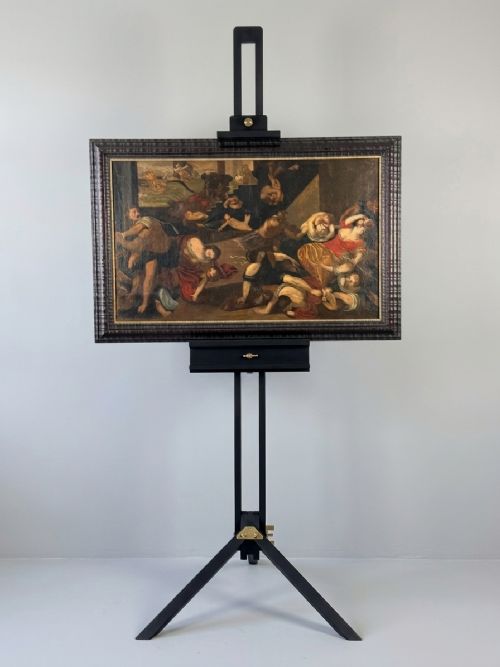
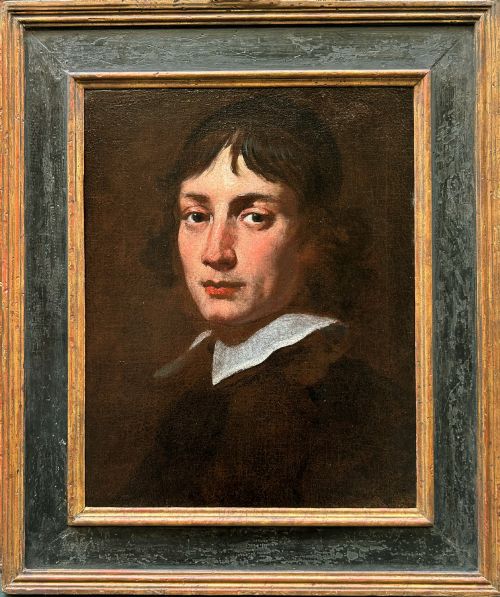
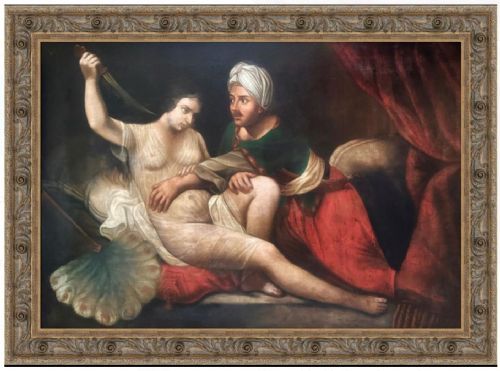
These 17th century italian canvas works bring dramatic painterly presence and religious or classical narratives straight into a room.
17th Century Italian Canvas
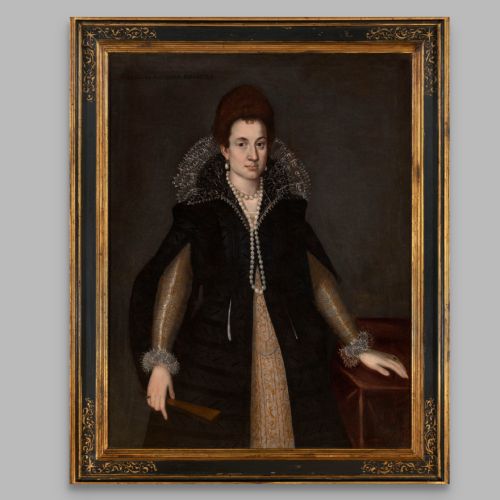
When you search for 17th century italian canvas, you encounter oil paintings originating from various regional schools across Italy during the seventeenth and early eighteenth centuries. These works encompass grand religious scenes, classical landscapes, marine vistas, and detailed portraiture.
The selections available here range from works attributed to specific masters and their circles to examples from the broader Italian, Roman, Genoese, and Veronese schools. Canvas supports dominate alongside occasional transitional pieces stretching into the eighteenth century.
Materials and Construction
These pieces utilise oil paint applied directly to woven canvas supports, sometimes paired with wood elements and heavy giltwood frames embellished with gold leaf. Artists built compositions through layered oils that frequently reveal pentimenti and historical brushwork.
Surviving works rely on the traditional preparation of fabric grounds, allowing pigments to adhere over centuries. Frames often feature applied gilding that frames the painted surface.
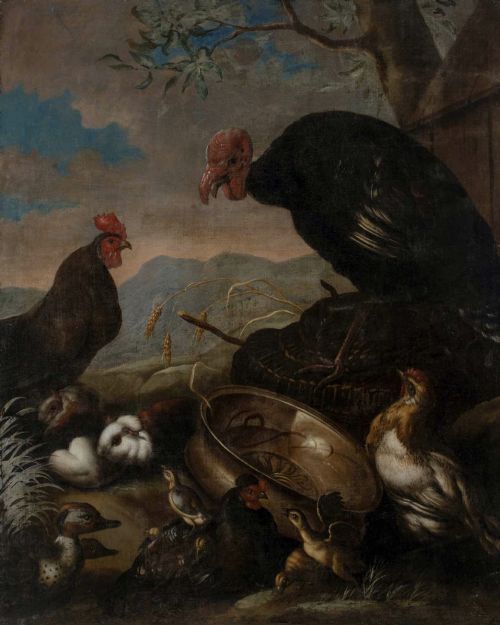
Several canvases capture dramatic scenes involving fowl in castle ruins and saints comforted by heavenly attendants.
Assessing Quality and Execution
Quality rests in the firmness of the drawing, the handling of light and shadow, and the expressive depth of the figures. Stronger works display confident brushwork and anatomical clarity within portraits or narrative scenes.
The condition of the painted surface and the integrity of the original canvas support influence the overall standard. Pieces bearing secure attributions or originating from established regional circles tend to command greater attention from collectors.
Angelo Maria Crivelli·Pietro Fachetti·Guillaume Courtois·Gian Lorenzo Bertolotto·Guido Reni·Andrea Celesti·Orsola Maddalena Caccia
The 17th Century Italian Canvas Glossary
- Pentimento
- An alteration in a painting evidenced by visible traces of previous work, showing where the artist changed their composition. This phenomenon often confirms the authenticity of older canvases.
- Giltwood
- Wood carved and coated with gold leaf or a gold-coloured metallic finish. This material frequently frames important historical paintings.
- Baroque
- The dominant artistic style of the seventeenth century characterised by dynamic movement, deep shadow, and high emotional intensity. Italian art of this era set the standard across Europe.
- Circle of
- A designation used when an artist's work closely follows the style of a master without being a direct production by that master's own hand. It indicates a contemporary working within the same immediate artistic environment.
17th Century Italian Canvas: Frequently Asked Questions
How do I identify a 17th century italian canvas?
Look for the characteristic handling of oil paint on woven fabric, often accompanied by historical giltwood framing. Subject matter frequently centres on religious iconography, classical mythology, or dramatic portraiture typical of regional Italian schools.
Examine the surface for signs of age, such as craquelure in the paint layer and older stretcher frames behind the canvas. Attribution notes and school associations provide further clues to origin.
What subjects are most common?
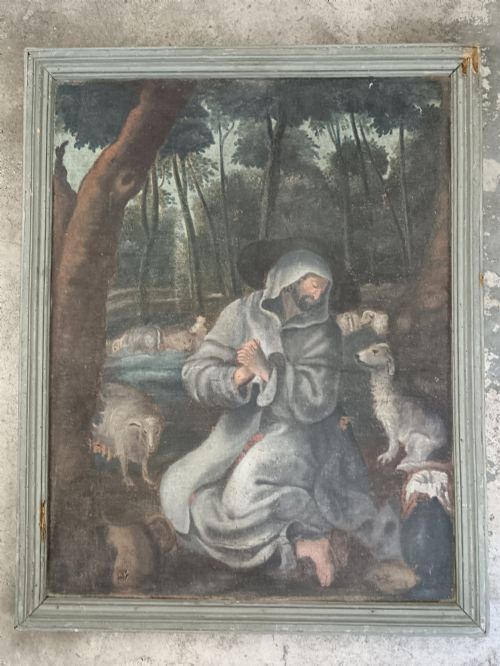
Religious narratives such as martyrdoms, lamentations, and depictions of saints appear frequently across these Italian schools. Portraits of philosophers, prophets, and noble figures also form a major part of the selection.
Additionally, you will find classical landscapes, marine seascapes depicting ports like Ostia, and still life compositions featuring animals.
How should I care for an old oil painting?
Keep the canvas away from direct sunlight, high humidity, and rapid temperature fluctuations that can cause the paint and wood to warp or crack. Dust the surface very gently with a dry, soft brush without applying pressure.
Avoid using water or chemical cleaners on the paint surface or the gilt frame. Consult a professional conservator if the canvas requires cleaning or structural repair.
What does attribution to a school mean?
Attribution to a specific school, such as the Roman or Genoese school, indicates that the painting was produced within that region during the stated period. It links the stylistic traits of the piece to the prevailing artistic methods of that local community.
Works described as being in the manner of or from the circle of a master suggest a close stylistic relationship to a known artist from that era.