



17th C Oak Chair
A 17th c oak chair offers solid timber construction and historic panelled backs, appealing to collectors seeking tangible seventeenth-century domestic history.
17th C Oak Chair
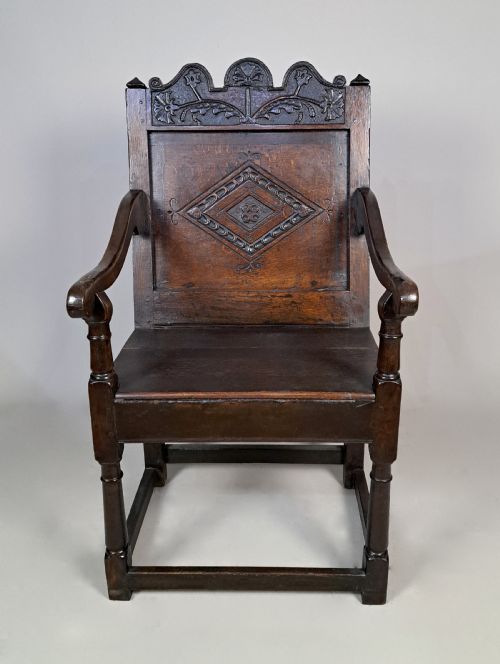
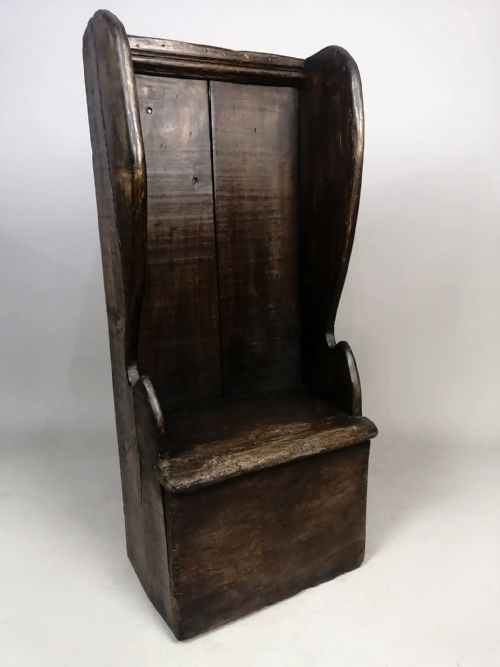
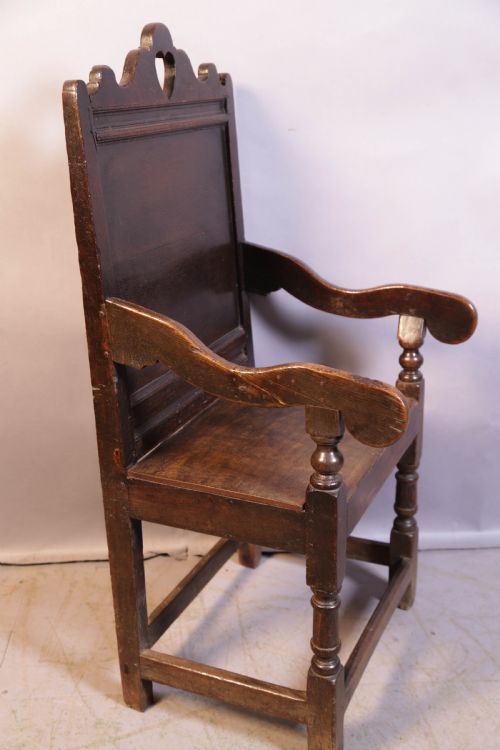
A 17th c oak chair encompasses robust joined furniture including wainscot armchairs, side chairs, back stools, and regional variants from Yorkshire, Lancashire, and Wales. Buyers encounter authentic period pieces alongside later revival interpretations produced during the nineteenth and early twentieth centuries.
Regional vernacular pieces dominate the selection, showing distinct carving patterns particular to northern counties or Welsh workshops. Both single seating items and matched dining sets appear across the inventory.
How they were made
Joinery methods rely heavily on mortise and tenon joints secured with wooden pegs rather than metal nails, providing structural rigidity to the solid oak framework. Secondary timbers such as elm or fruitwood occasionally appear alongside primary oak components.
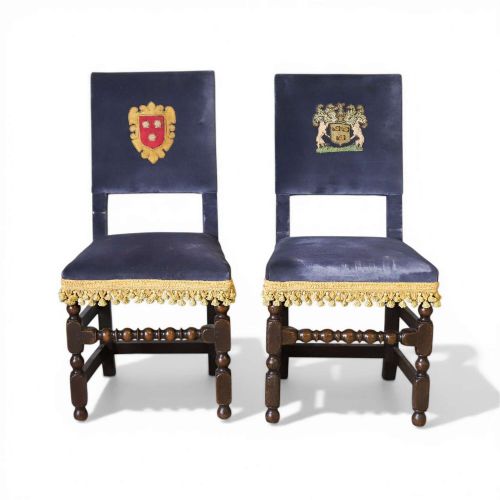
Surface decoration involves hand carving, chip carving, and panelling, sometimes complemented by applied mouldings or turned spindles. Upholstered variants incorporate leather, velvet, or textile fastened with brass tacks.
Listings feature oak, walnut, elm, and fruitwood seating alongside upholstery in leather, velvet, cane, and textile.
What varies in quality
Proportion and the crispness of surviving hand-carved details distinguish superior examples from plain utility seating. The integrity of the original joined frame and timber patination also dictate the standing of an individual piece.
Regional characteristics and documented provenance, such as identifiable heraldic crests or early ownership initials, elevate certain armchairs and side chairs above standard vernacular production.
The 17th C Oak Chair Glossary
- Wainscot chair
- A heavy wooden armchair constructed with panelled backs and solid wooden seats, typical of early domestic interiors. These pieces often feature carved top rails.
- Back stool
- An early form of side chair without arms, serving as a precursor to the modern dining chair. They share the joined construction of larger armchairs.
- Joined oak
- Furniture assembled using interlocking wood joints secured by pegs, replacing earlier boarded construction methods. This technique defines seventeenth-century cabinet making.
- Derbyshire chair
- A regional style of seventeenth-century chair characterised by open carved work along the back rails and turned supports. They originate from the East Midlands.
- Carolean
- Pertaining to the reign of King Charles II, marked by ornate carving, scrolls, and occasional use of cane panelling. Pieces from this era reflect Restoration tastes.
17th C Oak Chair: Frequently Asked Questions
How do I identify a genuine 17th century chair?
Examine the construction joints for hand-cut pegged mortise and tenons, alongside timber shrinkage and surface patination consistent with age. Tool marks left by pit saws and hand chisels provide further indicators of period authenticity.
Compare the carving styles and joinery against known regional exemplars from Lancashire, Yorkshire, or Wales. Revival pieces from later centuries often betray their origin through machine-cut elements or differing timber preparation.
How should I care for an antique oak chair?
Maintain stable indoor humidity levels and keep the timber away from direct heat sources or strong sunlight to prevent wood splitting. Dust gently with a dry cloth and apply occasional specialist beeswax to nourish the dry grain.
Avoid modern liquid polishes containing silicones, which can damage historic finishes. Check peg joints periodically to ensure structural stability remains sound.
Did common households use these chairs?
Early wainscot chairs were luxury items owned by prosperous merchants, landowners, or gentry, reflecting status within the home. Simpler joint stools and basic side seating served broader domestic functions.
Over subsequent decades, forms evolved and became more widely distributed across various social strata in rural and urban settings.