



17 Jewels Wristwatch
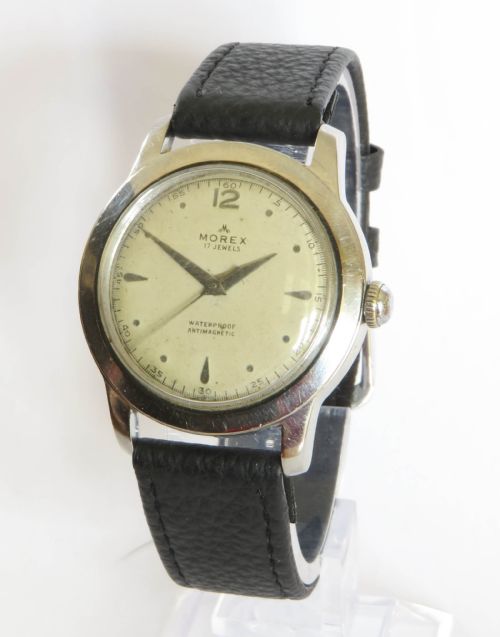
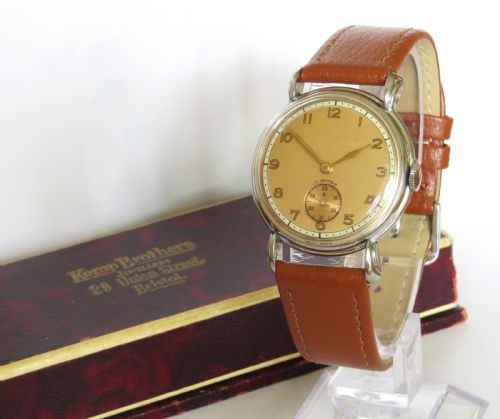
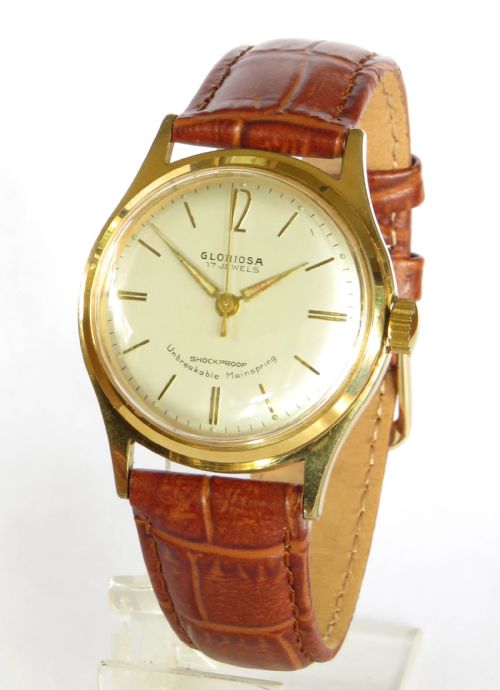
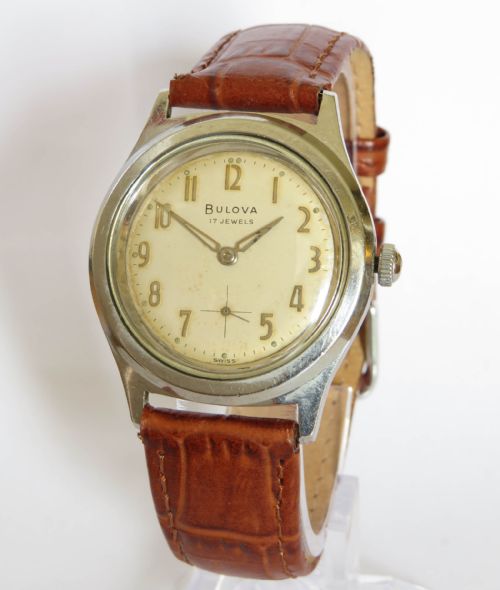
These 17 jewels wristwatch examples are mechanical timepieces driven by jewelled lever escapements, prized for their accuracy and mid-century design.
17 Jewels Wristwatch
A 17 jewels wristwatch represents a fully jewelled mechanical movement where synthetic rubies reduce friction on the pivots of the gear train. Buyers hunting for a 17 jewels wristwatch will encounter men's styles spanning the Art Deco era through the 1950s and 1960s.
The pieces appearing most frequently originate from the mid-century decades, covering straightforward dress watches alongside chronographs and calendar models. Formats range from classic round dials to square configurations typical of earlier decades.
Materials and Construction
Cases combine stainless steel, chrome, gold plated metal, and solid 9ct gold, paired with glass or acrylic crystals. Straps typically utilise leather to complete the traditional assembly of these watches.
Movements rely on manual wind mechanisms housed within metal chassis, incorporating ruby jewel bearings at high-friction points to ensure durability.
Listings feature movements spanning the 1930s to the 1960s, employing stainless steel, gold plate, and 9ct gold alongside leather straps.
Factors of Quality
Case materials distinguish the range, moving from plated metals and chrome up to solid 9ct gold constructions. Movement provenance also separates standard Swiss calibres from specialist British and Swiss branded signatures.
Dial complexity plays a role, with standard time-only faces positioned below multi-register chronographs, moonphase displays, and uncommon 24-hour layouts.
Montilier·Seiko Sportsman Diashock·Bulova·Smiths Deluxe·Belair·Invicta·Mappin·Smiths De Luxe·Longines Flagship·Miramar·Avia Olympic·Beltane·JW Benson London
The 17 Jewels Wristwatch Glossary
- Escapement
- The mechanism inside a watch that controls the release of power from the mainspring to the gear train. It gives the watch its characteristic ticking sound.
- Chronograph
- A watch equipped with a display function for measuring elapsed time independently of the time of day. These often feature subsidiary dials.
- Manual wind
- A timepiece requiring the wearer to turn the crown by hand to tension the mainspring. Unlike automatic variants, it contains no rotor weight.
- Acrylic
- A lightweight, shatter-resistant synthetic material utilised for watch crystals during the mid-century period. It can be polished to remove surface scuffs.
- Moonphase
- A complication on a dial that graphically depicts the current lunar phase. It tracks the cycle of the moon across the synodic month.
17 Jewels Wristwatch: Frequently Asked Questions
What does seventeen jewels mean?
Seventeen jewels indicates the minimum number of synthetic ruby bearings required to fully jewel a standard manual-wind mechanical watch movement.
These jewels minimise friction on the pivots of the gear train, extending the lifespan and improving the timekeeping accuracy of the movement.
How do I wind my watch?
Turn the crown clockwise between your thumb and forefinger until you feel gentle resistance, stopping immediately to avoid overwinding.
Most vintage manual-wind watches require daily winding to maintain a full power reserve and keep accurate time.
Are these watches waterproof?
Most vintage pieces from this era lack modern rubber gaskets and screw-down crowns, meaning they offer minimal resistance to moisture.
Exposing these watches to water, rain, or humidity can cause condensation inside the crystal and rust the internal steel components.
How do I date my watch?
Dating relies on comparing the case style, dial typography, and movement serial numbers against known manufacturer production ledgers.
Design markers such as square Art Deco cases point to the 1930s, whilst minimalist round dials often signal the 1950s or 1960s.