


A 2026 Guide by Sellingantiques
Welsh Oak Jacobean Chair-table, Circa 1620, 17th Century
Priced at £4,400 from WelshAntiques
Most early antique chairs were reserved for the head of a household. Others sat on benches or stools.
Regional patterns developed strongly across Britain over the centuries. A Windsor chair made in the Thames Valley looks different to one built by craftsmen in Yorkshire.
Matching sets replaced the earlier habit of pulling disparate seating around a table during the eighteenth century.
Turn the seat over. You will often see tool marks from the original adze work on country pieces.
Thomas Chippendale ran a London workshop from 1754 to 1779. His craftsmen supplied carved mahogany seating to major houses.
Gillows of Lancaster exported dining sets throughout the late eighteenth century. They frequently stamped their name onto the seat rail.
William Ince and John Mayhew partnered from 1759 to 1803. They produced intricate dining chairs with carved fretwork backs.
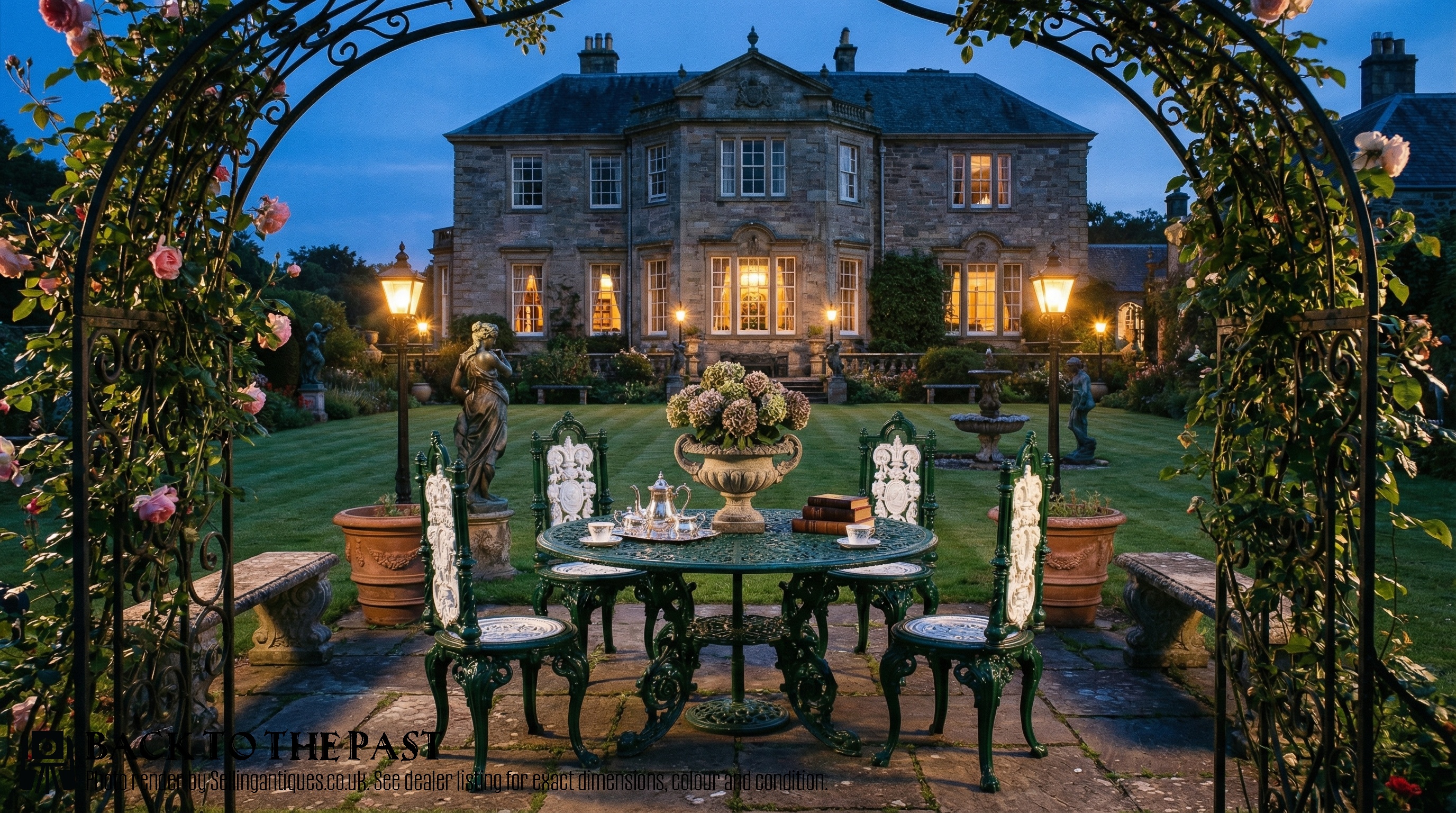
Set of Four Victorian Cast Iron Garden Chairs, Victorian
Priced at £950 from The Antique Furniture Company
The 2026 retail price guide for Antique Chairs is drawn from a proprietary archive of over 1.1 million retail prices indexed by Sellingantiques since 2003. This guide relies exclusively on their own internal data; no external sources or auction records are used.
Analysing nearly 25 years of UK antique market history alongside current retail values, the data indicates that typical UK retail prices for Antique Chairs range between £400 and £2,700. Entry-level prices generally fall under £400 and premium examples upwards of £2,700.
The backrest dictates the style. Splats and spindles define the profile of an antique chair.
Drop-in seats lift out easily for recovering. Fixed upholstery is tacked firmly over webbing on the seat rails.
Expect legs to range from simple turned posts to complex cabriole forms terminating in ball-and-claw feet.
Formal frames rely on mortise and tenon joints. The projecting peg slots into a matching hole and gets pinned with a dowel.
Windsor antique chairs rely on socket construction. Legs and spindles wedge firmly into holes drilled directly through a solid wooden seat.
Examine the cresting. Early carvers shaped elaborate crests from solid timber using gouges and mallets.
"Many regional designs provide excellent comfort. The deep scoop in a saddled elm seat supports the body well, spreading your weight evenly without the need for thick padding."
"Early upholsterers used horsehair to stuff the seats. It creates a firm cushion that holds its shape for decades."
"Upholstered backs helped keep draughts away from the sitter. High sides on wing chairs trapped the heat from an open fire."
Based on almost 25 years of Sellingantiques UK antique market data, Antique Chairs appeared 86633 times (out of 1,100,000 antiques) which gives it a rarity score of 1/100.
This score measures scarcity within the Sellingantiques archive only and is not a survey of the entire antiques market, so these statistics may not be indicative of the general availability of Antique Chairs elsewhere.
Loose joints need proper attention. You'll have to take the frame apart carefully. Knocking a few nails in will only split the old timber.
Clean the old animal glue out of the mortises first. Hot hide glue is the best thing to use when putting it back together.
A drop-in seat is a separate wooden frame covered in fabric. It rests on rebates cut into the main seat rails.
You push them out from underneath.
Chairs sometimes lose height for a few reasons. Feet rot on damp floors and owners trim them back to solid wood. Others were deliberately shortened to sit closer to the fire.
Children's chairs were usually built to scale from the start. A full-sized seat frame on short legs isn't normally a nursery piece.
Look at the proportions of the stretcher. If it sits too close to the floor, the legs have probably been cut down.
Recovering is standard practice. Very few chairs retain their first covering. Fabrics wear out long before the wooden frame fails.
Keep any original horsehair stuffing if you can. A good upholsterer will build it back up and stretch new fabric over the top. Modern foam alters the profile.
Please note: This Antique Chairs guide and its associated pricing data are provided for general informational purposes only. It does not constitute formal financial, investment, or appraisal advice and should not be relied upon as the sole basis for any commercial activity, purchasing, or sales decisions. Sellingantiques.co.uk accepts no liability for any actions taken in reliance on this information. Always consult with a qualified professional or independent appraiser.
