20,554  PAGES BROWSED TODAY PAGES TODAY 36  ANTIQUES UPLOADED TODAY NEW ARRIVALS
ID #SA678080
FOR SALE
£3,500
Email
Save
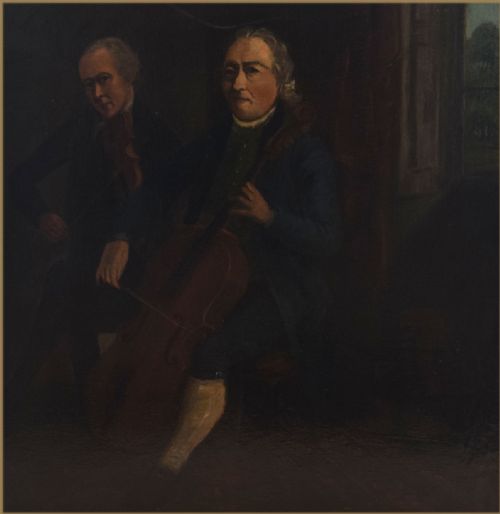
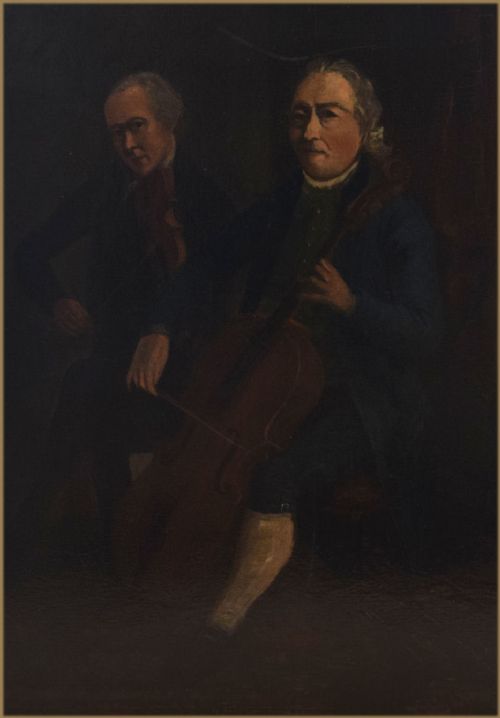
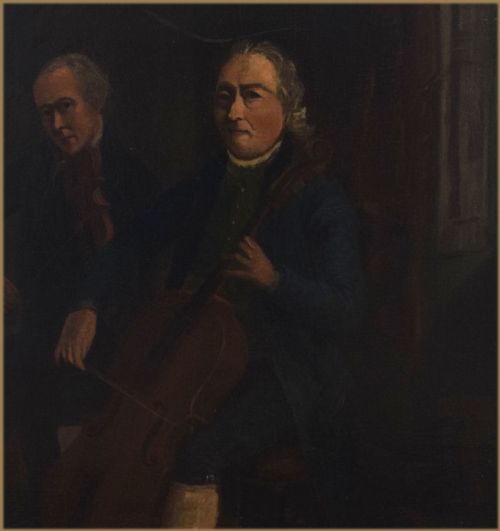
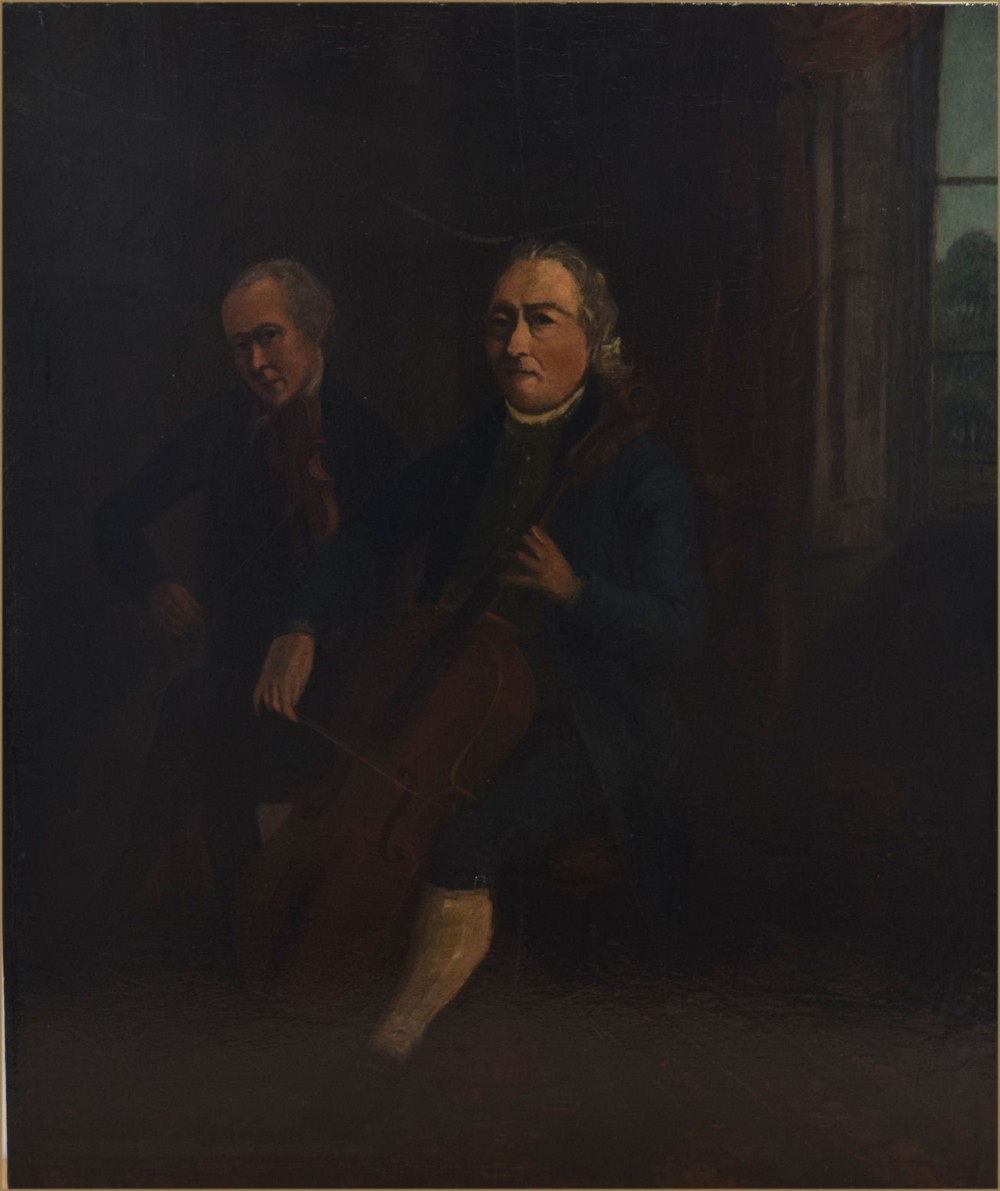
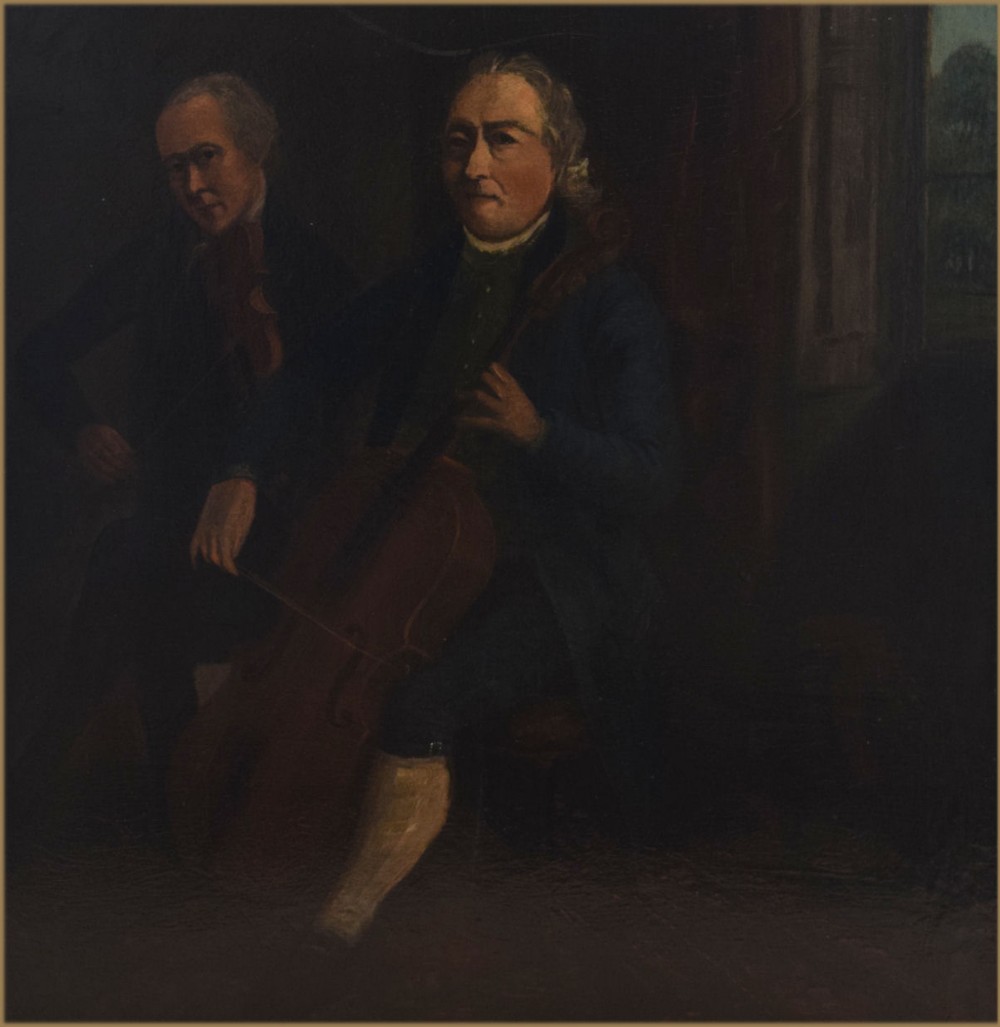
Circle of Francesco Renaldi ., 1755 - Circa 1799 A Portrait of Two Musicians Performing a Violin and Cello Duet in an Interior oil on Panel 58 X 50 Cm. (23 X 20 In.)
Artware Fineart
for sale €4,095     $4,445
£3,500

Artware Fineart

Sellingantiques Verified Since Sep 2008
View Dealers Stock Page
Id #SA678080
PDF SHARE
SAVE

Circle of Francesco Renaldi ., 1755 - Circa 1799 A Portrait of Two Musicians Performing a Violin and Cello Duet in an Interior oil on Panel 58 X 50 Cm. (23 X 20 In.)

18th century
For Sale by Artware Fineart
Description

Circle of Francesco Renaldi ., 1755 - circa 1799

A Portrait of Two Musicians performing a Violin and Cello duet in an Interior

oil on panel

58 x 50 cm. (23 x 20 in.)

Chamber music is a form of classical music that is composed for a small group of instruments—traditionally a group that could fit in a palace chamber or a large room. Most broadly, it includes any art music that is performed by a small number of performers, with one performer to a part (in contrast to orchestral music, in which each string part is played by a number of performers). However, by convention, it usually does not include solo instrument performances.
Because of its intimate nature, chamber music has been described as "the music of friends". For more than 100 years, chamber music was played primarily by amateur musicians in their homes, and even today, when chamber music performance has migrated from the home to the concert hall, many musicians, amateur and professional, still play chamber music for their own pleasure. Playing chamber music requires special skills, both musical and social, that differ from the skills required for playing solo or symphonic works.
Johann Wolfgang von Goethe described chamber music (specifically, string quartet music) as "four rational people conversing".This conversational paradigm – which refers to the way one instrument introduces a melody or motif and then other instruments subsequently "respond" with a similar motif – has been a thread woven through the history of chamber music composition from the end of the 18th century to the present. The analogy to conversation recurs in descriptions and analyses of chamber music compositions.
During the Baroque period, chamber music as a genre was not clearly defined. Often, works could be played on any variety of instruments, in orchestral or chamber ensembles. The Art of Fugue by Johann Sebastian Bach, for example, can be played on a keyboard instrument (harpsichord or organ) or by a string quartet or a string orchestra. The instrumentation of trio sonatas was also often flexibly specified; some of Handel's sonatas are scored for "German flute, Hoboy [oboe] or Violin" Bass lines could be played by violone, cello, theorbo, or bassoon, and sometimes three or four instruments would join in the bass line in unison. Sometimes composers mixed movements for chamber ensembles with orchestral movements. Telemann's 'Tafelmusik' (1733), for example, has five sets of movements for various combinations of instruments, ending with a full orchestral section.
J. S. Bach: Trio sonata on YouTube from The Musical Offering, played by Ensemble Brillante

Baroque chamber music was often contrapuntal; that is, each instrument played the same melodic materials at different times, creating a complex, interwoven fabric of sound. Because each instrument was playing essentially the same melodies, all the instruments were equal. In the trio sonata, there is often no ascendent or solo instrument, but all three instruments share equal importance.
Baroque musicians playing a trio sonata, 18th century anonymous painting

The harmonic role played by the keyboard or other chording instrument was subsidiary, and usually the keyboard part was not even written out; rather, the chordal structure of the piece was specified by numeric codes over the bass line, called figured bass.

In the second half of the 18th century, tastes began to change: many composers preferred a new, lighter Galant style, with "thinner texture, ... and clearly defined melody and bass" to the complexities of counterpoint. Now a new custom arose that gave birth to a new form of chamber music: the serenade. Patrons invited street musicians to play evening concerts below the balconies of their homes, their friends and their lovers. Patrons and musicians commissioned composers to write suitable suites of dances and

Physical Dimensions
Height
58cm (22.83")
Width
50cm (19.69")
Depth
1cm (0.39")
Declaration

Artware Fineart has dated this 18th Century Portrait Painting to the 18th Century.

Reference Numbers
Sellingantiques Reference
SA678080
Dealers Internal Reference
4145
Description
Circle of Francesco Renaldi ., 1755 - circa 1799

A Portrait of Two Musicians performing a Violin and Cello duet in an Interior

oil on panel

58 x 50 cm. (23 x 20 in.)

Chamber music is a form of classical music that is composed for a small group of instruments—traditionally a group that could fit in a palace chamber or a large room.
Artware Fineart

Most broadly, it includes any art music that is performed by a small number of performers, with one performer to a part (in contrast to orchestral music, in which each string part is played by a number of performers). However, by convention, it usually does not include solo instrument performances.

fig 1. An 18th-century oil painting on panel depicting two male musicians in period dress playing a cello and violin in a dimly lit interior.
fig 1. Circle of Francesco Renaldi ., 1755 - Circa 1799 A Portrait of Two Musicians Performing a Violin and Cello Duet in an Interior oil on Panel 58 X 50 Cm. (23 X 20 In.)

Because of its intimate nature, chamber music has been described as "the music of friends". For more than 100 years, chamber music was played primarily by amateur musicians in their homes, and even today, when chamber music performance has migrated from the home to the concert hall, many musicians, amateur and professional, still play chamber music for their own pleasure. Playing chamber music requires special skills, both musical and social, that differ from the skills required for playing solo or symphonic works.

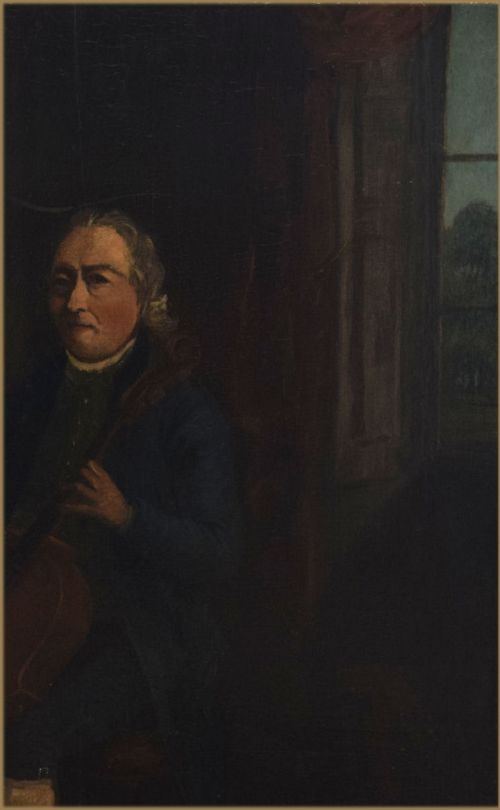
fig 2. An 18th-century oil painting on panel depicting two male musicians in period dress playing a cello and violin in a dimly lit interior.
fig 2. Circle of Francesco Renaldi ., 1755 - Circa 1799 A Portrait of Two Musicians Performing a Violin and Cello Duet in an Interior oil on Panel 58 X 50 Cm. (23 X 20 In.)

Johann Wolfgang von Goethe described chamber music (specifically, string quartet music) as "four rational people conversing".This conversational paradigm – which refers to the way one instrument introduces a melody or motif and then other instruments subsequently "respond" with a similar motif – has been a thread woven through the history of chamber music composition from the end of the 18th century to the present. The analogy to conversation recurs in descriptions and analyses of chamber music compositions.

fig 3. An 18th-century oil painting on panel depicting two male musicians in period dress playing a cello and violin in a dimly lit interior.
fig 3. Circle of Francesco Renaldi ., 1755 - Circa 1799 A Portrait of Two Musicians Performing a Violin and Cello Duet in an Interior oil on Panel 58 X 50 Cm. (23 X 20 In.)

During the Baroque period, chamber music as a genre was not clearly defined. Often, works could be played on any variety of instruments, in orchestral or chamber ensembles. The Art of Fugue by Johann Sebastian Bach, for example, can be played on a keyboard instrument (harpsichord or organ) or by a string quartet or a string orchestra. The instrumentation of trio sonatas was also often flexibly specified; some of Handel's sonatas are scored for "German flute, Hoboy [oboe] or Violin" Bass lines could be played by violone, cello, theorbo, or bassoon, and sometimes three or four instruments would join in the bass line in unison. Sometimes composers mixed movements for chamber ensembles with orchestral movements. Telemann's 'Tafelmusik' (1733), for example, has five sets of movements for various combinations of instruments, ending with a full orchestral section.

fig 4. An 18th-century oil painting on panel depicting two male musicians in period dress playing a cello and violin in a dimly lit interior.
fig 4. Circle of Francesco Renaldi ., 1755 - Circa 1799 A Portrait of Two Musicians Performing a Violin and Cello Duet in an Interior oil on Panel 58 X 50 Cm. (23 X 20 In.)

J. S. Bach: Trio sonata on YouTube from The Musical Offering, played by Ensemble Brillante

Baroque chamber music was often contrapuntal; that is, each instrument played the same melodic materials at different times, creating a complex, interwoven fabric of sound. Because each instrument was playing essentially the same melodies, all the instruments were equal. In the trio sonata, there is often no ascendent or solo instrument, but all three instruments share equal importance.

fig 5. An 18th-century oil painting on panel depicting two male musicians in period dress playing a cello and violin in a dimly lit interior.
fig 5. Circle of Francesco Renaldi ., 1755 - Circa 1799 A Portrait of Two Musicians Performing a Violin and Cello Duet in an Interior oil on Panel 58 X 50 Cm. (23 X 20 In.)

Baroque musicians playing a trio sonata, 18th century anonymous painting

The harmonic role played by the keyboard or other chording instrument was subsidiary, and usually the keyboard part was not even written out; rather, the chordal structure of the piece was specified by numeric codes over the bass line, called figured bass.

In the second half of the 18th century, tastes began to change: many composers preferred a new, lighter Galant style, with "thinner texture, ... and clearly defined melody and bass" to the complexities of counterpoint. Now a new custom arose that gave birth to a new form of chamber music: the serenade. Patrons invited street musicians to play evening concerts below the balconies of their homes, their friends and their lovers. Patrons and musicians commissioned composers to write suitable suites of dances and

Height
58cm (22.83")
Width
50cm (19.69")
Depth
1cm (0.39")
Date of Manufacture

Artware Fineart has dated this 18th Century Portrait Painting to the 18th Century.

Reference Numbers
Sellingantiques Ref
SA678080
Dealers Internal Ref
4145
Artware Fineart
Sellingantiques verified Since Sep 2008
Dealer Profile

You can view the stock and full dealer information on the Artware Fineart Profile Page
PDF SHARE
SAVE
An 18th-century oil painting on panel depicting two male musicians in period dress playing a cello and violin in a dimly lit interior.
1 / 6
Archive I An 18th-century oil painting on panel depicting two male musicians in period dress playing a cello and violin in a dimly lit interior.

Circle of Francesco Renaldi ., 1755 - Circa 1799 A Portrait of Two Musicians Performing a Violin and Cello Duet in an Interior oil on Panel 58 X 50 Cm. (23 X 20 In.)
Archive II An 18th-century oil painting on panel depicting two male musicians in period dress playing a cello and violin in a dimly lit interior. View II
Archive III An 18th-century oil painting on panel depicting two male musicians in period dress playing a cello and violin in a dimly lit interior. View III
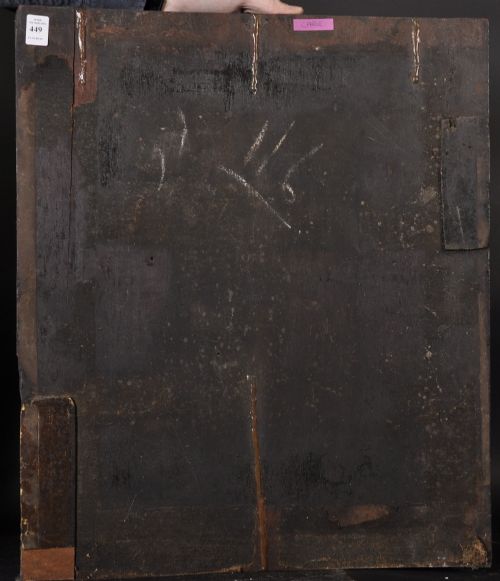
Archive IV An 18th-century oil painting on panel depicting two male musicians in period dress playing a cello and violin in a dimly lit interior. View IV
Archive V An 18th-century oil painting on panel depicting two male musicians in period dress playing a cello and violin in a dimly lit interior. View V
Archive VI An 18th-century oil painting on panel depicting two male musicians in period dress playing a cello and violin in a dimly lit interior. View VI
FURTHER BROWSING

Visitors also looked at these ⇣

Enlarged Archival View
Telephone 07958 699 645
Location
18 La Gare
51 Surrey Row
London
SE1 0BZ
United Kingdom
Verified Since Sep 2008
Items For Sale 243
Items Sold 223
Artware Fineart
Verified Since Sep 2008
View Dealer Info
Location: 18 La Gare , 51 Surrey Row , London , SE1 0BZ , United Kingdom
Verified
Sep 2008
For Sale
243
Sold
223
An 18th-century oil painting on panel depicting two male musicians in period dress playing a cello and violin in a dimly lit interior.
Circle of Francesco Renaldi ., 1755 - circa 1799 A Portrait of Two Musicians performing a Violin and Cello duet in an Interior oil on panel 58 x 50 cm. (23 x 20 in.)
Ref: SA678080
An 18th-century oil painting on panel depicting two male musicians in period dress playing a cello and violin in a dimly lit interior.
Detail View 1
Detail View 2
Detail View 3
Detail View 4
Detail View 5
Archival Detail
Every single antique dealer on our platform is individually approved by our internal team. We verify their professional trade history, ethical standards, and photographic quality to ensure a secure, high-standard buying environment. Upon joining, every dealer agrees to a strict 9-point code of conduct. While issues can occasionally arise, our dealers typically resolve them swiftly and directly with the buyer. In fact, since our founding in 2002, Sellingantiques has only had to step in to help resolve an issue on roughly five occasions—a true testament to the quality of our dealers and their dedication to your happiness.
Our dealers are highly experienced in packing and shipping fragile, high-value antiques. Because you are in direct contact with the dealer, you will be able to easily go through all available shipping and insurance options together to ensure your item arrives safely.
Antiques are the ultimate green purchase. By choosing historical pieces over newly manufactured goods, you completely eliminate the carbon footprint of modern mass production while preserving exceptional, timeless craftsmanship.

Georgian portraiture from the 18th century typically emphasizes intimate, realistic depictions of sitters, often incorporating interior settings, personal hobbies, musical instruments, and subtle domestic lighting.

Artists during this period commonly used seasoned hardwood panels, such as oak or mahogany, coated with a gesso priming layer before applying natural oil pigments mixed with drying oils.

Authentic works often display age-appropriate craquelure patterns, evidence of hand-milled pigments, historical joinery on wood panels, and natural oxidisation of varnish layers.

Place classic portraiture in a contemporary library, dining space, or hallway, paired with subtle picture lighting and dark painted walls to enhance the tonal depth of the artwork.

Maintain a stable indoor climate to prevent wood warping, keep the panel away from direct sunlight or heat sources, and employ a professional art conservator for cleaning and re-varnishing.
items
Add keywords to the filter
Price
£100
£250000
Era
Movements
Material
Origin
Stock Location
Freshness
Online Payments
Categories