

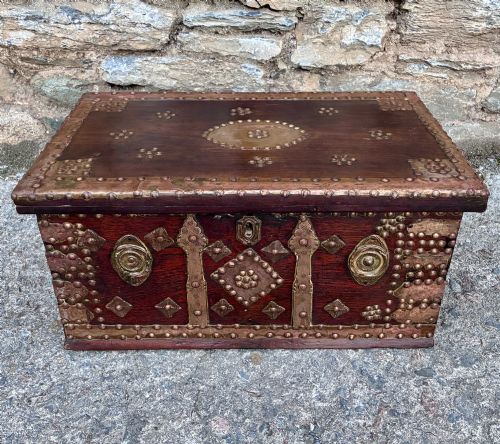
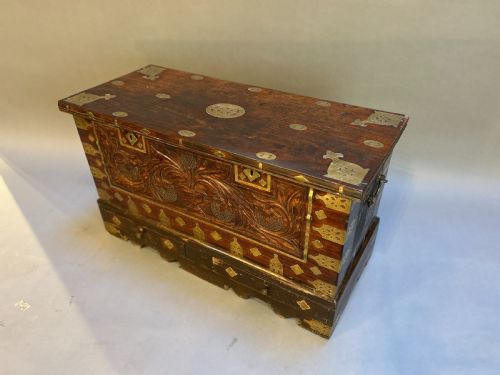
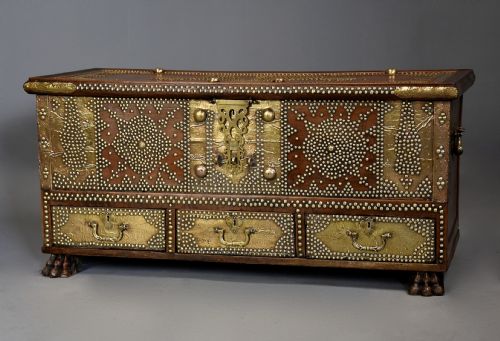
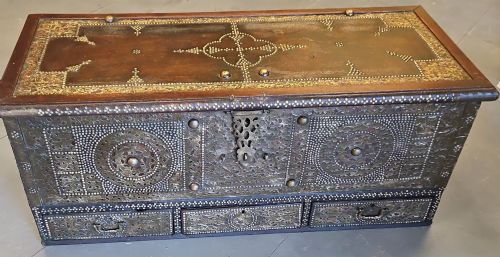


Zanzibar Storage Chest
These heavy hardwood zanzibar storage chest examples offer robust utility and traditional craftsmanship, designed to anchor a room with functional heritage.
Zanzibar Storage Chest
A zanzibar storage chest is a sturdy box designed for travel and domestic storage, often utilised by traders during the nineteenth century. These items emerge from Victorian and Anglo-Indian colonial contexts, displaying regional trade routes and global influences in their construction.
The versions most commonly met on this page include mid-Victorian and nineteenth-century examples fashioned from dense timbers like teak and padouk wood. They function equally well as blanket boxes, carriage trunks, and coffee tables in contemporary interiors.
How they were made
Maker construction relies on durable hardwoods such as teak and padouk, selected for their resilience against humidity and heavy handling. These timbers are joined to form heavy carcasses suited to long-distance transport.
Metalwork forms a defining characteristic, featuring heavy brass bindings, corner brackets, and intricate stud decoration hammered directly onto the wood. Copper elements also appear, adding structural reinforcement alongside decorative contrast.
Zanzibar Storage Chest Retail Price Guide 2026
Typical asking prices for zanzibar storage chest among the pieces listed under this phrase on Sellingantiques today, from the lower quarter to the upper quarter. They describe what is for sale here now, not the wider market.
Materials recorded across the inventory include hardwood, teak, padouk wood, brass, iron, and copper.
What varies in quality
Quality separates through the density and selection of the hardwood timber, alongside the intricacy of the brass studwork and corner plating. Elaborate decorative metal patterns indicate higher workmanship than plain structural banding.
Proportion and surface finish distinguish finer pieces, with well-preserved patination on the padouk or teak body elevating the visual presence of the trunk.
The Zanzibar Storage Chest Glossary
- Padouk
- A heavy tropical hardwood valued for its reddish-brown colour and durability in furniture manufacture. It provides a stable base for traditional nineteenth-century trunk construction.
- Brass stud
- A small decorative and structural metal fastening hammered onto chest surfaces in geometric patterns. These studs define the aesthetic of traditional trading trunks.
- Anglo-Indian
- A style describing objects manufactured in India under British influence during the colonial period. It combines local woodworking traditions with European form requirements.
- Coffer
- A large box traditionally used for holding valuables, textiles, or documents. It shares structural similarities with blanket boxes and storage trunks.
Zanzibar Storage Chest: Frequently Asked Questions
How were zanzibar chests originally used?
These chests served as durable luggage and secure containers for merchants travelling by sea and land during the nineteenth century. They protected valuable goods and personal textiles against harsh environmental conditions.
In domestic settings, they transitioned into stationary storage for blankets, linens, and household possessions while displaying the owner's worldly trade connections.
What woods are used in these chests?
Makers utilised dense tropical hardwoods such as teak and padouk wood to ensure structural longevity and resistance to wear. These materials provide a heavy, stable frame capable of withstanding rough transport.
Secondary timbers sometimes appear inside, but the main body relies on these durable species to support extensive metal hardware.
How do I date a zanzibar chest?
Dating relies on examining the construction methods, the style of the brass bindings, and the specific hardwood species utilised. Most examples date from the nineteenth century, particularly the Victorian era around eighteen-fifty.
Stylistic markers like Anglo-Indian colonial design elements help narrow the production period within the broader nineteenth-century timeframe.
Can I use a zanzibar chest as a coffee table?
Their flat lids and sturdy proportions make these chests suitable for placement in living spaces as alternative coffee tables. They offer interior storage space while functioning as a solid surface for everyday items.
Placing them in modern rooms allows the historical brass studwork and hardwood grain to act as a central visual feature.