



Zanzibar Chest Trunk
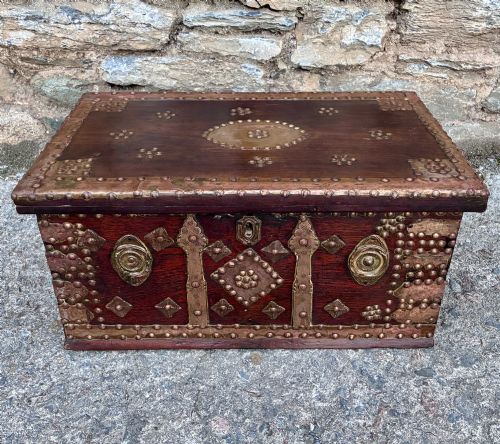
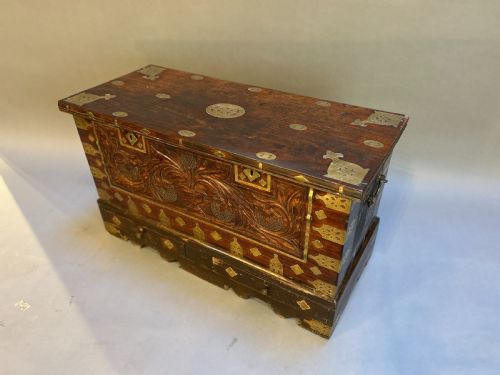
A zanzibar chest trunk combines heavy tropical timber and intricate brass work to serve as a striking, robust storage piece.
Zanzibar Chest Trunk
A zanzibar chest trunk is a substantial storage box designed for travel and domestic use, appearing in forms such as blanket boxes, storage chests, and coffee tables. Buyers seeking a zanzibar chest trunk encounter pieces spanning the nineteenth century and the Victorian era, including dated examples from 1890 and 1920. These objects function as practical storage containers while displaying distinct regional character through their construction and fittings.
The regional attribution encompasses Anglo-Indian, colonial, Middle Eastern, and specific Zanzibar styles. Pieces manifest as sturdy travel trunks or domestic coffers, sometimes featuring carved details and functional locks with keys. Most available examples date to the nineteenth century, reflecting global trade routes and the movement of goods across East Africa and beyond.
Materials and Construction
Makers construct these trunks using dense tropical hardwoods including teak, padouk, rosewood, and general hardwood. These heavy timbers provide the structural durability necessary for maritime transport and long-term domestic storage.
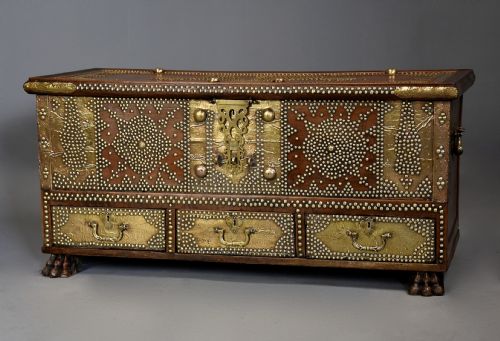
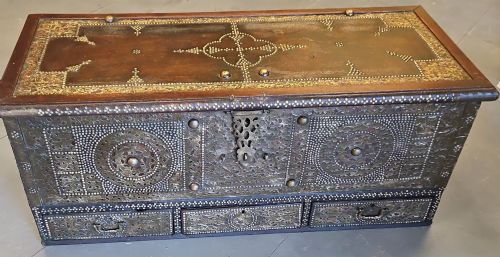
Metalwork forms an essential component of the manufacture, employing brass and iron for corner mounts, hinges, and decorative studwork. Artisans apply sheet brass and individual studs in geometric patterns to reinforce the wooden joins and protect the edges during travel.
Zanzibar Chest Trunk Retail Price Guide 2026
Typical asking prices for zanzibar chest trunk among the pieces listed under this phrase on Sellingantiques today, from the lower quarter to the upper quarter. They describe what is for sale here now, not the wider market.
Assessing Quality and Craftsmanship
The refinement of the brass inlay and the density of the stud decoration distinguish finer examples from standard utility boxes. Superior pieces incorporate intricate carving on the timber alongside extensive brass binding and specialised locking mechanisms.
The choice of primary wood also influences the grade of the piece, with richly grained padouk and rosewood commanding attention alongside traditional teak. The precision of the joinery and the survival of original keys contribute to the standing of any given trunk.
The Zanzibar Chest Trunk Glossary
- Zanzibar chest
- A heavy storage box originating from East Africa featuring brass studs and strapwork. These pieces served as travel trunks and domestic storage.
- Padouk
- A dense, durable tropical hardwood with a reddish hue used in fine cabinet making. This timber resists decay and provides a stable structure for heavy furniture.
- Mule chest
- A traditional storage chest featuring one or more drawers beneath the main compartment. It combines the functions of a trunk and a chest of drawers.
- Brass bound
- Furniture edged or reinforced with strips of brass to protect corners and structural joints. This technique adds both physical durability and visual contrast.
Zanzibar Chest Trunk: Frequently Asked Questions
What is a zanzibar chest trunk?
A zanzibar chest trunk is a nineteenth-century storage box built from tropical hardwoods like teak or padouk and decorated with brass studding and strapwork. These pieces originated through maritime trade and colonial networks.
They function today as decorative storage units, blanket boxes, or low coffee tables in contemporary interiors.
How do I care for my trunk?
Maintain the hardwood by applying appropriate wax or oil sparingly to keep the timber nourished without damaging the metal fittings. Avoid placing the chest near direct heat sources to prevent the wood from splitting.
Polish the brass components gently with a suitable cloth if you wish to reduce oxidation, though many collectors prefer a natural aged patina.
Are these trunks waterproof?
While constructed with thick tropical woods and metal reinforcement for maritime travel, these chests are not sealed against modern moisture conditions. They serve effectively for indoor storage of textiles and household items.
Keep them in stable room environments to protect both the hardwood structure and the internal contents from humidity fluctuations.
How old are these chests?
The available pieces date primarily from the nineteenth century and the Victorian period, with specific examples recorded around 1850, 1870, 1880, 1890, and up to 1920. Stylistic cues and materials help establish these broad chronological periods.
Carving styles, wood types, and brass work provide indicators of the manufacturing era without requiring precise maker signatures.