


Yorkshire Coastal Watercolour Painting
These works capture maritime life and dramatic northern shores through pigment on paper.
Yorkshire Coastal Watercolour Painting
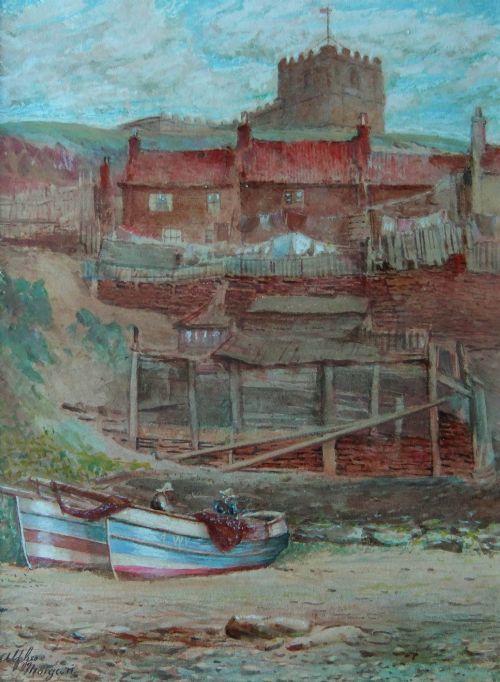
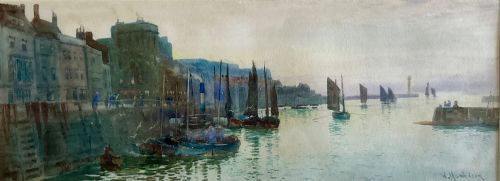
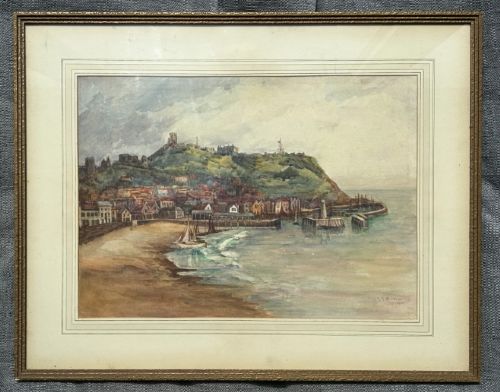
A yorkshire coastal watercolour painting records scenes from historic fishing ports and sandy bays, focusing frequently on Whitby, Scarborough, Staithes, and Runswick Bay. The works span the nineteenth and twentieth centuries, capturing busy harbours, cliffside abbeys, and local vessels such as cobles.
Buyers encounter depictions of townscapes, market places, and open seascapes rendered during the Victorian, Edwardian, and mid-century periods. These pictures reflect distinct regional traditions associated with local artists recording the changing light of the North Sea coast.
The available selection relies heavily on paper supports finished with watercolour pigments, framed behind glass with protective wooden surrounds. Subjects range from tight topographical views of narrow streets to expansive marine perspectives of choppy waters and returning fishing boats.
Materials and Technique
Artists painted these coastal views using water-soluble pigments applied directly onto heavy paper supports, often building up translucent washes alongside denser opaque touches of bodycolour to describe highlights on sea spray and building facades.
Framing typically involves traditional wooden mouldings enclosing plain glass sheets that protect the delicate paper surfaces from atmospheric moisture and handling damage.
Several pictures record bustling Victorian fishwives gossiping loudly on the coble landings.
Assessing Quality
Quality rests upon the artist's handling of light and atmosphere, distinguishing rapid topographical records from carefully composed observations of harbour life and coastal weather.
The preservation of the paper support and the vibrancy of the original pigment heavily influence the overall standard, as prolonged exposure to direct sunlight can fade delicate blues and greens.
Alfred G. Morgan·William Matthison·Arthur Tucker·Robert Leslie Howey·Tom Clough·James Watson·George Hamilton Constantine·James Thomas Watts·Frederick William Booty·Kate E Booth·Frederick Williamson·Alfred Robert Quinton·William Kay Blacklock·Rowland Henry Hill·Harry Wanless·Joseph Newington Carter·William Moore Junior·Walter Emsley·Frank Rousse·John J. Hamer·Edwin Bagshaw·A.G.Stevens·Fred Stead·Fred Lawson
The Yorkshire Coastal Watercolour Painting Glossary
- Coble
- A traditional type of open fishing boat native to the north-east coast of England, featuring a flat bottom and high bow designed for launching from surf beaches.
- Bodycolour
- Watercolour paint mixed with a white pigment to make it opaque, allowing artists to add solid highlights and pale details over transparent washes.
- Seascape
- A work of art depicting the sea, coastal cliffs, shipping, and marine weather conditions.
Yorkshire Coastal Watercolour Painting: Frequently Asked Questions
What subjects appear most often?
Harbours, fishing fleets, and historic abbey ruins dominate the imagery, particularly around Whitby and Scarborough.
Artists frequently recorded local workers hauling in nets, gathering seaweed, or launching boats from sandy northern bays.
How should these works be framed?
Traditional wooden frames fitted with glass protect the paper from dust and moisture.
Conservation mounting using acid-free materials ensures the fragile paper remains stable over decades.
How do I identify the period?
Stylistic shifts and artist signatures offer primary clues, moving from Victorian realism towards early twentieth-century British impressionism.
Framing styles and old inscriptions on the reverse of the paper frequently supply further historical context.
Where were these artists active?
Many painters based themselves in the distinct fishing communities of the Yorkshire coast, notably Staithes and Runswick Bay.
Colonies of artists gathered along these shores to study maritime activity and changing light conditions.