



Yew Wood Commode
A yew wood commode brings deeply figured timber and rich golden warmth into a room, offering both practical storage and striking eighteenth-century presence.
Yew Wood Commode
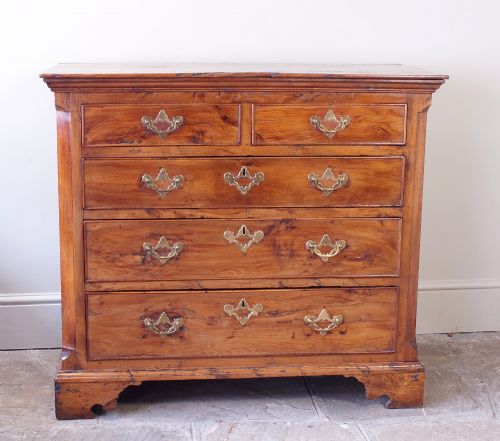
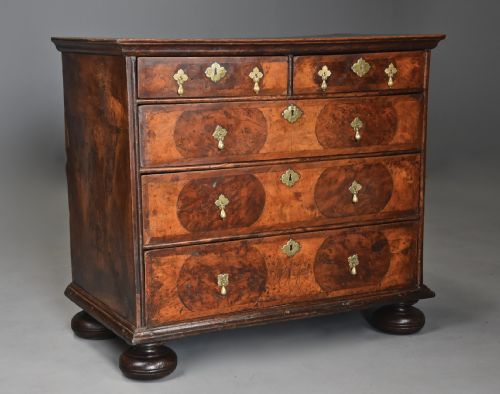
A yew wood commode or chest of drawers represents some of the most richly figured case furniture produced in Britain. When you search for a yew wood commode, you encounter substantial Georgian statement pieces alongside smaller chests and miniatures.
The selections on this page span several centuries, reaching back to the seventeenth century and extending through the Georgian era into later revival periods. Alongside formal commodes, the listings include chests of drawers and miniature apprentice pieces utilising burr yew, walnut, and elm.
How they were made
Cabinetmakers constructed these pieces using solid timber foundations overlaid with decorative wood veneer and burr yew sections. Craftsmen enhanced the natural grain patterns through careful wood inlay techniques.
Fine brass hardware such as drop handles and escutcheons complemented the figured timber surfaces. Structural elements frequently incorporated secondary woods like maple, walnut, or elm to support the primary yew exteriors.
Yew Wood Commode Retail Price Guide 2026
Typical asking prices for yew wood commode among the pieces listed under this phrase on Sellingantiques today, from the lower quarter to the upper quarter. They describe what is for sale here now, not the wider market.
Listings feature pieces spanning the seventeenth century, the Georgian era, and the twentieth century, constructed from yew, burr elm, and walnut.
What varies in quality
Quality rests upon the selection and matching of the burr timber across the drawer fronts and top surface. Exceptional examples display wild, unbroken grain patterns that catch the light.
The crispness of the cabinetmaking and the survival of an aged, warm patina dictate the standing of a piece. Finer items retain their original brass mounts and tight drawer construction.
The Yew Wood Commode Glossary
- Burr yew
- The gnarled growth on a yew tree that yields swirling, highly decorative grain patterns when sliced into veneer. Cabinetmakers prized this material for drawer fronts.
- Commode
- A decorative low chest of drawers or cabinet originating in France and adopted by British makers during the Georgian period. These pieces often featured serpentine or demi-lune shapes.
- Patina
- The deep surface sheen and mellow colour developed by aged wood through decades of handling and waxing. A rich patina signals authenticity and gentle care.
- Inlay
- The technique of fitting contrasting strips of wood into a recessed surface to form geometric patterns or borders. This ornamentation defines many eighteenth-century case pieces.
Yew Wood Commode: Frequently Asked Questions
What is a yew wood commode?
A yew wood commode is a low storage chest or cabinet surfaced with figured yew timber. Makers utilised the distinct golden-brown grain to create decorative furniture for principal rooms.
These pieces function as focal points in traditional and modern interiors alike. They provide surface display space alongside deep drawer storage.
How do I date a yew chest?
Dating relies on examining construction methods, timber choices, and hardware styles across the piece. Seventeenth-century examples often display oyster veneers and geometric mouldings, while Georgian commodes favour serpentine shapes and delicate bracket feet.
Later revival pieces from the twentieth century reproduce these earlier silhouettes using period-appropriate joinery techniques. Comparing the secondary woods inside the drawers helps clarify the period.
Where were yew commodes placed?
These decorative cabinets stood in principal bedchambers, withdrawing rooms, and parlours where guests could admire the figured wood. Their compact scale allowed them to fit between windows or against panelled walls.
Today, they suit similar spaces as hall chests or bedside storage. Their warm tones complement both antique and contemporary surroundings.
How do I care for yew wood?
Maintenance requires regular dusting with a soft, dry cloth and occasional applications of traditional beeswax to nourish the timber. Avoiding direct sunlight and sudden temperature shifts prevents the veneer from drying out.
Proper humidity levels protect the ancient glue and wood joints. Gentle polishing preserves the natural lustre of the surface.