

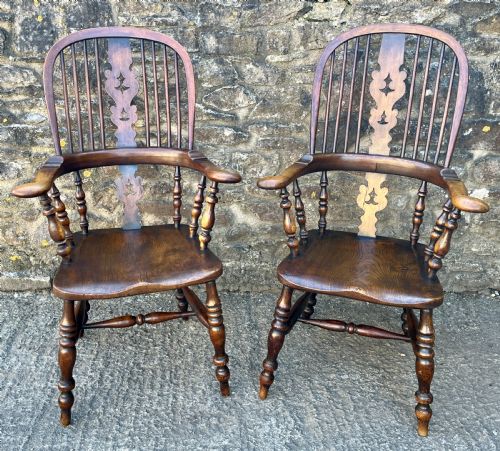


Yew Armchair Pair
A yew armchair pair brings the warmth of English country seating into a room, offering sturdy wooden comfort forged through centuries of rural craftsmanship.
Yew Armchair Pair
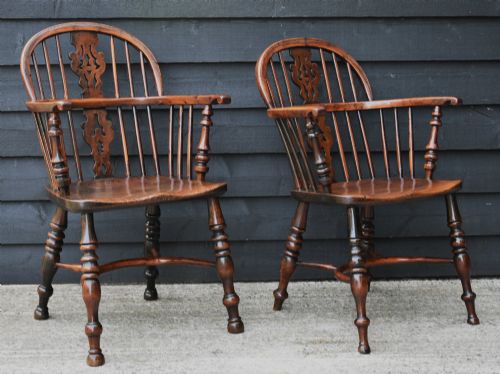
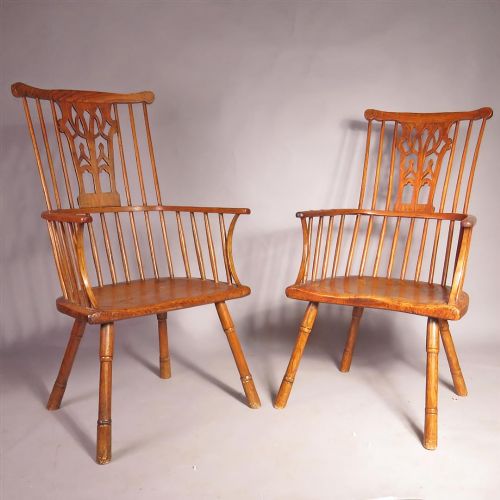
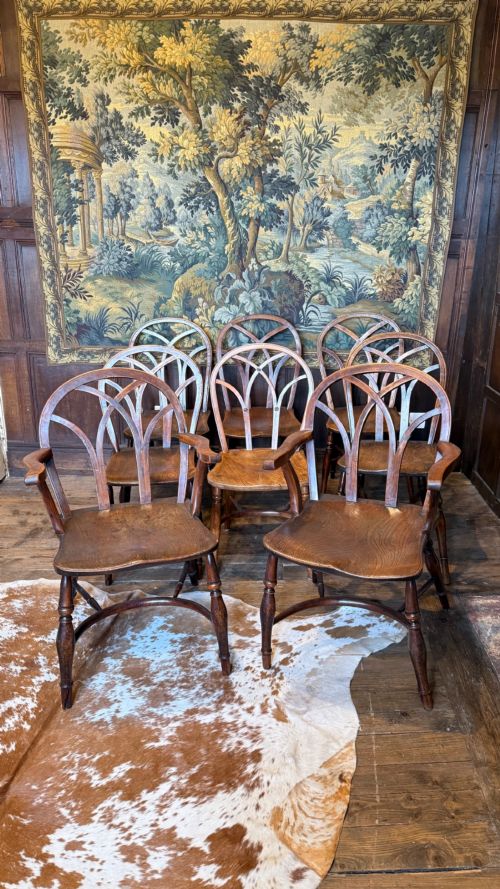
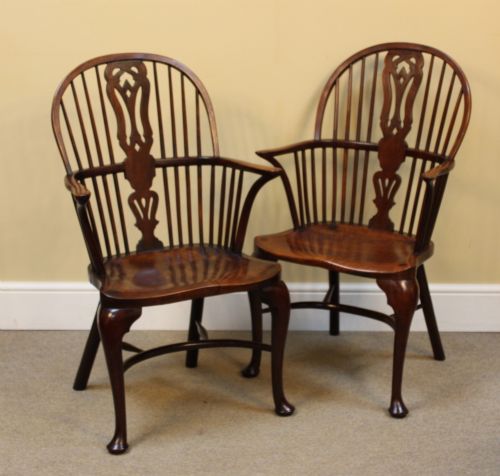
A yew armchair pair consists of two matching seats designed for domestic use, most frequently encountered here as traditional Windsor armchairs. These pieces emerge primarily from the eighteenth and nineteenth centuries, spanning Georgian and Victorian eras of English country furniture.
The selections span various regional configurations including comb back, high back, low wheel back, and broad arm designs. Elm and yew woods feature prominently across these forms, alongside occasional examples in beech, oak, and ash.
Materials and construction methods
The construction relies on a combination of native British timbers, joining yew seats with elm, beech, oak, or ash components. Yew wood provides distinct figuring and depth, while elm offers strength for shaped solid seats.
Joinery traditions employ turned spindles, steam-bent bows, and sturdy legs wedged directly into thick wooden seats. These techniques create resilient frames built to withstand decades of daily use.
Yew Armchair Pair Retail Price Guide 2026
Typical asking prices for yew armchair pair among the pieces listed under this phrase on Sellingantiques today, from the lower quarter to the upper quarter. They describe what is for sale here now, not the wider market.
Periods represented span from Georgian and 18th century through to Victorian and 1920.
Distinguishing quality in pairs
Quality separates pairs through the richness of the timber grain, particularly the presence of burr yew, and the depth of natural patina acquired over generations. Matched sets display consistent turning detail on spindles and legs, reflecting the skill of the original maker.
Proportion and comfort elevate certain examples, where balanced arm designs and well-formed comb or high backs demonstrate superior regional craftsmanship.
Nottinghamshire·Thames Valley
The Yew Armchair Pair Glossary
- Windsor chair
- A wooden chair built with a heavy solid seat into which the legs and back spindles are direct-tenoned. This form dominates country seating traditions.
- Comb back
- A Windsor chair design where the top rail resembles the spine of a traditional hair comb, holding vertical spindles.
- Wheel back
- A chair back featuring an openwork splat carved in the shape of a spoked wagon wheel.
- Broad arm
- A chair featuring wide, flat wooden armrests that flare outward for additional comfort and utility.
- Burr yew
- A growth deformity in yew trees yielding dense, highly swirled grain patterns prized by furniture makers.
Yew Armchair Pair: Frequently Asked Questions
Are these chairs comfortable for daily use?
The solid sculpted elm seats and supportive spindle backs provide surprising physical comfort for modern seating. Many owners place them around dining tables or use them as fireside armchairs.
Their robust timber construction ensures they easily handle regular domestic life without losing stability or charm.
How do I tell an 18th-century pair from a Victorian pair?
Eighteenth-century examples often exhibit deeper patina, slimmer turned components, and earlier regional bracing styles. Victorian versions tend to show heavier proportions and occasionally incorporate Gothic Revival motifs.
Examining the tool marks underneath the seat reveals clues regarding the period of hand-tool manufacture.
Why are yew wood chairs matched in pairs?
Country makers frequently produced seating in matched sets or pairs to furnish rural parlours and dining spaces uniformly. Finding a true pair today means the two chairs share identical timber turning, scale, and age.
Matching pairs hold greater decorative utility in modern rooms than single isolated chairs.
What is the difference between high back and low back models?
High back variants offer elevated support for the head and shoulders, often featuring architectural spindle arrangements. Low back models maintain a lower profile that keeps sightlines open across a room.
Both forms utilise the same underlying Windsor construction principles.