
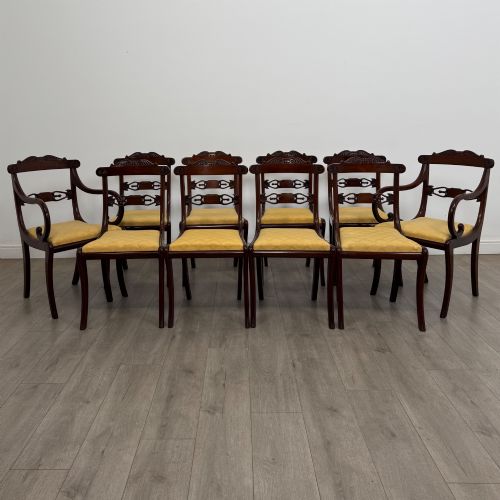
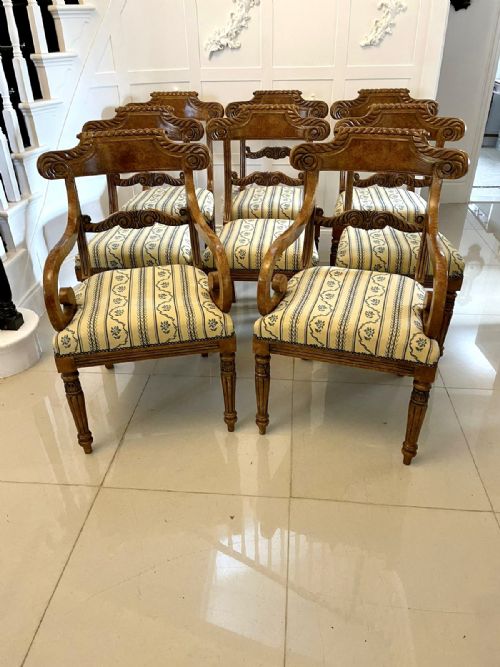
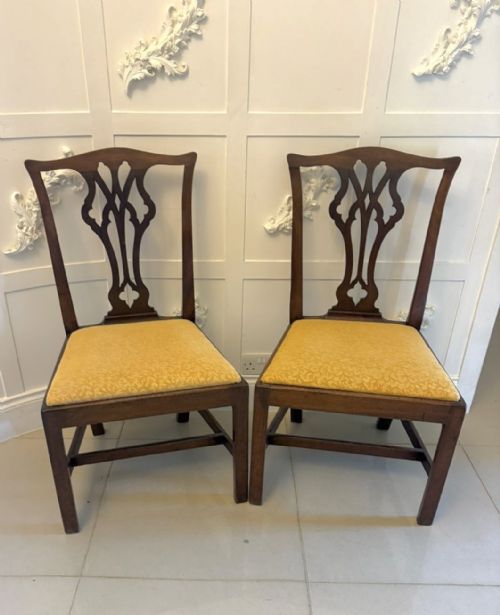


Yellow Seat Dining Chairs
Yellow seat dining chairs bring warmth and colour to a room, uniting functional wooden seating with vibrant upholstered pads from various historical periods.
Yellow Seat Dining Chairs
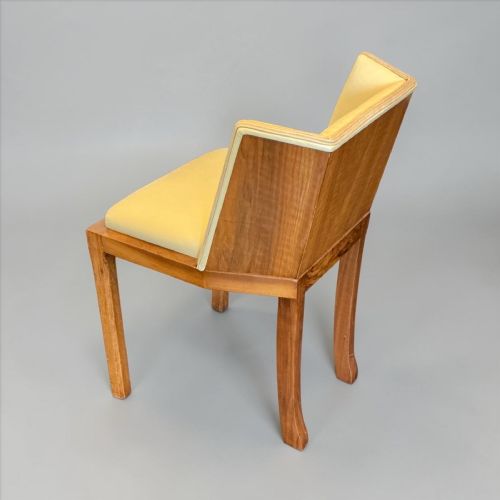
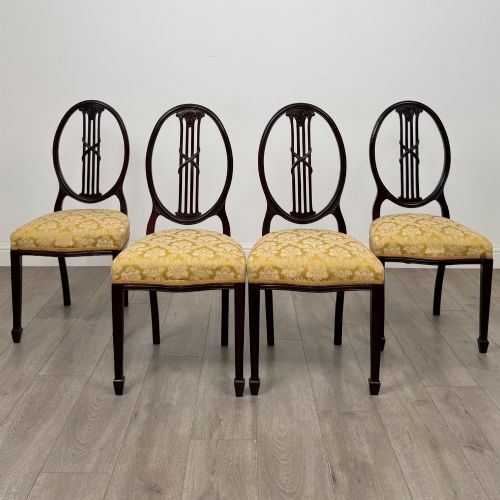
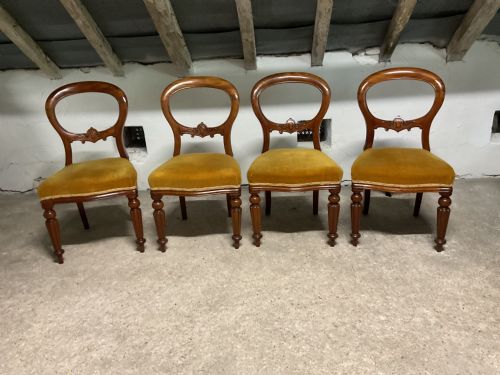
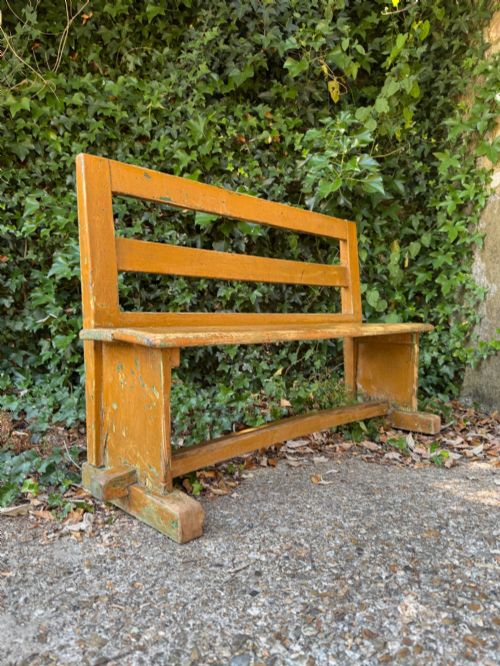
Yellow seat dining chairs comprise a variety of antique wooden forms designed for the dining table, ranging from single side chairs to extensive sets. When searching for yellow seat dining chairs, buyers encounter pieces spanning Georgian, Regency, Victorian, and later revival styles. The selection includes mahogany balloon backs, rosewood frames, and oak farmhouse designs alongside painted bamboo and walnut armchairs.
Most examples originate from the nineteenth and early twentieth centuries, reflecting the craftsmanship of eras when dining furniture was built from dense hardwoods. Sets vary in size from small pairs to groups of ten, often featuring upholstered pads that introduce bright colour to traditional frames. Side chairs and armchairs dominate the selection, providing practical seating options for period and eclectic interiors.
How they were made
Makers utilised solid timbers such as mahogany, walnut, rosewood, and oak to construct the structural frames of these seats. Joinery techniques relied on traditional mortise and tenon joints to ensure stability across frequent daily use. Wood was often carved, ebonised, or painted, with some pieces incorporating string inlay or brass detailing.
Upholstered seat pads were integrated into the frames using traditional stuffing materials and covered in textiles like fabric and velvet. Needlepoint and other durable coverings were secured over the padding, providing the characteristic cushioned surface that defines these seats.
Solid brass chairs offer an unexpectedly heavy and gleaming alternative to traditional timber seating.
What varies in quality
The degree of refinement in the woodwork distinguishes finer examples from standard production pieces. Crisp carving on the mahogany or walnut frames, balanced proportions, and the selection of dense, richly grained timber indicate higher workshop standards. Consistency across a large set of chairs requires precise execution by the cabinet maker.
The integrity of the frame construction and the preservation of original timber surfaces determine the lasting character of the piece. Subtle details such as fine brass inlay, well-turned legs, and carefully shaped splats separate superior seating from simpler utilitarian versions.
Blyth and Sons·James Shoolbred
The Yellow Seat Dining Chairs Glossary
- Balloon back
- A rounded, oval-shaped wooden backrest popular during the Victorian period. This design curves outwards to provide comfortable support.
- Carver armchair
- A dining armchair designed with arms, traditionally placed at the head of the table. These pieces match the style of the smaller side chairs in a set.
- Regency
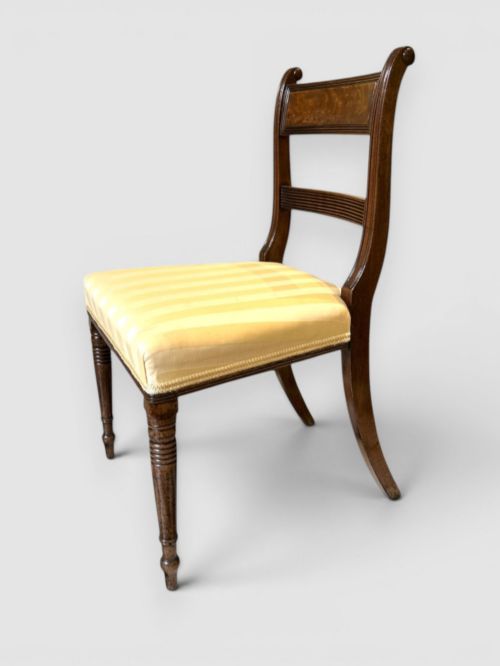
- A stylistic period spanning the early nineteenth century influenced by classical Greek and Roman forms. Furniture from this era often incorporates saber legs and brass inlay.
- Ball and claw
- A furniture foot carved to resemble a bird's talon gripping a ball. This motif appears frequently on walnut and mahogany seating from earlier periods.
Yellow Seat Dining Chairs: Frequently Asked Questions
How do I care for antique wooden chairs?
Keep wooden frames away from direct heat sources and sudden humidity changes to prevent the timber from splitting. Apply appropriate furniture wax sparingly to nourish the polished surface.
Avoid using harsh chemical cleaners on the wood or the upholstered pads. Regular dusting with a soft cloth helps maintain the finish over time.
Can I mix different styles around a table?
Mixing different chair styles creates an eclectic dining arrangement that reflects individual taste. Matching wood tones helps tie disparate pieces together visually.
Ensure seat heights remain compatible to maintain comfort for diners around the table.
What defines a Regency dining chair?
Regency dining chairs typically feature clean architectural lines influenced by classical antiquity. Common elements include saber legs, reeded frames, and brass or ebonised accents.
These chairs often utilise mahogany or simulated rosewood finishes, reflecting the aesthetic preferences of the early nineteenth century.
How many chairs come in a typical set?
Antique dining chair sets appear in various quantities, most commonly in groups of four, six, or eight. Larger sets of ten or twelve are less common and usually command significant interest.
Pairs of side chairs are also frequent, serving as bedroom or hall seating alongside dining use.