


Yellow Gold Target Ring
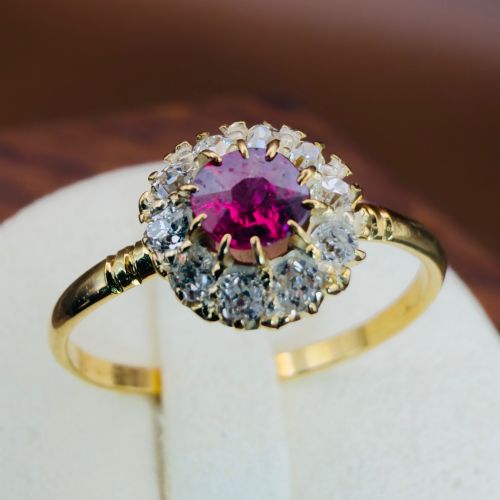
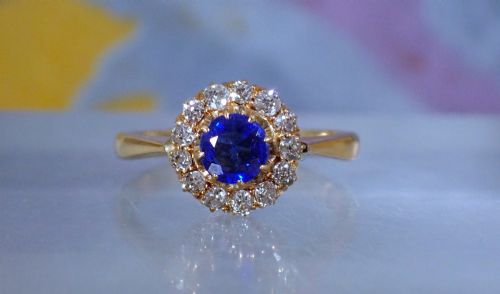
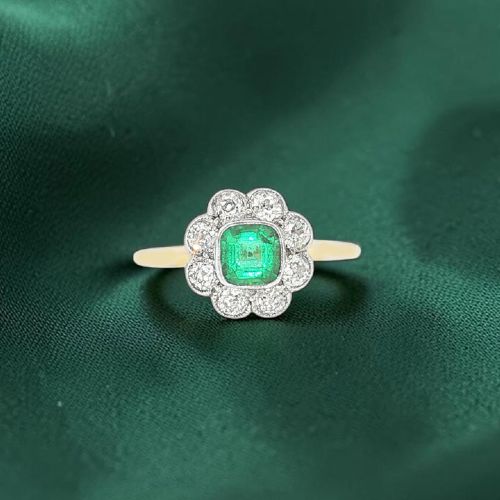
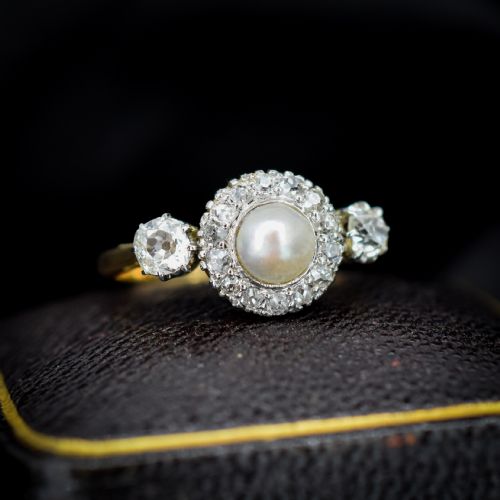
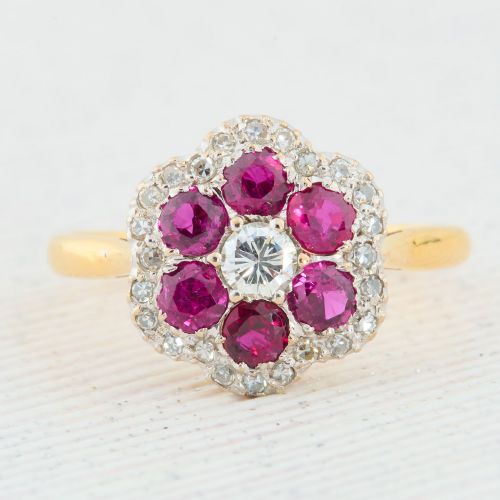
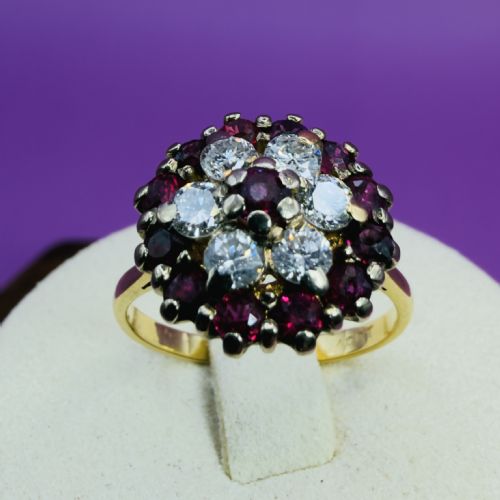
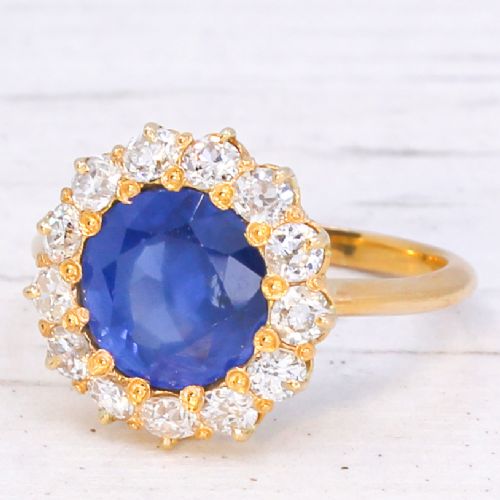
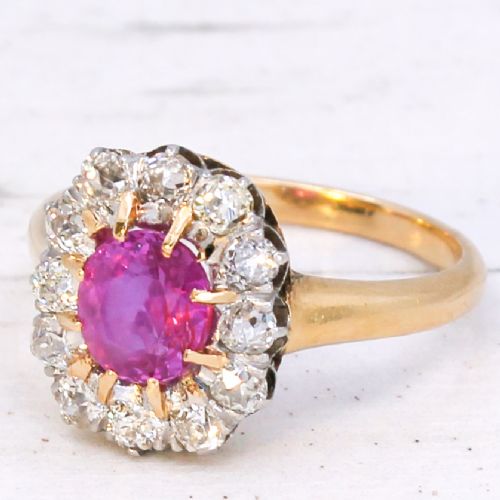
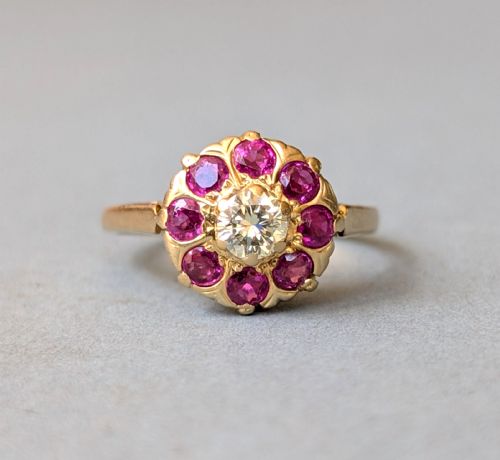
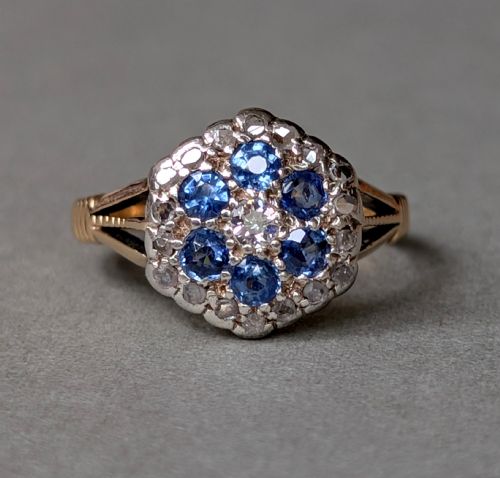
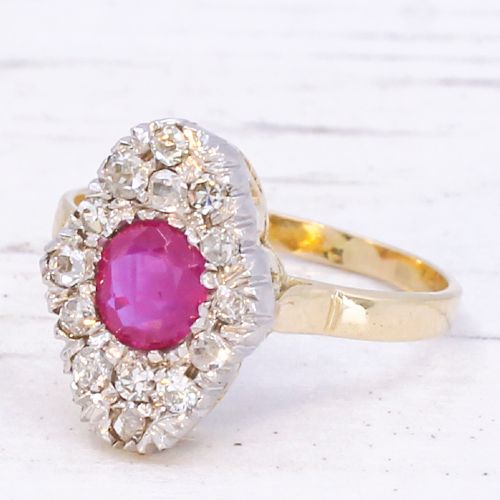
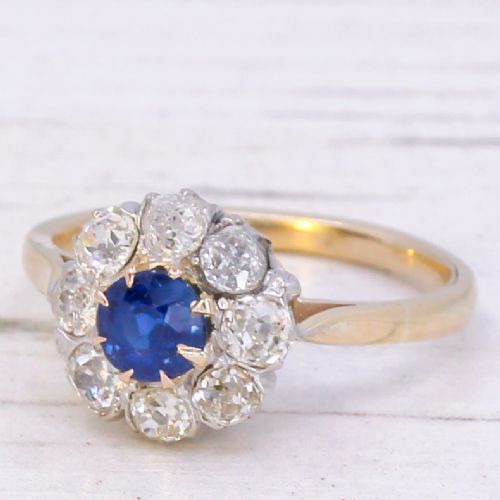
A yellow gold target ring brings concentric circles of gemstones together around a central diamond or sapphire, creating a bold face upon the finger.
Yellow Gold Target Ring
A yellow gold target ring organises gemstones in distinct geometric rings, often placing a central stone within contrasting borders of smaller gems. The pieces found here span the Victorian, Edwardian, and Art Deco periods, extending into mid-century vintage designs.
Most examples combine a warm yellow gold band with white precious metals around the stone setting to enhance the brilliance of diamonds and sapphires. Configurations range from simple daisy clusters to complex double halo arrangements incorporating rubies, emeralds, pearls, and turquoise.
How they were made
Goldsmiths worked primarily in 18ct yellow gold for the shanks, combining the metal with platinum or white gold settings on the ring face to frame diamonds and sapphires cleanly. This dual-metal construction kept the warm tone of traditional gold against the skin while providing a bright, neutral backdrop for stones.
Stones were secured using grain, bezel, or claw settings tailored to old cut diamonds and calibre-cut gems. The concentric tiers demanded precise stone-matching for size, colour, and cut to maintain the geometric harmony required by the style.
Materials appearing across the current selection include 18ct yellow gold, platinum, diamonds, sapphires, rubies, and pearls.
What varies in quality
The precision of the concentric tiers and the symmetry of the stone arrangement dictate the visual impact of the piece. Master jewellers ensured that every border maintained uniform spacing and that the height of the tiers created a balanced profile.
The quality of the central gemstone and the condition of the original settings heavily influence the character of each piece. Untreated stones with strong natural colour and well-preserved antique cuts represent the finer end of surviving examples.
The Yellow Gold Target Ring Glossary
- Target ring
- A ring style featuring concentric circles of contrasting gemstones radiating from a central stone. This geometric layout defined much of the jewellery design during the Art Deco period.
- Old cut
- A diamond facet arrangement hand-cut before modern machine precision methods became standard. These stones typically exhibit smaller tables and higher crowns, giving a softer light under candlelight.
- Cluster ring
- A central gemstone surrounded by a border of smaller stones. The configuration maximises overall visual presence on the hand.
- Daisy cluster
- A specific cluster arrangement where rounded petal-like stones encircle a central gem, resembling a flower head. This motif is particularly common in Edwardian pieces.
Yellow Gold Target Ring: Frequently Asked Questions
How do I care for a target ring?
Clean your ring gently with warm soapy water and a soft brush, avoiding harsh ultrasonic cleaners that can loosen antique settings or harm organic gems like pearls.
Store the piece separately in a fabric-lined box to prevent harder diamonds from scratching softer yellow gold bands or surrounding rubies and emeralds.
Are these rings suitable for daily wear?
These antique and vintage pieces tolerate daily wear if treated with care, though delicate configurations featuring pearls or turquoise require extra attention.
Removing the ring during heavy manual tasks protects the intricate multi-tiered metalwork and prevents the claws from catching or wearing down.
How do I determine the period?
Examining the metal combinations, stone cuts, and overall geometry provides clear clues to the era of manufacture. Edwardian examples often utilise delicate platinum-topped yellow gold with floral motifs, while Art Deco pieces favour sharp concentric symmetry.
Maker's marks, hallmarking conventions, and the specific style of the collet settings further narrow down the decade of creation.
What is the difference between a cluster and a target ring?
While both styles group stones around a central point, a target ring specifically requires strict concentric bands that mimic a bullseye pattern. General cluster rings may feature irregular floral shapes or organic gemstone groupings.
Target rings rely on distinct geometric tiers of contrasting colours to achieve their characteristic graphic appearance.