



Yellow Gold Medallion Pendant
A yellow gold medallion pendant carries religious devotion, personal sentiment or artistic style suspended close to the heart.
Yellow Gold Medallion Pendant
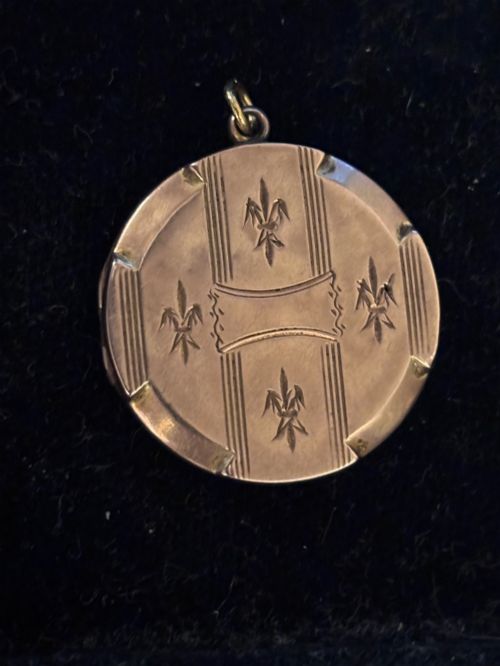
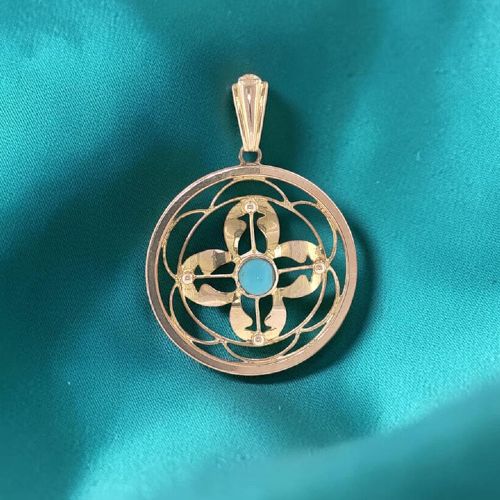
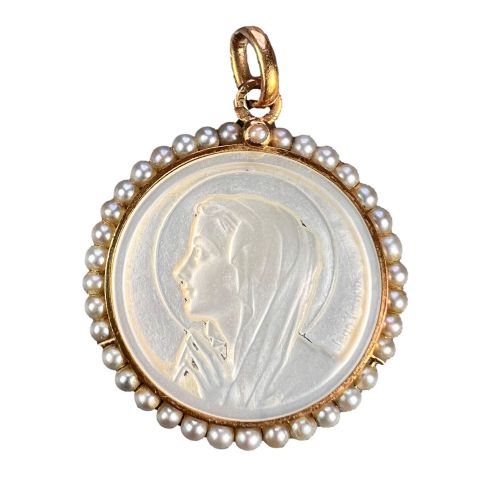
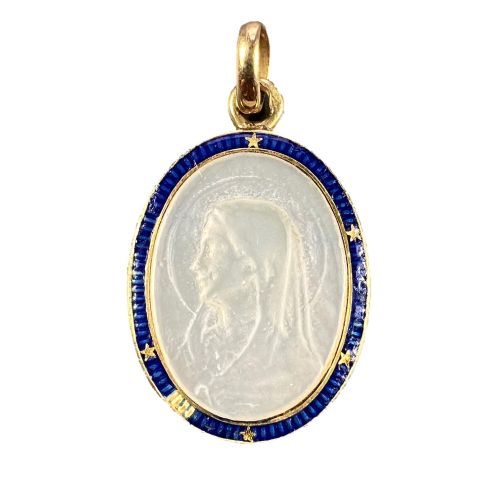
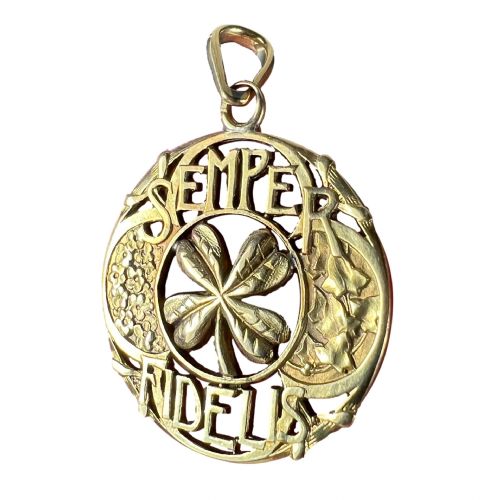
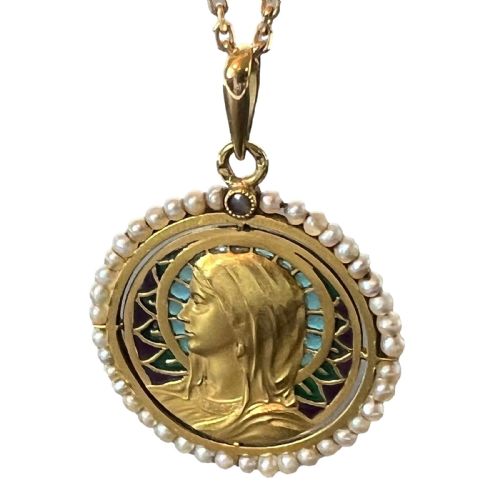
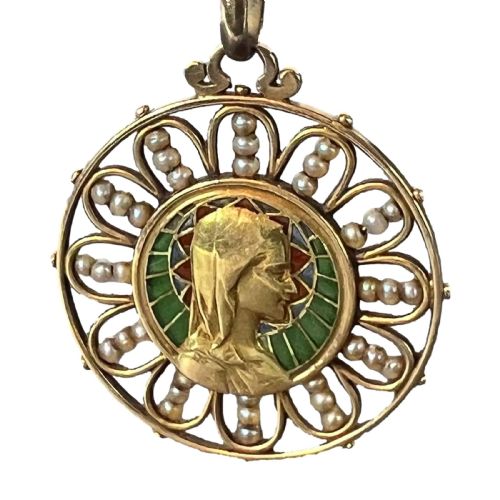
A yellow gold medallion pendant is primarily encountered here as a French religious or commemorative medal, alongside Victorian lockets and Edwardian cluster designs. These pieces span from the late nineteenth century through the mid-twentieth century, encompassing Art Nouveau, Art Deco and traditional devotional motifs. The versions most commonly met on this page are French medals featuring the Virgin Mary, saints or symbolic flora executed in high-carat gold.
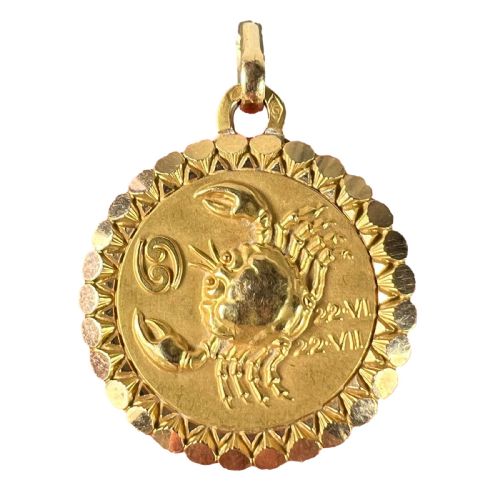
Makers and designers working in France produced numerous medals depicting the Madonna and Child, sacred hearts and zodiac signs. Alongside these devotional items sit lockets and pendants adorned with seed pearls, turquoise, enamel and mother-of-pearl. The selection bridges personal talismanic objects and decorative jewels from the Victorian and Edwardian eras.
Materials and Technique
The primary metal utilised across these pieces is yellow gold, predominantly found in 18-carat purity alongside occasional 9-carat and 15-carat examples. Artisans combined this warm metal with decorative elements such as seed pearls, diamonds, rubies and turquoise. Mother-of-pearl and glass also appear as central plaque materials within twisted wire frames.
Enamelling techniques, particularly plique-à-jour which allows light to pass through translucent coloured glass cells, frequently enhance the gold surfaces. Medallions often feature detailed relief sculpture depicting religious figures, floral wreaths or heraldic motifs, demonstrating the high level of craftsmanship standard in French and British workshops of the period.
The inventory spans the Victorian and Edwardian periods through to Art Nouveau and Art Deco designs.
Evaluating the Pieces
The distinction between standard production and exceptional quality lies in the depth of relief work and the finesse of secondary materials. Medallions featuring finely sculpted facial expressions and crisp lettering by named designers command greater interest than plain stamped blanks. The presence of delicate plique-à-jour enamel or carefully matched seed pearls elevates a piece above simpler metalwork.
Preservation of fragile elements such as enamel and natural pearls dictates the integrity of the pendant. Pieces that retain their original suspension loops, crisp surface chased details and undamaged translucent enamel represent the higher tier of surviving examples.
Emile Monier·Paul Brandt·Perroud·Mazzoni·Pageli Perriat·Guilbert·Vernon·Emile Dropsy·Sellier·Rasumny·Ovide Yencesse·Tairac
The Yellow Gold Medallion Pendant Glossary
- Plique-a-jour
- An enamelling technique where pigment is fired in open cells without a backing, creating a stained-glass effect that lets light pass through. This delicate method requires great skill from the jeweller to prevent cracking.
- Medallion
- A large medal-shaped pendant, often worn on a chain as an ornament or devotional token. They frequently commemorate religious figures, historical events or personal milestones.
- Seed pearl
- A very small, naturally occurring pearl, often drilled and sewn or set into jewellery en masse. These tiny pearls form delicate floral patterns or borders on Victorian and Edwardian pieces.
- Locket
- A small hinged pendant designed to open and enclose a portrait, lock of hair or miniature memento. They were especially popular during the Victorian era for sentimental keepsakes.
- Carat
- A unit measuring the purity of gold, with 24 carats representing pure gold. Most antique pendants on this page utilise 18-carat gold alloyed for durability and colour.
Yellow Gold Medallion Pendant: Frequently Asked Questions
What is a yellow gold medallion pendant?
A yellow gold medallion pendant is a wearable ornamental disc, often cast in high-carat gold, featuring relief carvings, religious iconography or sentimental motifs. These items combine the warmth of traditional gold alloys with detailed artistic rendering from various historical periods.
They serve as both personal adornments and meaningful keepsakes, frequently depicting saints, celestial signs or floral wreaths. The form encompasses everything from devotional medals to decorative Victorian lockets.
How do I identify the period of a pendant?
Dating relies heavily on stylistic cues such as the flowing organic lines of Art Nouveau or the geometric symmetry typical of Art Deco design. Maker marks, assay stamps and the specific choice of accompanying gems like seed pearls or turquoise also help narrow down the decade of creation.
Examining the construction methods, such as the bezel settings or the style of the suspension loop, provides further clues regarding whether a piece originates from the Victorian, Edwardian or mid-century eras.
Can these pendants be worn daily?
Most solid gold pendants withstand regular wear, provided they are hung from a secure and appropriately weighted chain. Care must be taken with pieces featuring delicate additions like plique-à-jour enamel or seed pearls.
Removable items like lockets or hinged charms benefit from gentle handling to protect their mechanical components and internal hinges. Storing them separately prevents scratching against harder jewellery.
What do the religious symbols mean?
Religious medallions frequently depict figures such as the Virgin Mary, Jesus Christ or specific saints intended to offer protection and guidance to the wearer. Symbols like the sacred heart or holy dove represent divine love, peace and spiritual devotion.
Inscriptions and Latin phrases like Semper Fidelis add layers of personal commitment and enduring faith. These motifs reflect the deeply devotional practices of the nineteenth and early twentieth centuries.