
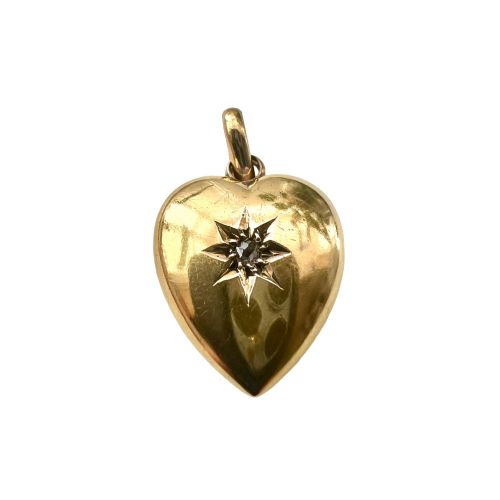


Yellow Gold Heart Necklace
A yellow gold heart necklace carries centuries of sentiment in precious metal, offering a romantic pendant or drop necklace from Victorian, Edwardian, and vintage eras.
Yellow Gold Heart Necklace
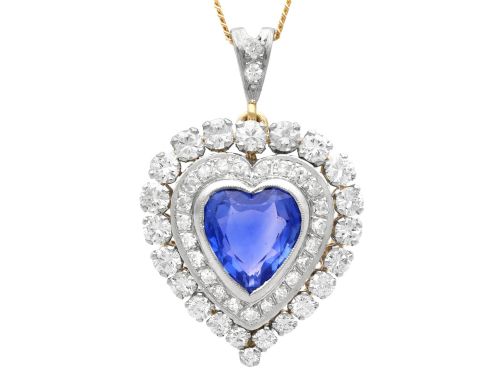
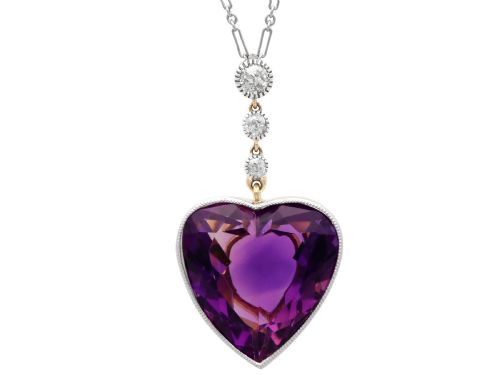
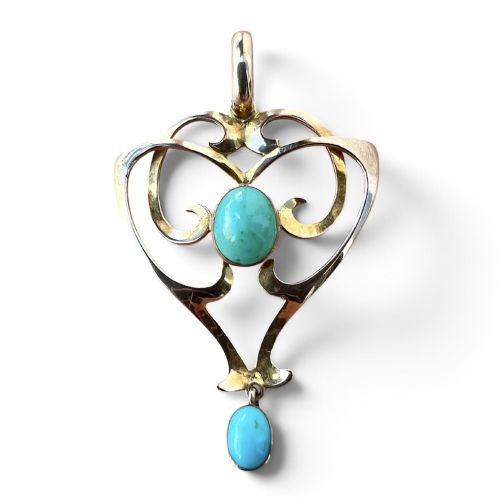
The most common form on this page is the pendant or charm suspended from a fine chain, often featuring central gems or delicate seed pearl borders. One frequently encounters Edwardian witch's heart designs alongside Victorian garnet, turquoise, amethyst, and diamond variants set in high carat and nine carat yellow gold.
Materials and construction
Goldsmiths constructed these yellow gold heart necklaces using varied carat weights, notably nine carat, fifteen carat, and eighteen carat gold, alongside rarer twelve carat standards. Metal components were cast, hand-engraved, and hollow-formed to create puffy dimensional silhouettes without excessive weight.
Settings incorporate claw and collet work to secure old cut diamonds, natural pearls, seed pearls, turquoise, rubies, sapphires, citrines, amethysts, and opals. Artisans frequently integrated fine wirework and millegrain detailing, particularly during the Edwardian and Art Nouveau periods.
Listings feature yellow gold, rose gold, and high carat standards alongside seed pearls, diamonds, turquoise, amethysts, opals, and citrines.
Distinctions in quality
Quality across a yellow gold heart necklace is determined by the fineness of the gold alloy, the precision of the hand-engraving, and the integrity of the structural elements. Higher tier examples often utilise fifteen or eighteen carat gold and feature superior gemstone matching.
The sophistication of the lapidary work and the delicacy of auxiliary motifs, such as seed pearl borders or integrated bows, separate standard production pieces from fine artisan creations. Maker attribution, such as work by Deakin and Francis, elevates the historical significance.
Deakin & Francis·Perriat
The Yellow Gold Heart Necklace Glossary
- Witch's heart
- A pendant shape featuring a twisted tail curving to one side, traditionally symbolising being pierced through with love. This motif was particularly popular during the Edwardian era.
- Seed pearl
- A very small, natural, or cultured saltwater pearl, often drilled and threaded onto silk or wire in clusters or borders. They adorn many Victorian and Edwardian pieces.
- Lavaliere
- A type of pendant necklace featuring drops hanging at different lengths, often asymmetrical or cascading. These became fashionable in the late nineteenth and early twentieth centuries.
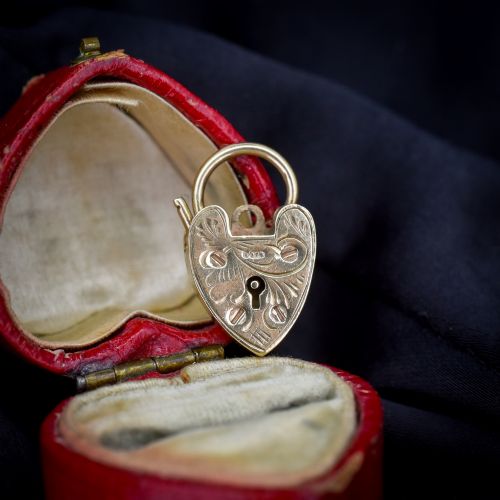
- Padlock charm
- A small, functional or decorative lock shaped like a heart, frequently attached to Victorian and Edwardian charm bracelets and pendant chains.
Yellow Gold Heart Necklace: Frequently Asked Questions
How do I date a yellow gold heart necklace?
Dating relies upon hallmarks, metal carat standards, gemstone cuts, and stylistic clues. Victorian and Edwardian pieces often display distinct motifs like seed pearl clusters and witch's heart shapes.
Later twentieth-century examples from the 1930s or 1960s utilise different clasp mechanisms and casting techniques that distinguish them from antique work.
Are these necklaces supplied with chains?
Many antique pendants and charms are offered independently so that buyers can select a chain length that suits their preference. Certain listings include antique or vintage chains original to the piece or matched for period accuracy.
Checking individual item descriptions clarifies whether a matching chain accompanies the pendant.
How should I care for antique gold jewellery?
Antique gold pieces require gentle handling due to delicate elements like seed pearls and closed-back gemstone settings. Cleaning should be done with a soft microfibre cloth without harsh chemical dips.
Professional inspection helps ensure that claw settings and fine chains remain secure during regular wear.