
Yellow Gold Drop Pendant
A yellow gold drop pendant suspends stones and metal from a fine chain, offering movement and colour.
Yellow Gold Drop Pendant
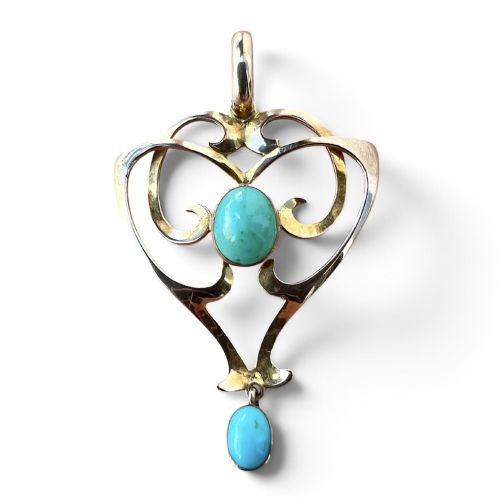
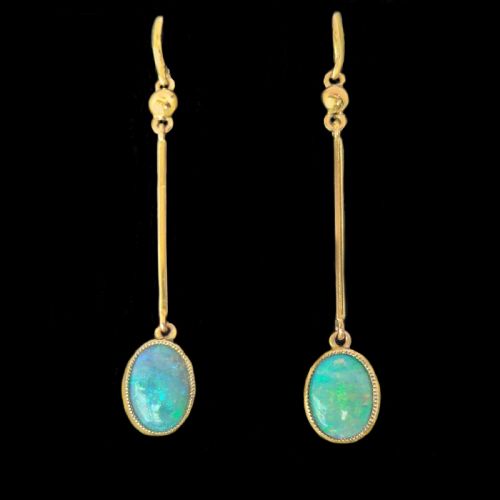
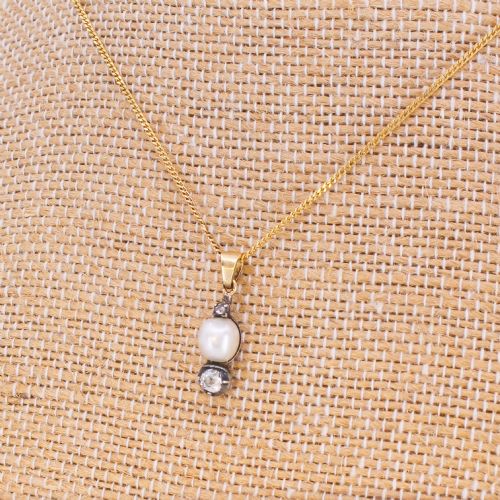
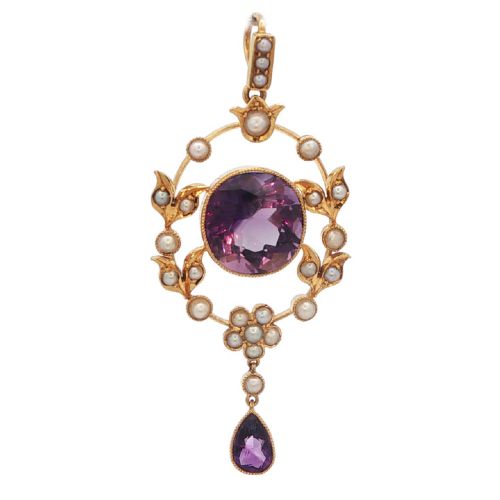
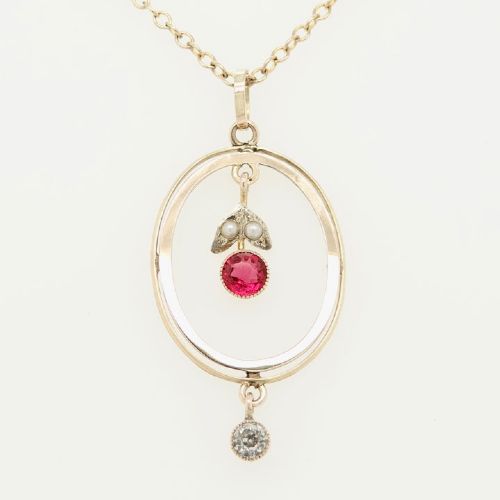
A yellow gold drop pendant suspends a gemstone or metal ornament from a fixed bail or loop on a chain, creating vertical movement when worn. Buyers searching for a yellow gold drop pendant encounter pieces originating from the Victorian, Edwardian, Art Nouveau, Art Deco and Mid-Century periods, alongside later vintage interpretations.
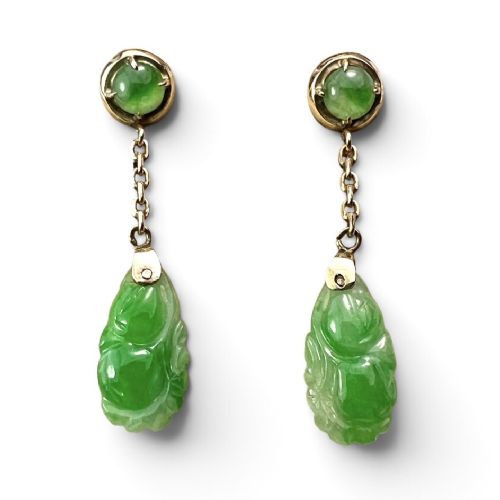
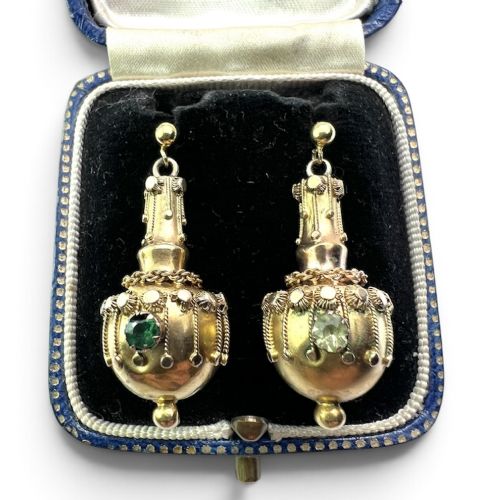
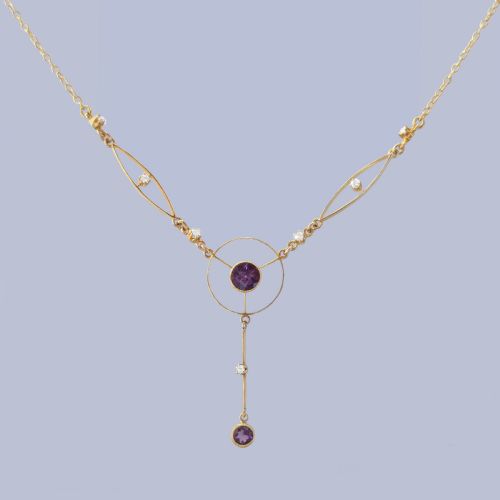
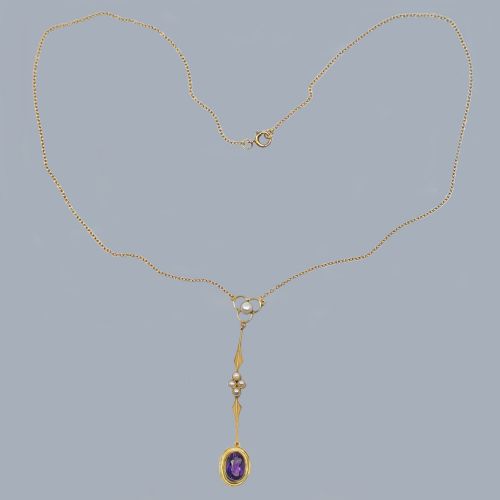
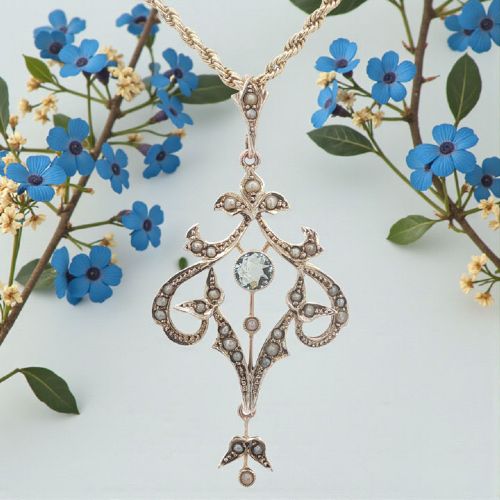
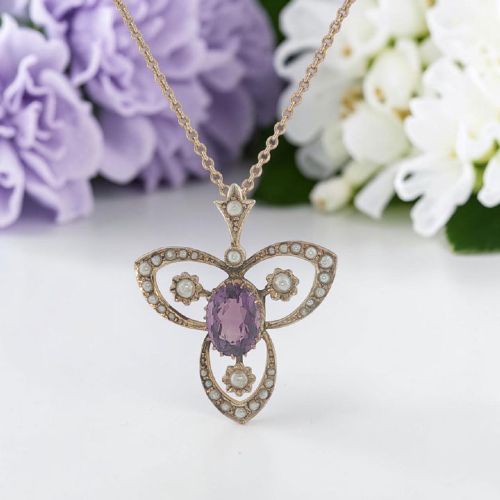
The form ranges from delicate Edwardian lavalier necklaces set with amethysts and seed pearls to substantial Victorian aquamarine designs and geometric Mid-Century opal clusters. The inventory also includes drop earrings, brooches and charm pendants, reflecting how makers applied the drop format across various jewellery types.
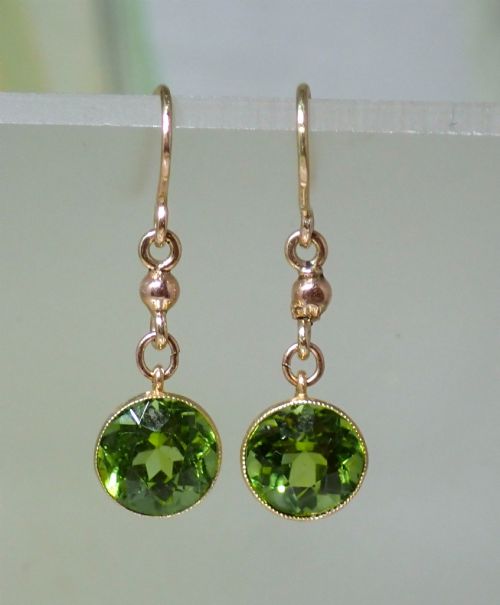
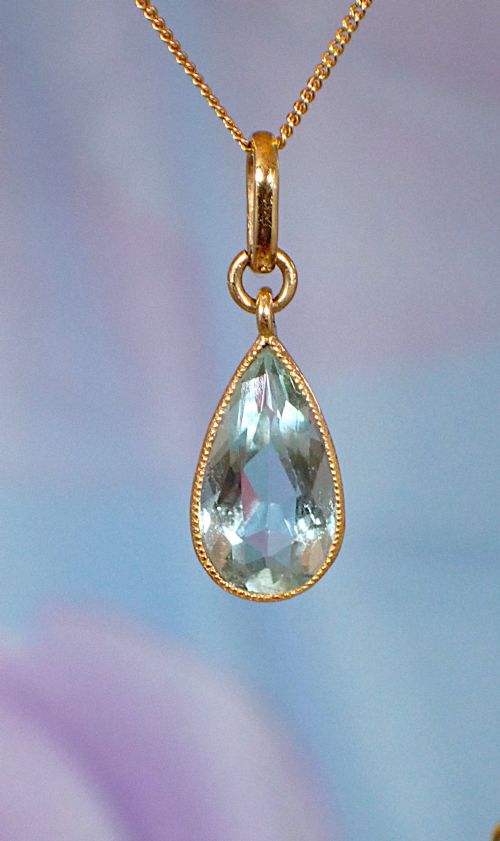
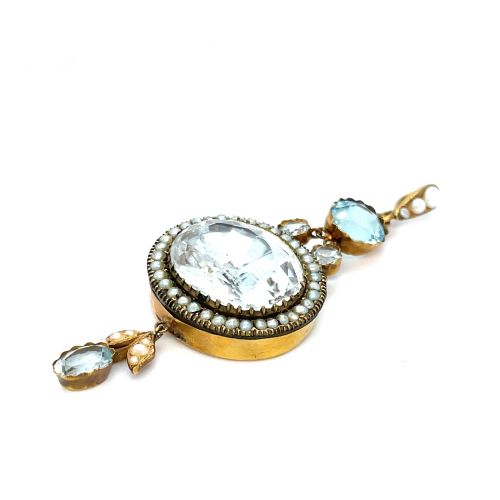
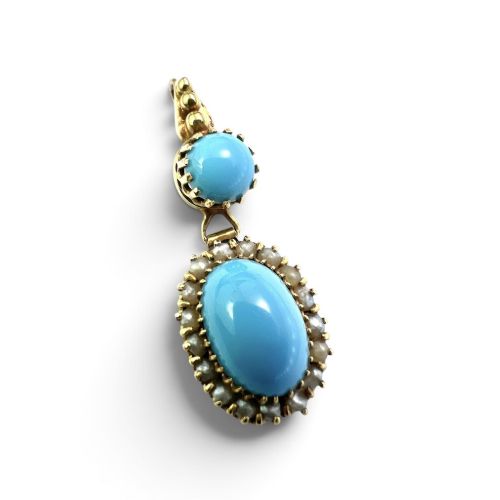
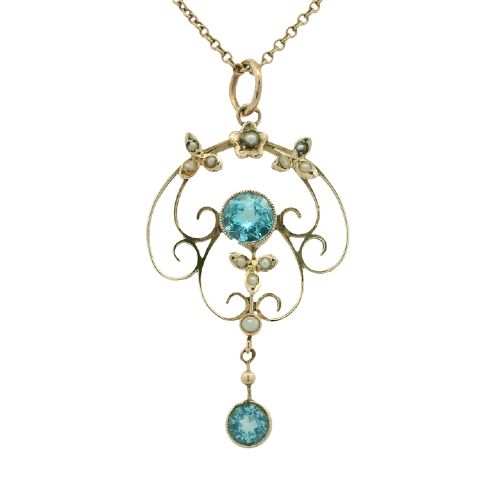
Edwardian and Victorian examples dominate the selection, frequently combining 9ct or 15ct yellow gold with blue aquamarines, green peridots and white seed pearls. These historical pieces demonstrate the enduring popularity of suspended clusters and swinging stones.
Materials and construction methods
Makers shaped yellow gold into delicate collet settings, bezels and wirework, utilising 9ct, 14ct, 15ct and 18ct alloys depending on the period and origin. Gemstones such as aquamarine, amethyst, peridot, opal and diamond are secured alongside natural pearls, seed pearls and turquoise.
Art Nouveau pieces incorporate flowing organic lines using cast and chased gold, while Edwardian designs favour openwork filigree and millegrain edges. Victorian examples often feature hollow stampings, foil backings to enhance stone colour, and intricate Etruscan revival granulation.
Gemstones recorded across the inventory include aquamarine, amethyst, peridot, opal, turquoise, sapphire, tourmaline, demantoid garnet, topaz, jade and diamond.
Factors influencing quality
Quality rests on the integrity of the goldwork, the security of the settings, and the calibre of the set stones. Finer pieces display crisp hand-chasing, well-matched natural gemstones without surface abrasions, and original secure fastenings.
The weight of the gold and the complexity of the pendant architecture distinguish standard production from superior workshop output. Maker marks from established firms indicate higher craftsmanship standards in period pieces.
Deakin & Francis·S. Blanckensee & Son·Murrle Bennett·Emile Dropsy
The Yellow Gold Drop Pendant Glossary
- Lavalier
- A necklace featuring a pendant with a dangling drop component, popular during the Edwardian and Art Nouveau eras.
- Millegrain
- A decorative technique involving a row of tiny raised metal beads along the edge of a setting.
- Seed pearl
- Very small natural or cultured pearls, often half-drilled and glued or pegged onto gold pins in cluster designs.
- Foil back
- A sheet of coloured metal foil placed behind a gemstone within a closed setting to enhance its optical depth and colour.
- Collet
- A band of metal that holds a gemstone in place by folding or rubbing the top edge over the stone's girdle.
Yellow Gold Drop Pendant: Frequently Asked Questions
How do I wear a drop pendant?
A drop pendant works best on a chain length that positions the swinging element just below the collarbone, allowing the stone to catch the light with movement. Pairing the piece with simpler necklines ensures the vertical drop remains the focal point of an outfit.
For historical pendants, matching the metal tone of the chain to the yellow gold of the pendant maintains period consistency. Many antique pieces come with their original chains, though contemporary solid yellow gold chains of appropriate weight suit loose pendants equally well.
How do I care for antique gold jewellery?
Antique yellow gold pendants require gentle cleaning with a soft microfibre cloth to remove daily oils without disturbing delicate settings or seed pearls. Water and harsh chemical dips should be avoided, particularly for pieces containing foil-backed stones or organic materials.
Storing each pendant in a separate compartment prevents scratching between pieces. Pearls and opals are softer than gold and diamonds, needing careful handling to preserve their surface lustre over decades of wear.
How can I tell an Edwardian pendant from a Victorian one?
Edwardian pendants typically showcase lighter, airier platinum-topped gold wirework, floral motifs, and pastel stones like aquamarine and amethyst. Victorian pieces tend to feature heavier yellow gold constructions, richer saturated gem colours, and distinct regional revival styles.
Examining the reverse of the pendant often reveals construction clues, such as closed-back settings in older Victorian examples versus open-back light-gathering mounts in later Edwardian work.
What is the difference between a lavalier and a standard pendant?
A standard pendant hangs directly from a bail as a single unified unit, whereas a lavalier incorporates multiple suspended tiers and dangling elements that swing independently. Lavalier necklaces became widespread during the early twentieth century, defining the Art Nouveau and Edwardian aesthetic.
The cascading structure of a lavalier provides greater kinetic energy when worn compared to a rigid stationary pendant.