
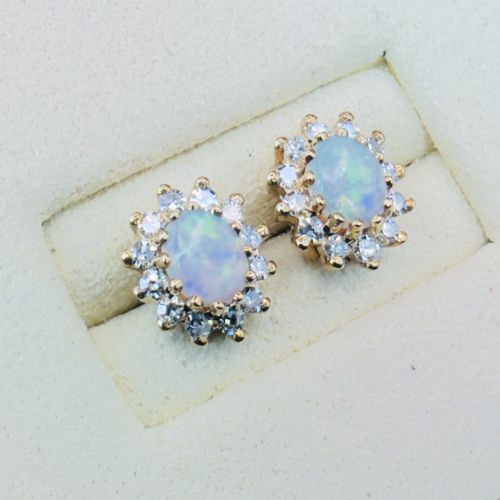
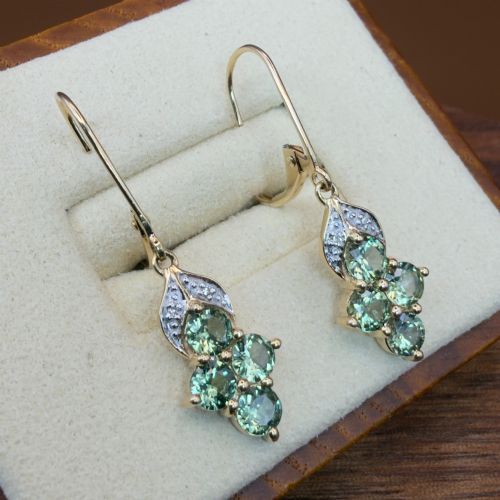


Yellow Gold Diamond Earrings
Yellow gold diamond earrings span Victorian, Edwardian and mid-century periods, pairing warm precious metal with enduring stones for daily wear and formal occasions.
Yellow Gold Diamond Earrings
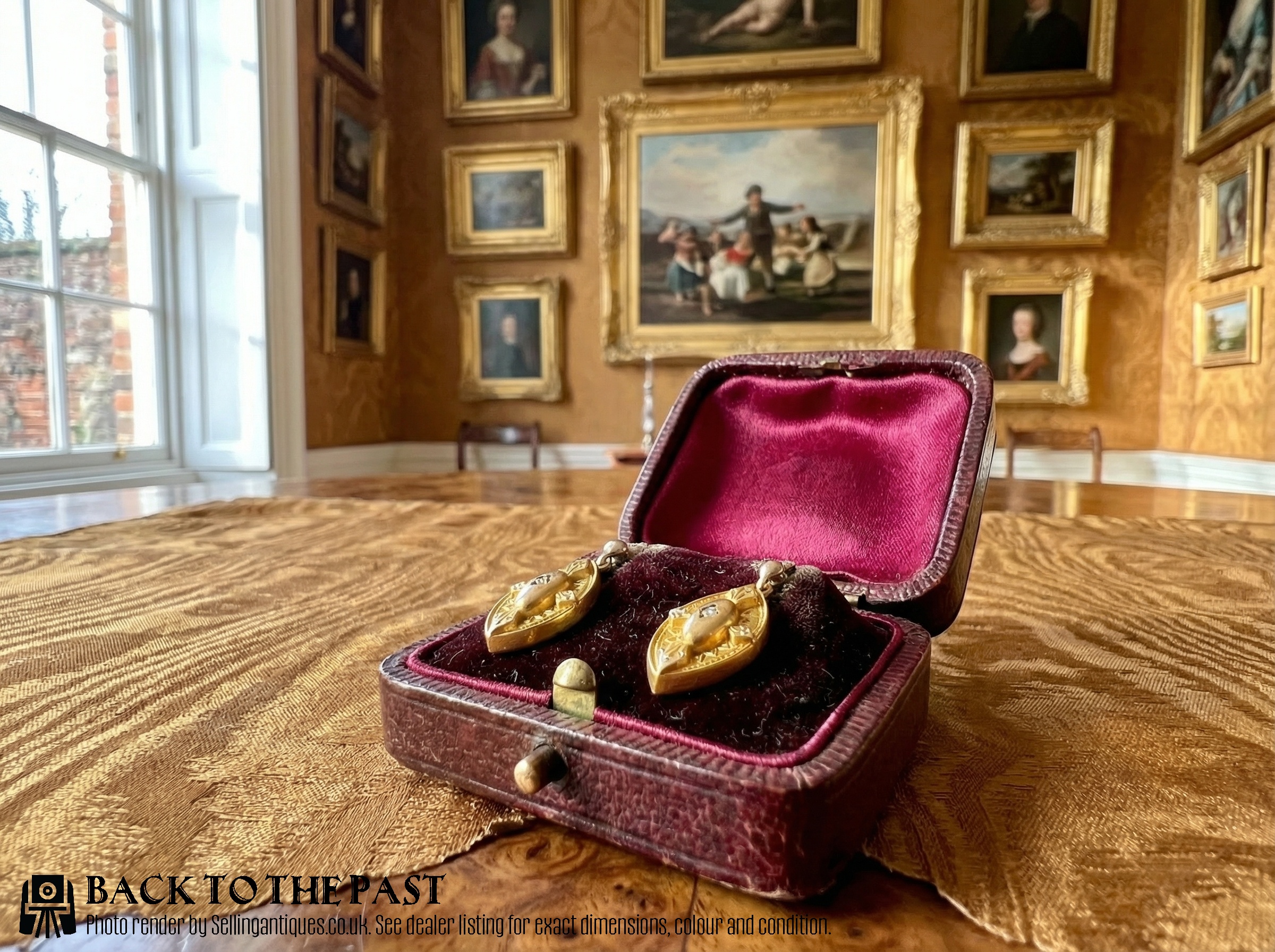
Yellow gold diamond earrings encompass various historical eras, ranging from nineteenth-century Victorian designs to mid-century creations. The selection includes delicate drop earrings, cluster studs and dangling configurations incorporating gemstones.
Victorian and Edwardian examples frequently utilise old cut diamonds alongside pearls, garnets or sapphires set in fifteen carat or eighteen carat yellow gold. Later mid-century pieces often present bold cluster formations and clean lines in nine carat or eighteen carat gold.
Buyers encounter numerous stud and drop forms featuring coloured stones such as rubies, emeralds, opals and aquamarines alongside the central diamonds. French antique dormeuses represent a frequent style designed specifically for comfortable overnight wear.
Materials and Techniques
Goldsmiths utilised varying purities of yellow gold, notably nine carat, fifteen carat and eighteen carat alloys, occasionally combining them with platinum or silver for stone settings. Metalworking techniques involved hand fabrication, bezel settings, and delicate cluster arrangements.
Diamonds within these pieces display historical cutting styles including old mine cuts, old European cuts and rose cuts, shaped by hand before modern machinery predominated. Gemstones are secured using traditional claw settings, flush mountings or millegrain edges.
Evaluating Quality
Quality rests upon the proportion and harmony of the design, the purity and weight of the gold alloy, and the original integrity of the settings. Pieces retaining their original fitted boxes or untouched maker configurations demonstrate superior preservation.
Stone selection dictates overall refinement, where well-matched natural pearls, vibrant coloured gems and well-cut historical diamonds elevate the piece. The fineness of hand-worked metal details, such as granulation or pierced gallery work, distinguishes finer studio output from standard production.
The Yellow Gold Diamond Earrings Glossary
- Old Cut
- A historical diamond cutting style characterised by a small table, high crown and large culet, designed to sparkle under candlelight.
- Dormeuse
- A type of antique earring originally designed to be comfortable enough to wear while sleeping, often featuring secure lever-back or wire closures.
- Rose Cut
- A vintage diamond cut featuring a flat base and a domed crown faceted with triangular patterns resembling an unopened rosebud.
- Cluster
- An arrangement of gemstones where a central stone is surrounded by a ring of smaller stones, maximising visual impact.
- Millegrain
- A decorative technique featuring a row of tiny raised metal beads along the edge of a setting, common in Edwardian jewellery.
Yellow Gold Diamond Earrings: Frequently Asked Questions
How do I care for antique yellow gold earrings?
Clean these pieces gently using warm soapy water and a soft brush, avoiding harsh chemical dips that may harm softer gemstones like opals or pearls.
Store each pair separately in lined boxes to prevent metal scratching and gemstone abrasion.
Can I wear antique earrings every day?
Many sturdy designs suit daily wear, though delicate Edwardian drop elements and antique clasps require careful handling during placement and removal.
Checking the security of stone settings periodically helps prevent accidental loss of old cut diamonds.
What is the difference between old cut and modern diamonds?
Historical diamonds were shaped by hand to maximise weight retention and visual brilliance under ambient light sources rather than standardised mathematical proportions.
This hand-shaped origin gives each stone a distinct optical character compared to modern brilliant cuts.
How can I identify the period of my earrings?
Stylistic clues such as millegrain detailing, platinum-topped gold, and specific gemstone combinations point toward Edwardian or Victorian manufacturing eras.
Metal purity stamps and regional hallmarks also provide concrete evidence of origin and date.