


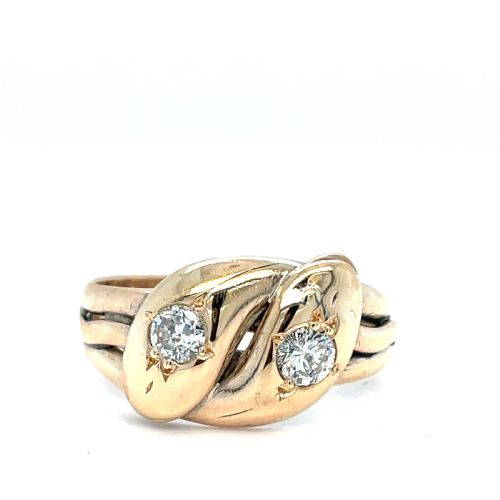
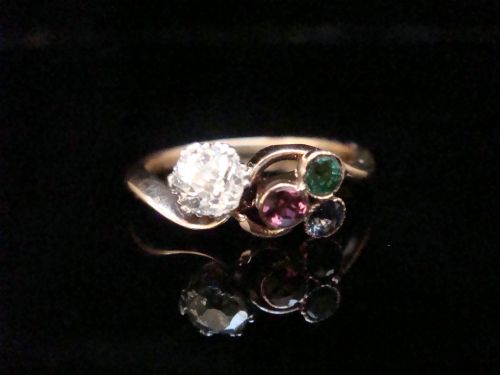
Yellow Gold Diamond Band
When choosing a yellow gold diamond band, you encounter rings shaped by Victorian, Edwardian, and later periods using old cut stones and precious metals.
Yellow Gold Diamond Band
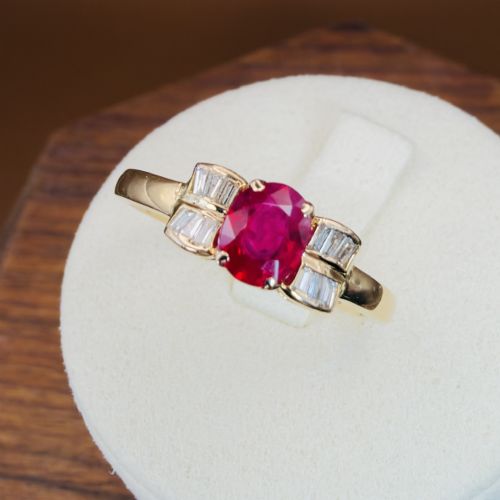
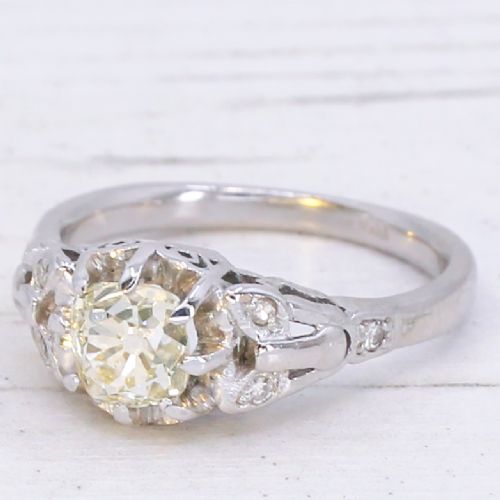
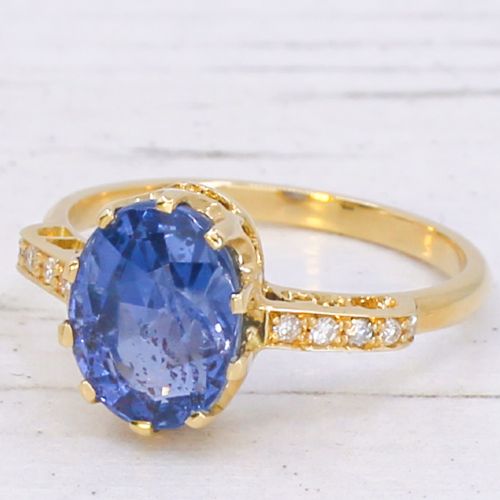
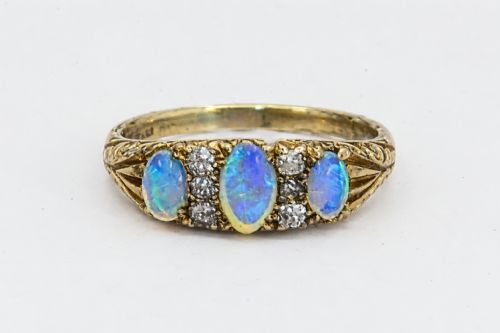
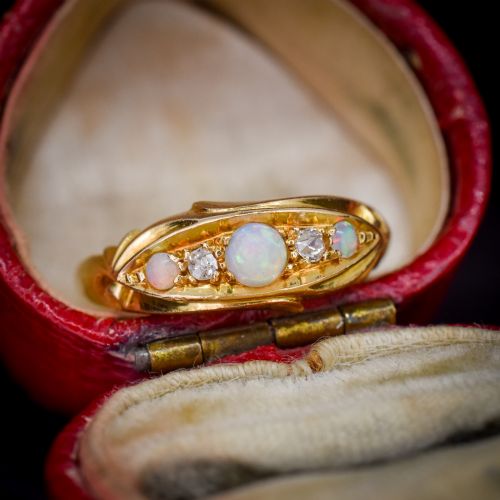
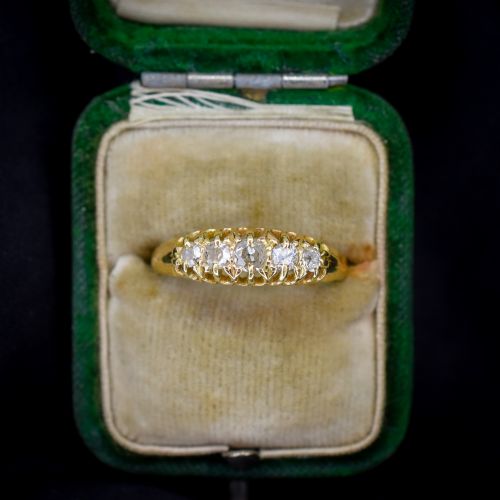
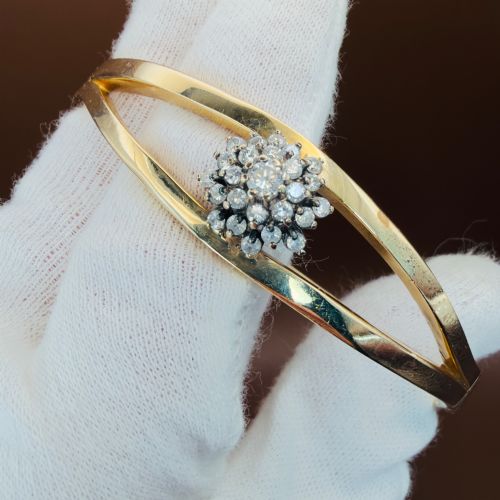
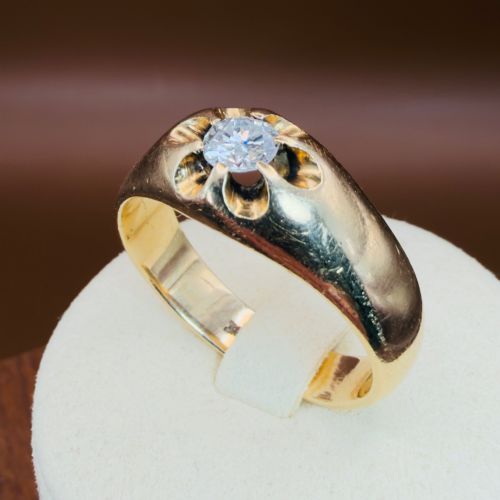
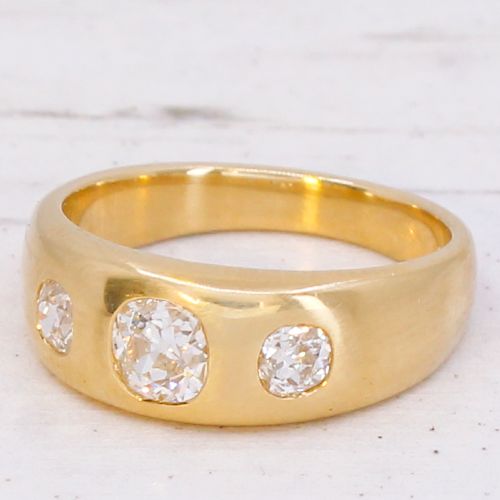
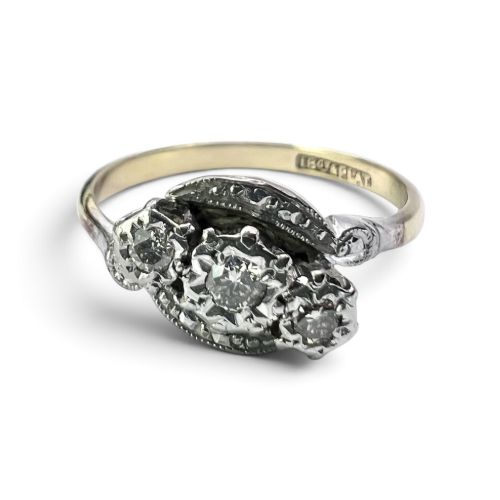
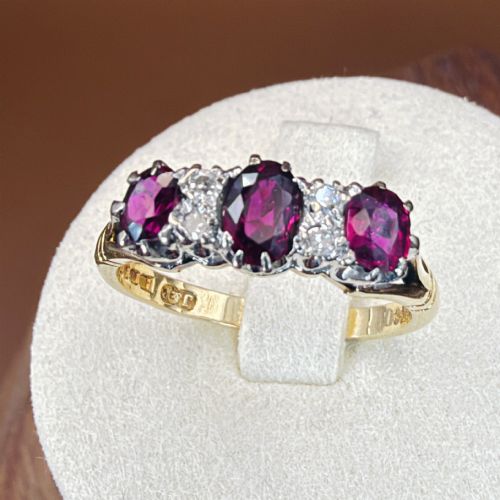
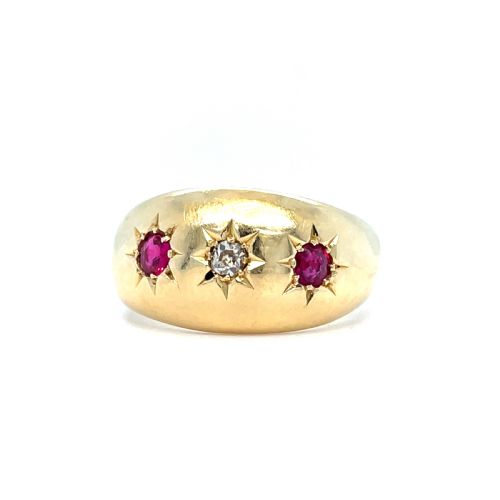
Buyers will encounter various forms upon this page, ranging from traditional boat rings and starburst gypsy settings to multi-stone trilogy layouts and heavy buckled bands. Many pieces integrate diamonds with rubies, sapphires, opals, or emeralds, offering both single-stone solitaires and cluster arrangements.
The origin of these rings extends across British assay offices such as Birmingham and Chester, alongside vintage international pieces. Whether examining a late nineteenth-century serpent design or a mid-century dress ring, each item demonstrates the enduring appeal of yellow gold matched with diamonds.
How they were made
Goldsmiths utilised 18ct and 9ct yellow gold to form the durable foundations of these bands, frequently incorporating platinum settings to secure individual stones. Metals were cast, hammered, and hand-carved to create ornate shoulders, starburst engravings, and structural elements like buckle motifs.
Diamonds within these pieces predominantly feature old cuts, old mine cuts, and brilliant cuts, shaped by hand before the widespread adoption of modern machinery. Gemstones such as rubies, sapphires, and opals were then flush-set into gypsy bands or raised within claw and cluster arrangements.
Yellow Gold Diamond Band Retail Price Guide 2026
Typical asking prices for yellow gold diamond band among the pieces listed under this phrase on Sellingantiques today, from the lower quarter to the upper quarter. They describe what is for sale here now, not the wider market.
The inventory records heavy bucket bands, serpent motifs, and multi-stone cluster arrangements originating from Birmingham and Chester assay offices.
What varies in quality
The standard of a yellow gold diamond band rests upon the weight and integrity of the precious metal construction, visible in substantial weights and robust shank thickness. Heavy cast gold and well-preserved structural details indicate superior original manufacture.
Stone selection and setting security govern the refinement of each piece, distinguishing modest production from masterwork execution. Fine matching of old cut diamonds alongside vivid rubies or sapphires elevates the overall harmony and desirability of the ring.
Kutchinsky
The Yellow Gold Diamond Band Glossary
- Gypsy band
- A ring style featuring stones flush-set directly into the thick gold band, popular during the Victorian era. This technique created a smooth outer profile.
- Old cut
- A diamond cutting style characterised by a small table, high crown, and open culet, typical of stones shaped before the twentieth century. These cuts catch candlelight uniquely.
- Trilogy ring
- A ring set with three prominent gemstones, traditionally symbolizing past, present, and future. They frequently combine diamonds with sapphires or rubies.
- Boat ring
- A specific boat-shaped cluster mounting where the central stones sit higher than the tapering ends. This configuration typifies Edwardian jewellery design.
- Navette
- A boat-shaped or marquise-like design stretching lengthwise along the finger, often decorated with multiple gems. The shape creates an elongated profile.
Yellow Gold Diamond Band: Frequently Asked Questions
How do I identify an Edwardian diamond ring?
Edwardian rings frequently utilise platinum tops combined with yellow gold shanks to showcase old cut diamonds with maximum brilliance. The metalwork often exhibits delicate openwork, garlands, and boat-shaped clusters.
Examining the underside usually reveals fine millegrain bezel edges and intricate pierced galleries characteristic of the early twentieth century. Hallmarks from British assay offices also help confirm the exact period of production.
Can I wear an antique diamond band daily?
Most antique yellow gold diamond bands were constructed for continuous daily wear using substantial gold weights and secure flush or star settings. Checking the thickness of the lower shank ensures the gold has not worn thin over the decades.
Routine inspection by a jeweller helps maintain the security of older stone settings, particularly in delicate multi-stone or cluster designs. Proper care allows these historical rings to continue serving as regular accessories.
What makes old cut diamonds different?
Old cut diamonds are shaped by hand rather than automated machinery, resulting in smaller tables, steeper crowns, and larger facets that produce a softer, deeper glow. These stones respond warmly to ambient lighting conditions.
Each antique diamond possesses individual proportions shaped by the cutter rather than standardised laser measurements. This artisanal origin gives every ring a distinct character absent in modern mass-produced stones.