


Yellow Gold Cuff Links
Yellow gold cuff links bring quiet character to a cuff, pairing precious metal with the varied forms of past decades.
Yellow Gold Cuff Links
Yellow gold cuff links span multiple eras, including Victorian, Edwardian, Art Deco, and mid-century periods. These fastenings appear alongside related objects such as bracelets in the wider records, but the main focus rests firmly on the cuff links themselves.
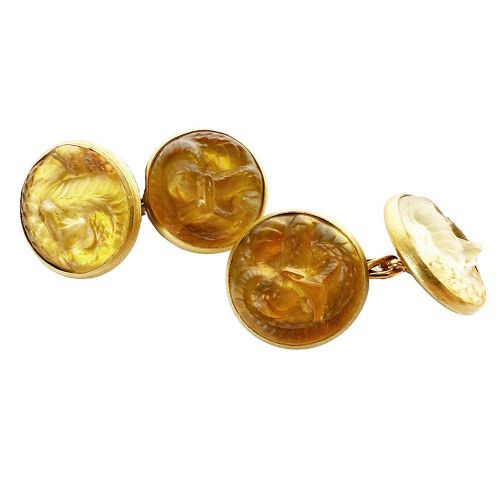
Makers and designers from different decades adapted this form using various materials, producing everything from simple engraved bars to intricate enamel work. The designs found here range from geometric Art Deco pieces to organic Art Nouveau serpent motifs.
Examples typically feature secure toggle backs, double-sided designs, or rigid bars intended for traditional button cuffs. Each pair reflects the prevailing aesthetic of its production period, whether that means strict modernist lines or ornate Victorian belt motifs.
Materials and construction methods
Metals form the foundation of these items, utilising yellow gold across varied purities including nine-carat, fourteen-carat, fifteen-carat, eighteen-carat, and twenty-one-carat standards. Enamel and moulded glass frequently add colour and texture to the metallic surfaces.
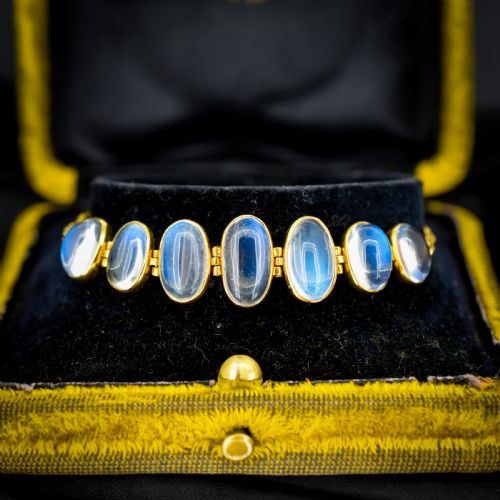
Craftsmen applied surface decoration through engine turning, hand engraving, and bezel setting for stones such as moonstones, turquoise, sapphires, and diamonds. Essex crystals and mother-of-pearl also appear as feature elements set into the gold frames.
Elks Lodge members once wore miniature hand-painted elk heads encased in rock crystal right on their cuffs.
Assessing craftsmanship and condition
Quality reveals itself in the crispness of hand engraving, the evenness of engine-turned patterns, and the secure mounting of inset stones or enamel. Finer examples display deliberate attention to the reverse sides and connecting links just as much as the visible face.
The integrity of hinged mechanisms and the purity marks stamped into the metal distinguish standard production items from workshop pieces bearing named maker signatures. Well-preserved original boxes and undamaged vitreous enamel further elevate a pair's standing.
R Lalique·Cartier·Taye Kenning and Spencer Ltd·Abraham Meyer Blanckensee
The Yellow Gold Cuff Links Glossary
- Engine turning
- A mechanical decoration technique that cuts intricate geometric patterns into metal surfaces. This process creates precise textures often seen on Art Deco pieces.
- Essex crystal
- A technique where a rock crystal cabochon is reverse-carved and painted to produce a three-dimensional image. These miniature artworks usually sit atop precious metal bases.
- Double-sided
- A cuff link configuration featuring matching decorative faces connected by a rigid bar or short chain. Both ends remain visible when worn through buttonholes.
- Vitreous enamel
- Fused glass powder applied to metal surfaces through high-temperature firing. This method delivers durable, coloured decoration that resists fading over decades.
Yellow Gold Cuff Links: Frequently Asked Questions
How do I date yellow gold cuff links?
Dating relies on hallmarks, fastening mechanisms, and stylistic clues typical of periods like the Victorian era or the Art Deco years. Specific motifs such as belt engravings or modernist enamel lines point directly to the decade of manufacture.
Material choices also offer guidance, as certain gold purities and gemstone combinations align with distinct historical periods in jewellery design.
Are these cuff links suitable for daily wear?
Sturdier constructions in solid gold handle regular use well, provided the connecting chains or hinges remain secure. Pairs featuring delicate enamel or reverse-carved crystals require more mindful handling to prevent surface damage.
Storing them in fitted boxes when not worn helps protect vulnerable decorative elements from scratches.
What is the difference between single and double-sided pairs?
Single-sided cuff links use a fixed or pivoting toggle on the reverse to anchor the piece through the cuff. Double-sided versions feature two decorated faces connected by a short bar or chain, showing pattern on both sides of the buttonhole.
Double-sided variants often demand slightly more care when threading through stiff shirt cuffs.
Do maker marks affect authenticity?
Maker marks and official hallmarks provide definitive proof of origin, purity, and workshop attribution. Stamped initials or full company names connect an item to specific firms and registered makers.
Unsigned pieces still hold value based on their design, weight, and material quality, but identifiable signatures add historical context.