
Yellow Gold Cluster
A yellow gold cluster brings together warm metal and a gathering of diamonds or coloured stones.
Yellow Gold Cluster
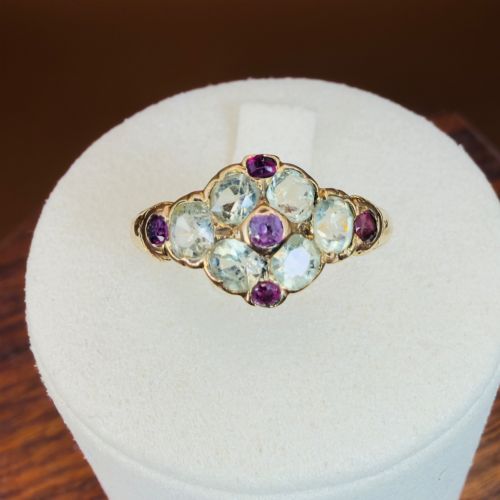
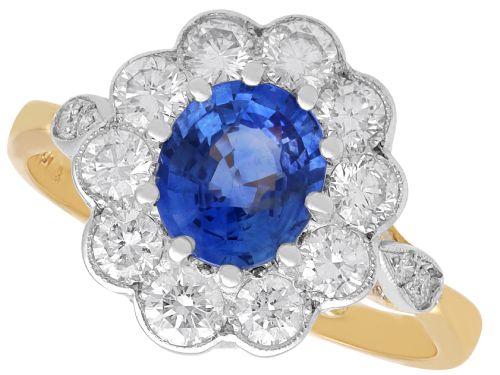
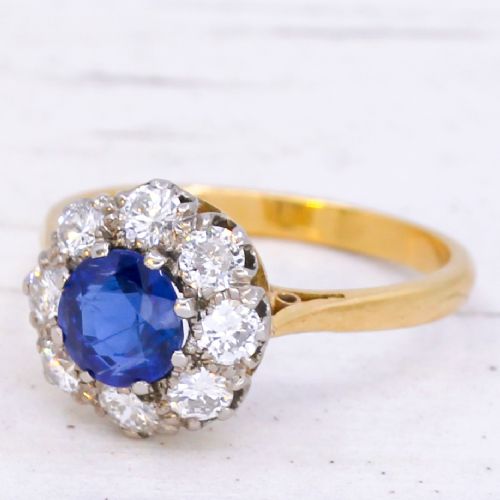
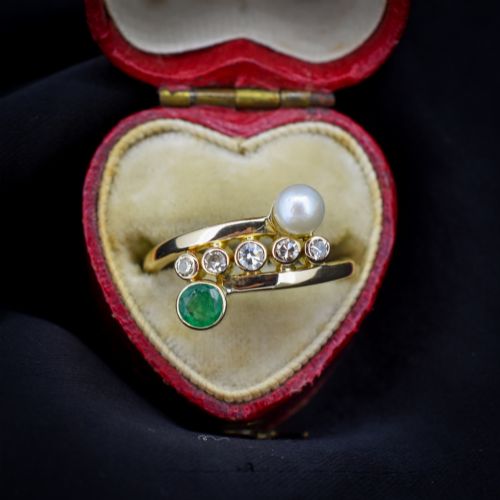
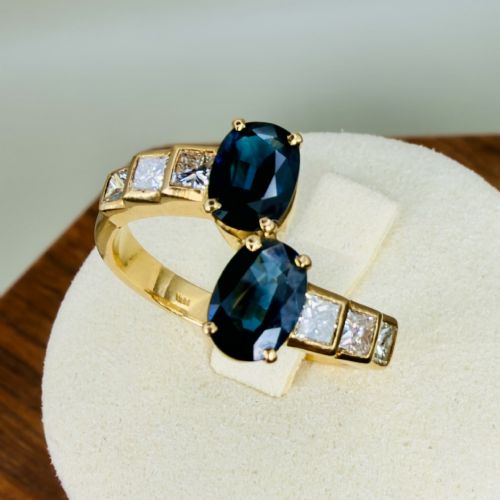
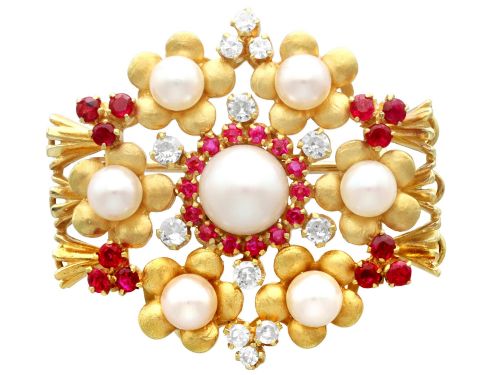
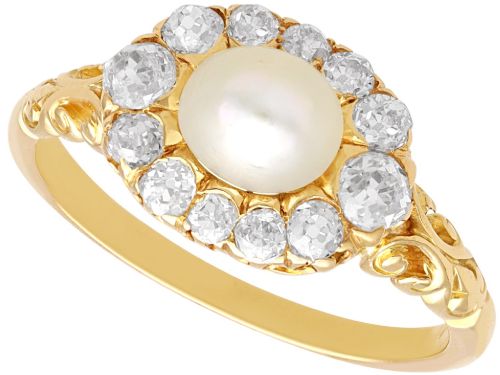
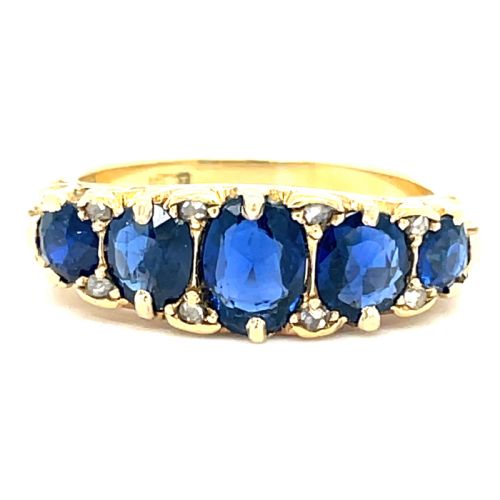
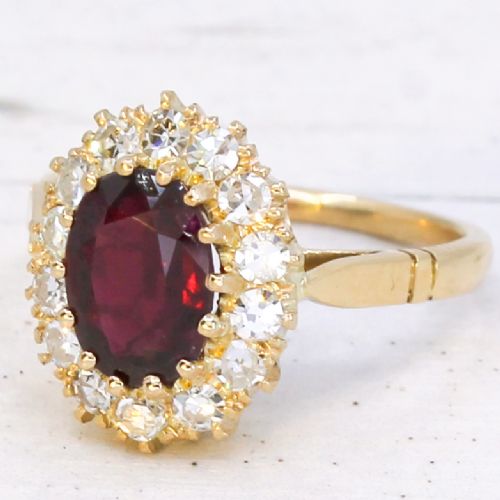
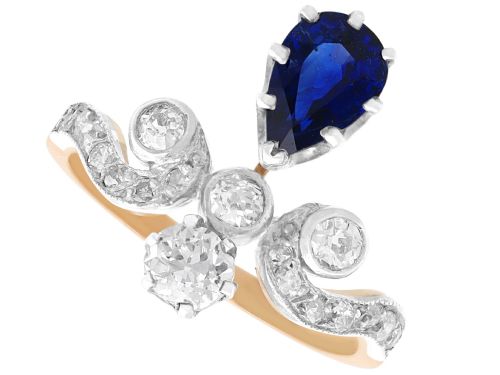
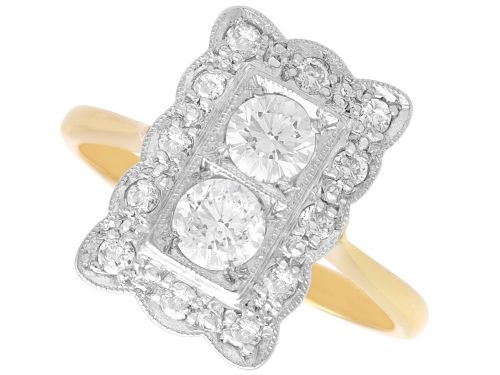
A yellow gold cluster centres on a prominent grouping of gemstones arranged closely together to maximise visual impact and sparkle. These jewels appear across rings, earrings, pendants, and bracelets spanning the Victorian, Edwardian, and mid-century periods.
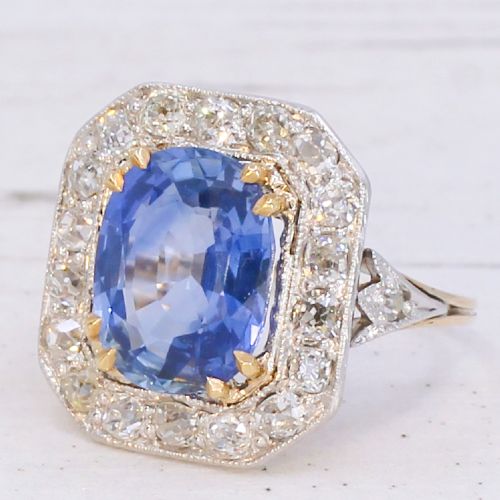
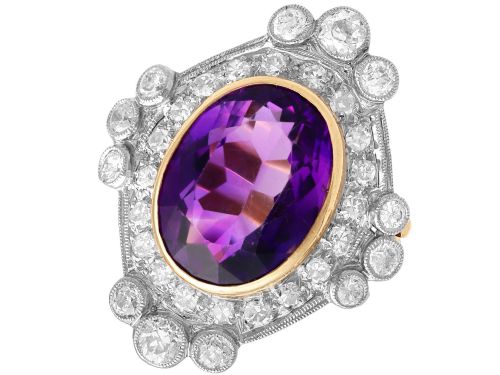
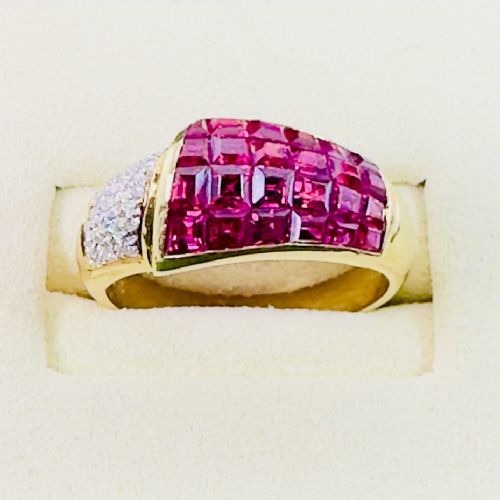
The yellow gold cluster most frequently takes the form of a ring, often designed as a daisy motif or a geometric halo surrounding a central diamond, sapphire, ruby, or emerald. Pieces from the Edwardian era and the later twentieth century dominate the selection.
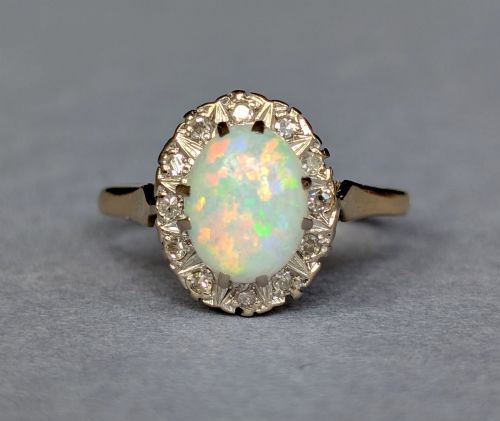
Beyond rings, the design extends to drop earrings, cluster bangles, and pendants featuring garnets, opals, and tourmalines set against rich yellow gold bands and mountings. Each form utilises the clustered arrangement to showcase multiple stones within a unified composition.
How they were made
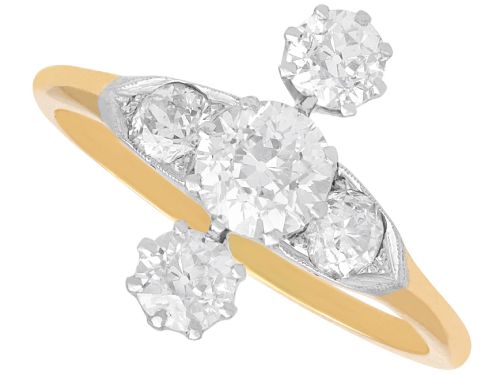
Craftsmen built these settings using 9ct and 18ct yellow gold, frequently combining platinum claw settings on the face of Edwardian and Victorian pieces to keep diamond settings bright and white. Goldsmiths shaped the metal by hand or cast heavier mid-century bangles and dress rings to house substantial stone weights.
Gems were secured using old cut, brilliant cut, or rose cut techniques depending on the period, with claw and bezel settings holding centre stones and surrounding borders tightly in place. Pearl and coral elements appear alongside hard stones, integrated into the metal framework through traditional peg and adhesive or secure bezel methods.
The inventory spans Victorian, Edwardian, and mid-century periods, encompassing rings, pendants, bangles, and drop earrings.
What varies in quality
The standard of a yellow gold cluster rests upon the symmetry of the stone arrangement and the weight and purity of the gold employed in the mount. Heavier constructions and finely matched gem sizes separate substantial workshop pieces from lighter commercial iterations.
The choice and saturation of the central gemstone, whether an unheated ruby, a Ceylon sapphire, or an old cut diamond, heavily dictate the desirability of the piece. Fine claw work and intact original settings without later alterations preserve the structural integrity and historical character of the jewel.
Kutchinsky
The Yellow Gold Cluster Glossary
- Cluster
- A style of jewellery where a central stone is encircled by a border of smaller gems. This layout creates the appearance of a larger single stone from a distance.
- Old cut
- A diamond cutting style prevalent before the twentieth century, characterised by a small table, high crown, and large culet facet. This cut produces a softer, candlelit sparkle rather than modern brilliance.
- Navette
- A boat-shaped gemstone setting that tapers to sharp points at either end. The elongated silhouette sits flat along the finger.
- Halo
- A concentric ring of smaller accent stones surrounding a larger focal gemstone. This technique enhances the perceived scale and brilliance of the centre gem.
- Almandine
- A variety of garnet known for its deep red or brownish-red hue. It appears frequently in nineteenth-century cluster rings.
Yellow Gold Cluster: Frequently Asked Questions
How do I date an antique cluster ring?
Dating relies on examining the cut of the diamonds, the metal combinations, and the overall construction style. Edwardian pieces often pair yellow gold shanks with platinum topped settings.
Victorian examples typically utilise lower-carat yellow gold or incorporate foiled backing and closed settings, while mid-century designs show heavier cast gold bands.
Can I wear a cluster ring every day?
Most cluster rings suit daily wear provided the stones and settings receive proper care and regular checks by a jeweller. Softer gems like opals or pearls require more caution than diamonds and sapphires.
Checking the security of the claws ensures that the smaller surrounding stones remain firmly anchored during active wear.
What stones are used in these clusters?
Diamonds form the core of many cluster designs, frequently paired with blue sapphires, rubies, and emeralds. Other variations incorporate garnets, turquoises, opals, and tourmalines.
Past eras also utilised seed pearls, coral, and purple glass within the secondary borders to create varied colour combinations.