
Yellow Gold Blue Ring
When you search for a yellow gold blue ring, you are looking at enduring gemstone jewellery that pairs the warmth of precious metal with deep blue stones.
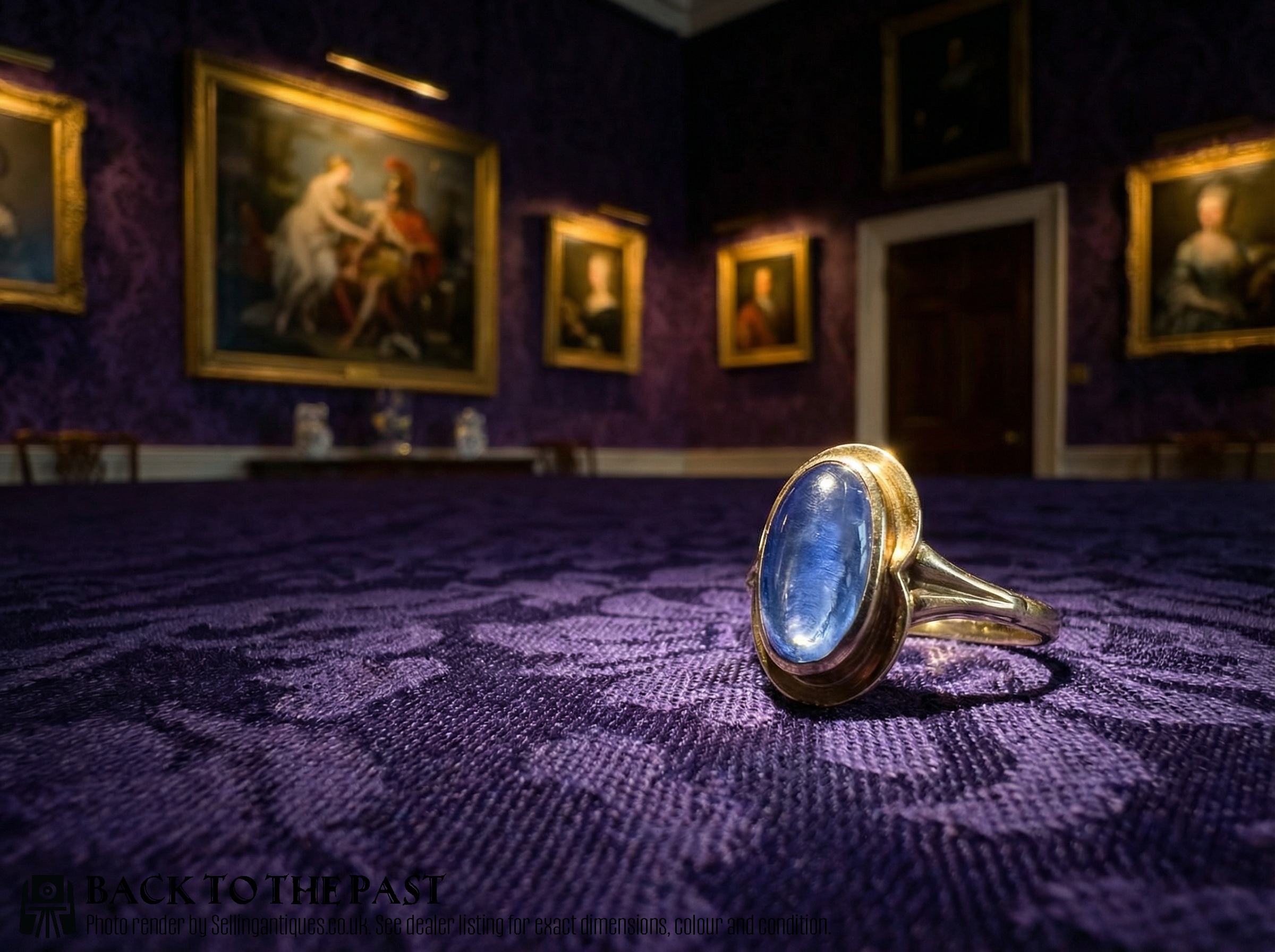
Yellow Gold Blue Ring
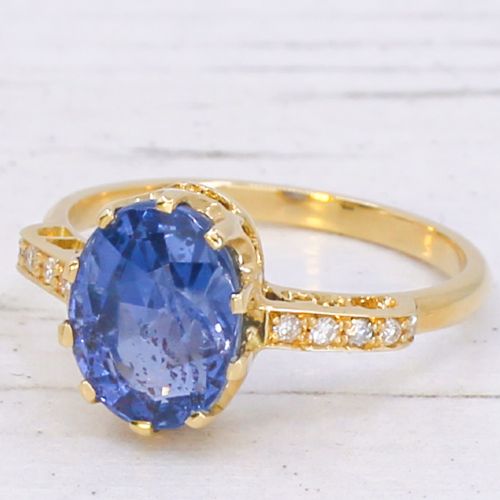
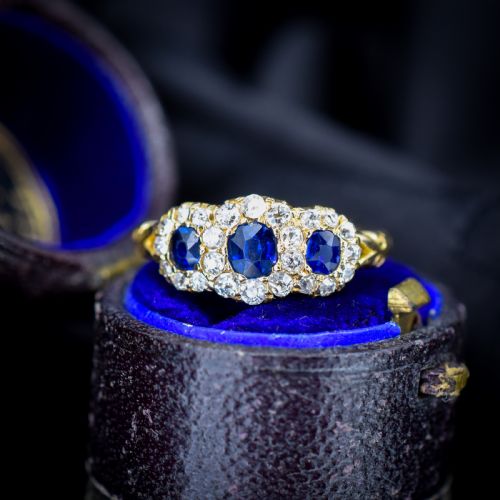
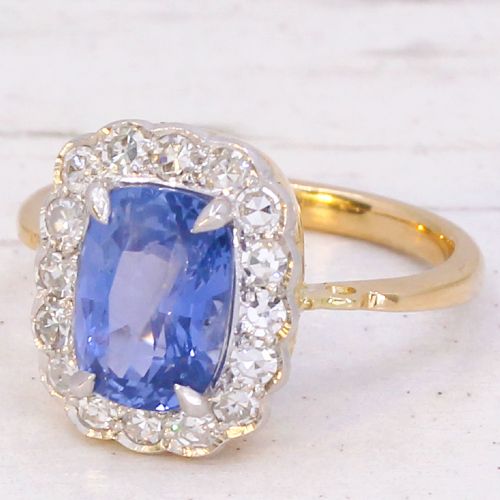
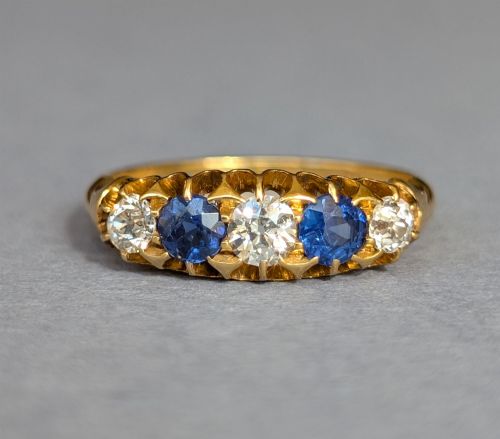
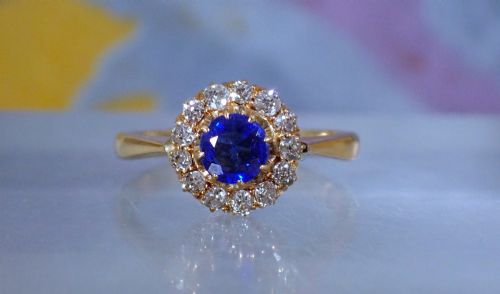
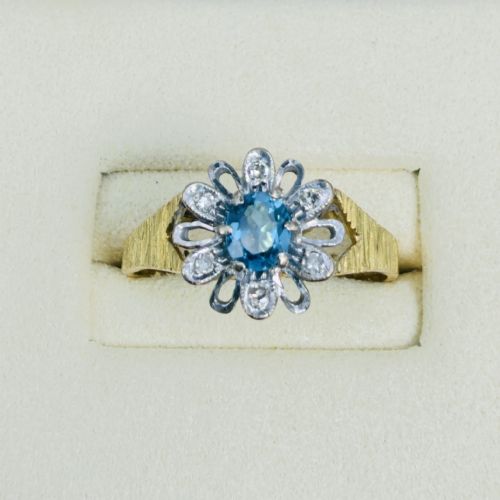
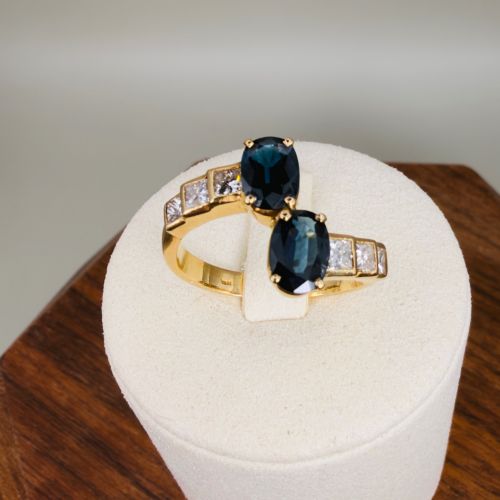
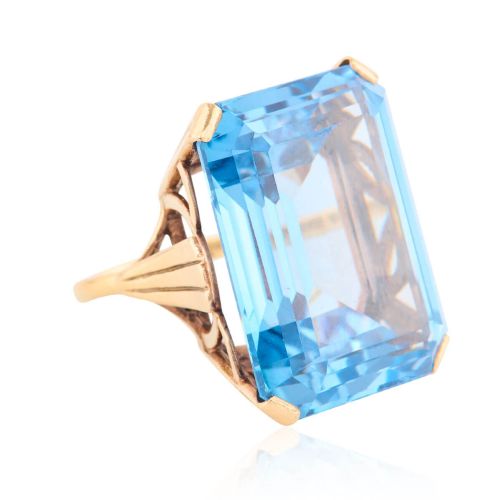
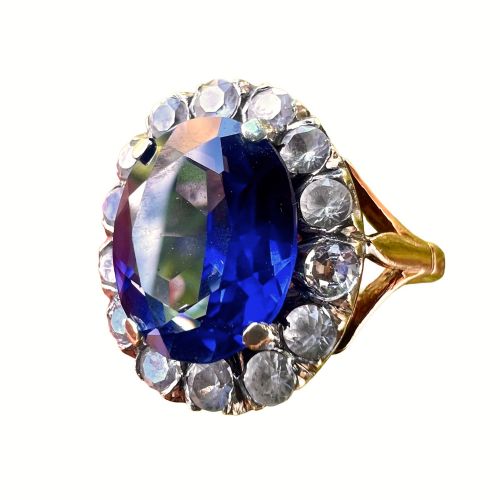
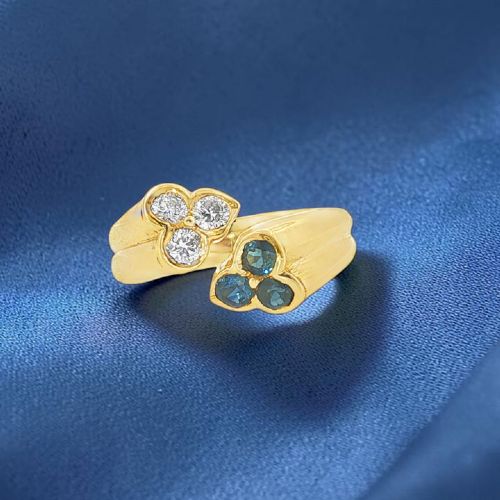
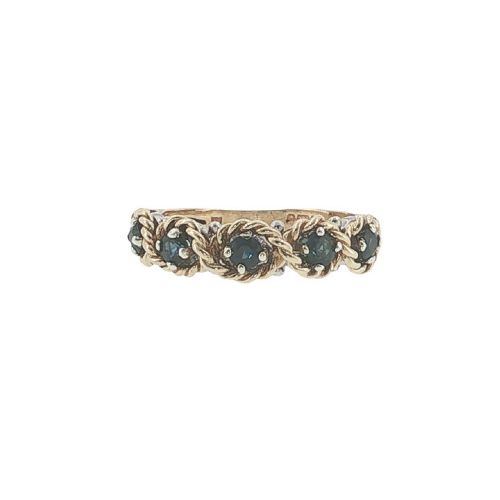
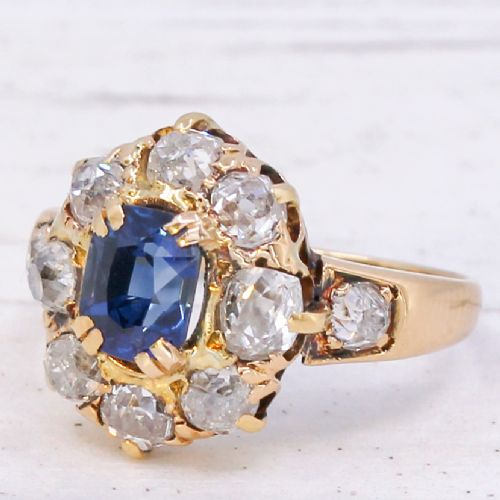
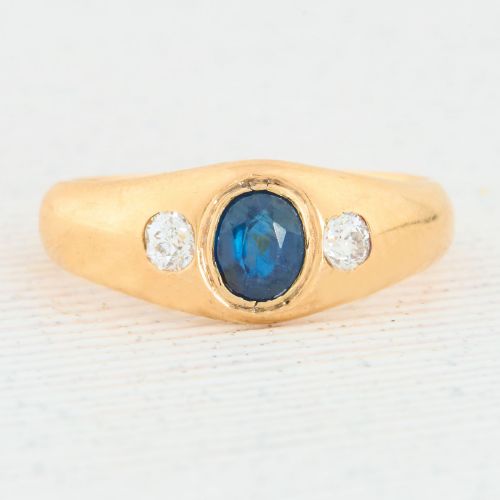
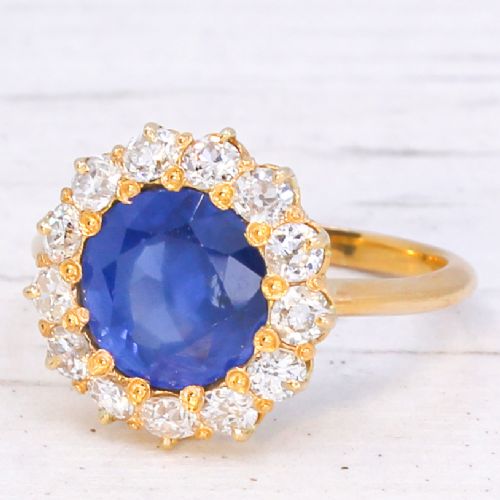
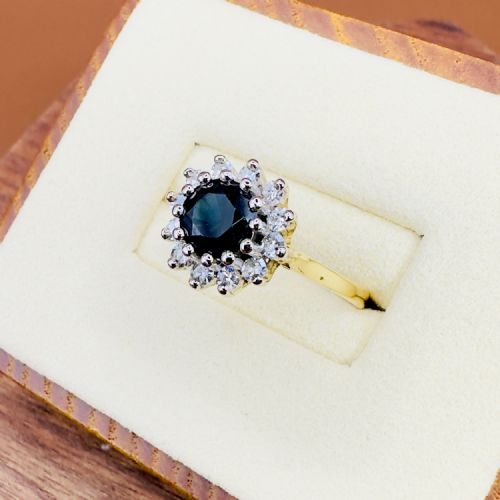
A yellow gold blue ring combines warm metallic bands with blue gemstones, spanning periods from the late nineteenth century through the Edwardian era and the Art Deco period into mid-century designs. You will frequently encounter cluster formations, traditional solitaires, and multi-stone settings on this page.
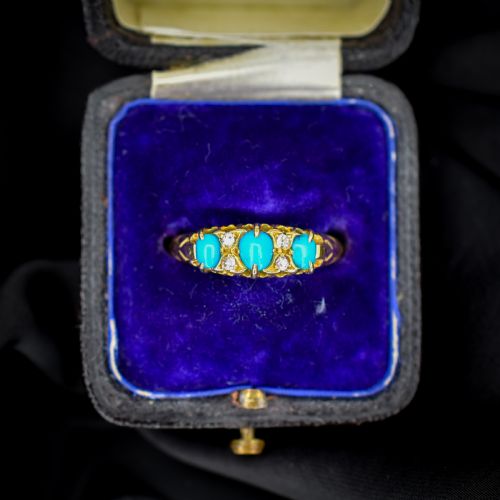
The blue stones span sapphires from origins such as Ceylon, Burma, and Kashmir, alongside turquoise, blue zircon, aquamarine, blue topaz, and blue paste. These rings served as everyday dress pieces, engagement tokens, and commemorative jewellery across generations of British and European craftsmanship.
How they were made
Goldsmiths utilised 18ct yellow gold, 9ct gold, and platinum, frequently combining yellow gold shanks with white metal settings to accentuate the brilliance of diamonds and the depth of blue stones. Stones were secured using claw settings, bezel mounts, and flush Gypsy settings integrated directly into the band.
Craftsmen shaped metal through casting, hand-fabrication, and detailed piercing, adding millegrain edges and engraved shoulders during the Edwardian and Art Deco periods. Gemstones were cut into old mine cuts, princess cuts, oval cuts, and transitional facets suited to the properties of each mineral.
Listings span Victorian, Edwardian, Art Deco, and Mid-Century periods, incorporating 18ct yellow gold, platinum, and 9ct gold.
What varies in quality
Quality rests upon the natural origin and untreated state of the central blue gemstone, with unheated stones carrying distinct geographical certifications commanding greater attention. The saturation and distribution of colour within sapphires or zircons determine the visual impact of the face-up appearance.
The precision of the metalwork, the matching and clarity of accompanying old cut or modern diamonds, and the preservation of original claw work or millegrain detail separate standard production from finer artisan workshops.
Kutchinsky
The Yellow Gold Blue Ring Glossary
- Cluster ring
- A ring design featuring a central gemstone surrounded by a border of smaller stones, usually diamonds.
- Gypsy ring
- A style where gemstones are flush-set directly into a heavy tapered band, popular during the late Victorian and Edwardian eras.
- Millegrain
- A decorative technique featuring a row of tiny raised metal beads along the edges of a setting.
- Old cut diamond
- A hand-faceted diamond cut before modern machinery, characterised by a smaller table, higher crown, and open culet.
- Trilogy ring
- A three-stone ring traditionally symbolising the past, present, and future.
Yellow Gold Blue Ring: Frequently Asked Questions
How do I date a yellow gold blue ring?
Dating relies on hallmarks stamped inside the shank, the cutting style of the diamonds, and the structural design of the setting. Specific motifs like millegrain work or boat shapes point directly to Edwardian or Art Deco periods.
Assay office marks and maker's stamps provide further chronological markers, while gemstone characteristics often align with specific historical mining regions.
Are sapphires heat treated?
Many historical sapphires remain completely unheated, meaning they display natural colour and clarity without thermal enhancement. Gemological reports accompanying certain pieces confirm whether a stone has undergone standard heating processes.
Unheated stones from origins like Ceylon or Kashmir are particularly valued by collectors for their natural formation.
Can I wear these rings every day?
Sapphires, diamonds, and spinels possess high hardness ratings suitable for daily wear, provided the settings remain secure and robust. Regular inspection of the claws prevents stone loss during routine tasks.
Softer materials like turquoise or paste require greater care and should be removed before water exposure or heavy manual work.
What is the difference between cluster and halo rings?
A cluster ring typically groups stones closely together to form a dense floral or geometric pattern across the finger. A halo ring specifically centres on one primary gemstone encircled by a distinct ring of smaller accent stones.
Both styles maximise visual presence by using surrounding diamonds to amplify the colour of the central blue stone.