

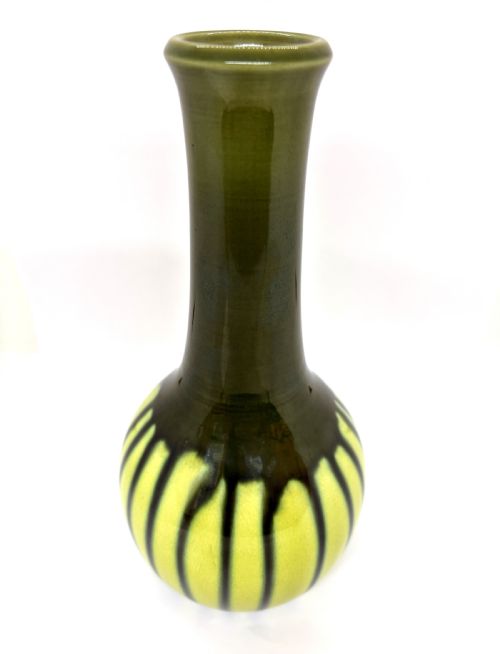
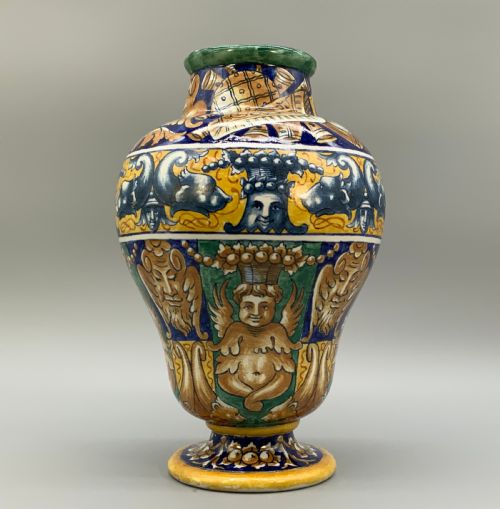
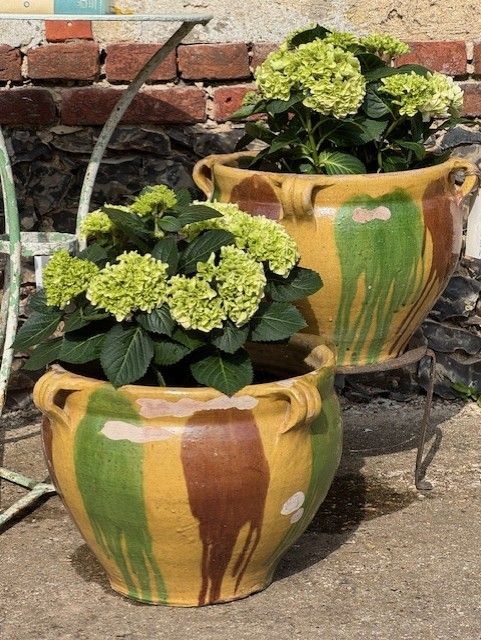


Yellow Glazed Earthenware Urn
These yellow glazed earthenware urns bring warmth and decorative presence to a room, spanning revivalist styles from the seventeenth century to the twentieth.
Yellow Glazed Earthenware Urn
Yellow glazed earthenware urns encompass a diverse group of vases, planters, and storage vessels originating mainly from nineteenth-century makers and revival periods. Buyers searching for a yellow glazed earthenware urn will find Italian majolica, French confit pots, and English art pottery sharing space on the shelves.
The most common forms on this page include Italian maiolica and faience vases decorated with polychrome palettes alongside French provincial planters. These pieces range from substantial garden vessels to decorative indoor amphorae and pedestal-mounted urns.
Makers drew on historical idioms from the Renaissance Revival to the Arts and Crafts movement, producing rich yellow and ochre surfaces. Such vessels function primarily as decorative objects or planters, carrying bright earthen tones into domestic spaces.
How they were made
Potters shaped these vessels from earthenware and terracotta before applying tin glazes or metallic lustre coatings to the body. These mineral-rich glazes fused during firing to create the characteristic yellow and ochre surfaces seen across the pieces.
Decoration often involved polychrome painting over an opaque tin-glazed ground, drawing on techniques associated with Italian maiolica and French faience production. Specialised slip techniques, such as dribble glazes, created running textural effects over the underlying ceramic body.
Yellow Glazed Earthenware Urn Retail Price Guide 2026
Typical asking prices for yellow glazed earthenware urn among the pieces listed under this phrase on Sellingantiques today, from the lower quarter to the upper quarter. They describe what is for sale here now, not the wider market.
French confit pots earned their keep preserving goose fat in chilly pantries before retiring to sunny drawing rooms as ornamental planters.
What varies in quality
Quality rests in the precision of the form and the richness of the tin glaze application. Finer examples display confident brushwork in polychrome decoration and even distribution of yellow pigment across complex surfaces.
The ambition of the design separates standard utility pieces from grander exhibition works, such as pedestal-mounted urns or modeled figures by notable potteries. Preservation of the glaze surface without extensive restoration dictates the standing of each vessel within its period.
Burmantofts Pottery·Cantagalli Faience·Minton
The Yellow Glazed Earthenware Urn Glossary
- Majolica
- Tin-glazed earthenware decorated with opaque colours on a white or pale ground. The technique gained prominence in Renaissance Italy and inspired later revivalist potteries.
- Confit Pot
- A traditional French earthenware jar designed for preserving food. These storage vessels often feature partial yellow or honey-coloured glazing near the rim.
- Amphora
- A tall two-handled jar used since antiquity for storage or decoration. Revivalist versions utilise traditional forms for purely ornamental purposes.
- Polychrome
- Decoration executed in multiple colours. In these ceramics, it describes the painted motifs applied over the tin glaze before final firing.
Yellow Glazed Earthenware Urn: Frequently Asked Questions
What is a yellow glazed earthenware urn?
It is a ceramic vessel coated in a mineral glaze, spanning styles from Italian maiolica to French provincial planters.
These objects range from utilitarian storage jars to decorative nineteenth-century revival vases intended for prominent display.
How do I date a yellow glazed urn?
Dating relies on stylistic clues, glaze characteristics, and the specific revival period referenced by the pottery. Nineteenth-century pieces frequently imitate earlier Renaissance or Baroque forms while utilising contemporary manufacturing methods.
Marks on the base or attribution to known potteries like Burmantofts help narrow the timeframe of manufacture.
Are these urns suitable for plants?
Many earthenware vessels and planters on this page were designed to hold plants or soil in domestic and garden settings. Glazed interiors help retain moisture, though porous earthenware requires care during colder months.
Buyers should check individual listings to confirm whether a piece is watertight or intended purely for dry decoration.
What is the difference between majolica and faience?
Majolica typically refers to Italian tin-glazed earthenware with bright polychrome decoration, particularly from revival periods. Faience is the broader French and European term for similar tin-glazed ceramics.
Both types share a porous earthenware body covered in an opaque glaze that accepts painted pigments.