

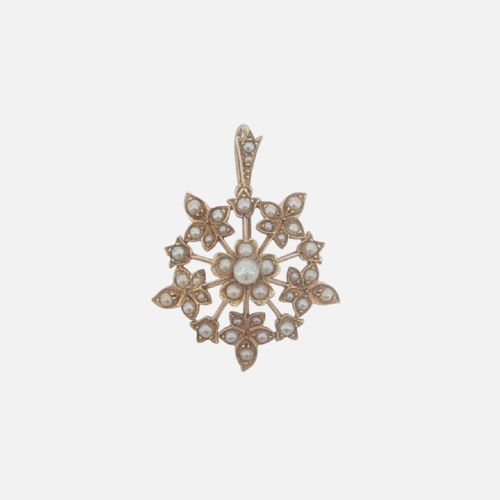
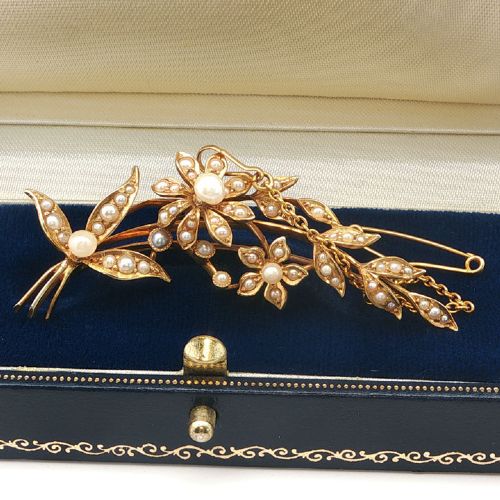


Yellow Flower Brooch
A yellow flower brooch brings botanical warmth to the lapel, combining rich golds and luminous gems in enduring floral motifs.
Yellow Flower Brooch
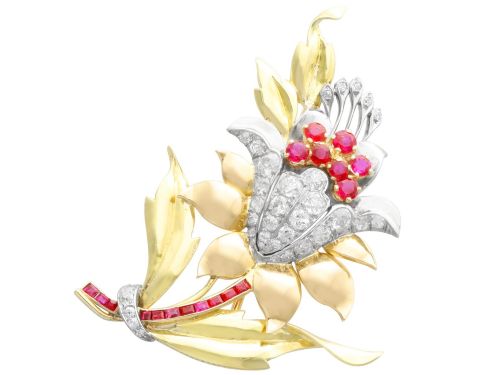
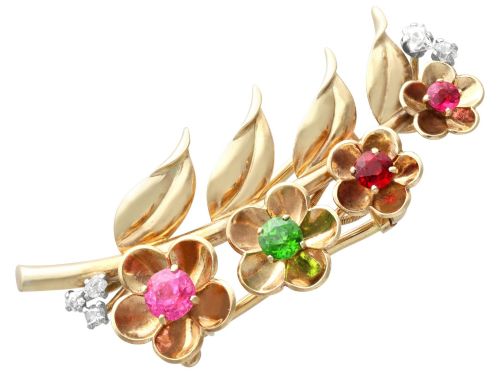
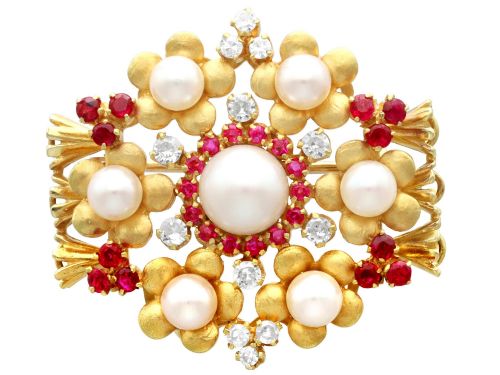
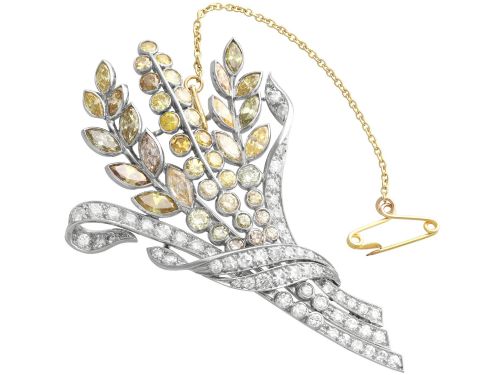
A yellow flower brooch draws on botanical forms spanning the Victorian, Edwardian, Art Deco, and mid-century periods. These pieces take the shape of flower sprays, floral clusters, and bar brooches accented with petals.
Buyers will encounter gold settings combined with diamonds, pearls, seed pearls, rubies, sapphires, turquoises, and garnets. The selection ranges from delicate late Victorian floral pins to substantial platinum-and-palladium spray creations from the nineteen-twenties.
Many examples double as multi-functional items, appearing as both brooches and pendants. The predominant character remains floral, captured through yellow gold, rose gold, and palladium.
Materials and construction methods
Goldsmiths utilised varying purities of gold, including nine-carat, fifteen-carat, eighteen-carat, and twenty-two-carat yellow gold, occasionally paired with palladium or rose gold. These precious metals formed the structural stems, leaves, and collets for the gems.
Gem-set petals and floral centres rely on traditional stone-setting techniques such as claw, bezel, and pave work. Seed pearls and pearls are threaded or pegged securely to precious metal stalks within intricate spray designs.
Yellow Flower Brooch Retail Price Guide 2026
Typical asking prices for yellow flower brooch among the pieces listed under this phrase on Sellingantiques today, from the lower quarter to the upper quarter. They describe what is for sale here now, not the wider market.
The listings span periods from eighteen-eighty through to nineteen-fifty-five, incorporating Victorian, Edwardian, Art Deco, and mid-century styles.
Distinctions in quality
The sophistication of the lapidary work and the calibre of the central gemstones determine the standing of an individual piece. Fine examples demonstrate precise matching of coloured stones and diamonds within balanced floral compositions.
Structural integrity and the preservation of delicate gold wirework or pierced foliage separate superior items from simpler productions. The weight and purity of the gold mountings also contribute significantly to the overall substance of the jewel.
Cartier
The Yellow Flower Brooch Glossary
- Flower spray brooch
- A pinned ornament depicting naturalistic floral stems, blossoms, and leaves arranged as if freshly cut. This form gained particular favour during the Edwardian and Art Deco eras.
- Seed pearl
- A very small natural or cultured pearl, often undrilled or half-drilled, used in dense clusters to form delicate flower petals in antique jewellery.
- Bar brooch
- A slender horizontal metal pin, frequently decorated with a central cluster or flower motif. It was widely worn at the neck or breast during the late Victorian and Edwardian periods.
Yellow Flower Brooch: Frequently Asked Questions
How do I wear a flower brooch?
Pin the brooch firmly to sturdy fabrics such as wool coat lapels, heavy silk scarves, or structured jacket fronts to support the weight of the gold and gemstones.
Ensure the safety clasp is fully secured before movement, allowing the botanical motif to sit upright and display its stones clearly.
Are these brooches solid gold?
The pieces utilise various grades of solid precious metal, ranging from nine-carat up to twenty-two-carat yellow gold, alongside platinum-group metals like palladium.
Maker marks and metal stamps often appear on the reverse pin stem or the rear of the floral gallery to confirm the alloy standard.
How do I date an antique brooch?
Examine the metal types, gemstone cuts, and overall artistic style, comparing them against characteristics from Victorian, Edwardian, and Art Deco periods.
Clasp mechanisms and pin fixings also provide reliable clues regarding the decade of manufacture, as fastening technology evolved continuously.
Can a brooch be worn as a pendant?
Certain designs incorporate hidden loops or swing bales on the reverse, allowing a chain to pass through the back of the floral frame.
This dual functionality was common in Edwardian and mid-century pieces, offering versatility between lapel wear and neck wear.