




Yellow Floral Artwork
Yellow floral artwork brings together botanical still lifes and garden scenes painted across the nineteenth and twentieth centuries.
Yellow Floral Artwork
Yellow floral artwork encompasses oil paintings and watercolours depicting blooms such as roses, marigolds, wallflowers, and chrysanthemums. These pieces span from the late nineteenth century through the mid-twentieth century, capturing botanical subjects in various settings.
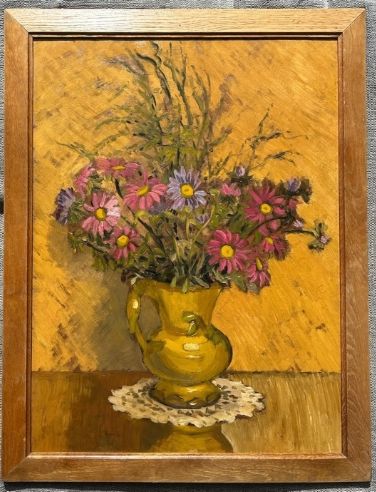
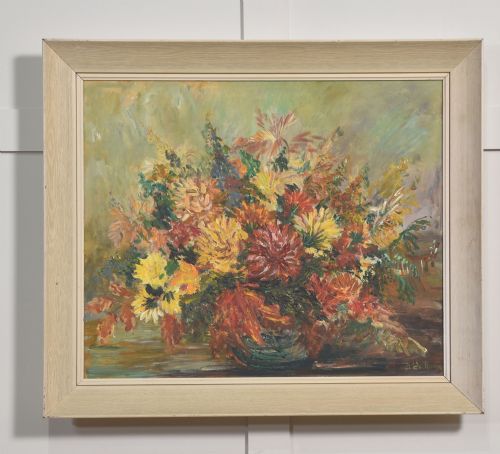
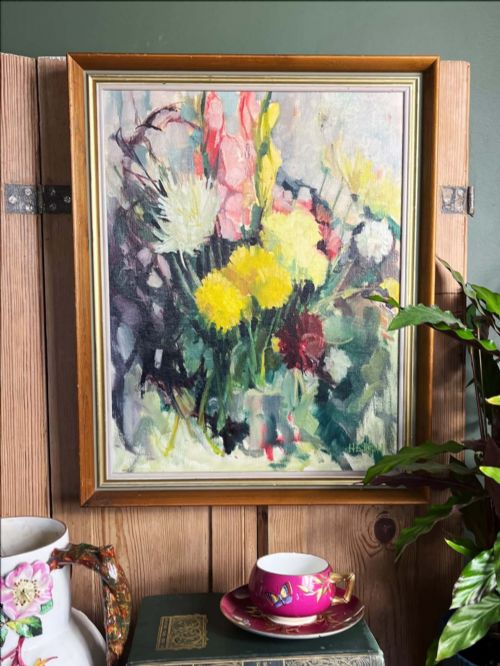
The version most commonly met on this page is the still life study, often showing flowers arranged in vases or baskets alongside fruit and pottery. Works range from Victorian detailed watercolours to mid-century impressionist canvases.
Materials and Techniques
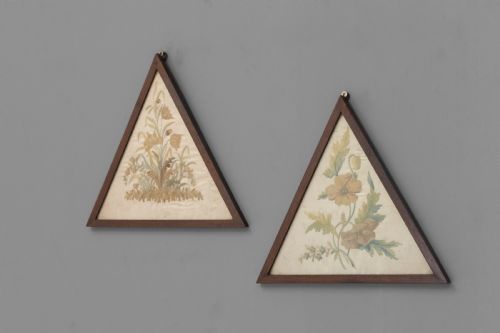
Artists painted these floral compositions primarily with oil paint on canvas or board, and with watercolour on paper. Some works utilise metal or embroidered panels to create textured floral displays.
Framed watercolours and oils employ traditional mounting methods, sometimes incorporating gilt frames that complement the warm tones of the painted petals.
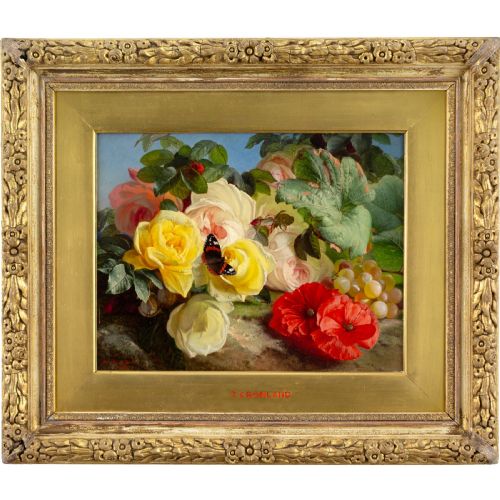
Butterflies occasionally share the canvas with nineteenth-century roses and grapes.
Distinctions in Quality
Quality in these works rests on the handling of light and the precision of botanical rendering by the hand of the artist. Stronger pieces demonstrate confident brushwork and balanced composition within the still life arrangement.
Provenance and clear attribution to recorded painters distinguish more notable examples from anonymous student or decorative output of the period.
Theude Grönland·Kenneth Cozens·Emma Fordyce MacRae·Harry Wanless·Henrietta Creswell·Amile Coppieters·Sir Matthew Smith·Eloise Harriet Stannard·Robin MacKertich·Freda Marston·Rowland Henry Hill·Phyllis I Hibbert·Marian Chase·Alice Macallan Swan·James Stuart Park·Ernest Higgins Rigg·John Sherrin·Beatrice Parsons·Julien Stappers·Bertoldo Taubert·Louisa Mary Bancroft·Owen Bowen
The Yellow Floral Artwork Glossary
- Still life
- A painting or drawing focussing on inanimate objects, commonly including flowers, fruit, and vessels. These compositions allow artists to study light and colour closely.
- Watercolour
- A paint consisting of pigment suspended in a water-soluble vehicle, applied to paper. It yields transparent washes well suited to delicate botanical studies.
- Impressionism
- A style of painting emphasising light and its changing qualities rather than minute detail. Mid-century examples apply this to floral subjects.
- Gilt
- Covered thinly with gold leaf or gold paint. This finish often appears on the frames enclosing older oil paintings.
Yellow Floral Artwork: Frequently Asked Questions
What periods do these pieces cover?
The selection spans from the late nineteenth century through the mid-twentieth century. This includes Victorian, Edwardian, and mid-century modern eras.
Each period brings distinct stylistic choices, moving from detailed realism towards looser impressionistic interpretations of floral subjects.
How are these artworks typically displayed?
Many pieces arrive framed, ready for wall mounting in domestic interiors. Oils on canvas or board and watercolours behind glass are standard formats.
Placement benefits from moderate lighting that highlights the warm yellow pigments without exposing fragile paper watercolours to direct sunlight.
Are these works signed by artists?
A significant portion of the pieces carry signatures or attributions to known painters of the nineteenth and twentieth centuries. Documentation often links them to specific regional groups or artistic movements.
Unsigned works also appear, representing period study pieces and decorative botanical art from commercial or private studios.
What subjects accompany the flowers?
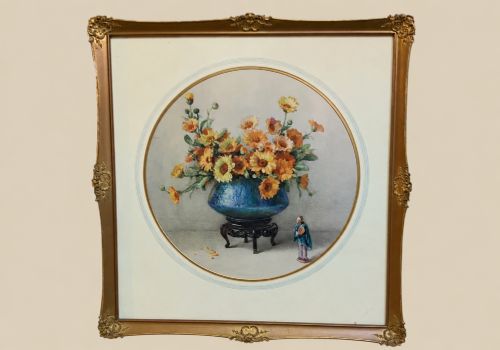
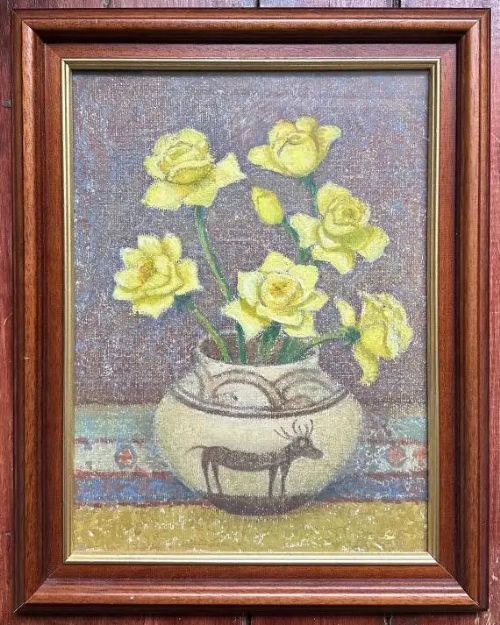
Floral arrangements frequently share space with fruit, pottery vessels, Chinese objects, and bird's nests on mossy banks. Some compositions place the blooms within garden landscapes or park settings.
These surrounding elements provide context and help date the stylistic approach of the painting.