


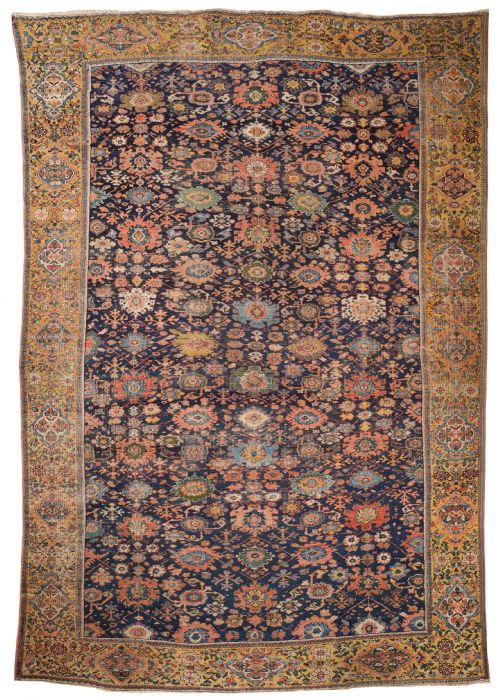

Yellow and Blue Rug
A yellow and blue rug brings warmth and striking contrast to a room through centuries-old weaving traditions.
Yellow and Blue Rug
A yellow and blue rug encompasses hand-knotted and flat-woven floor coverings originating from diverse global traditions including Persian, Anatolian, Chinese, and Indian workshops. These textiles span periods from the nineteenth century into the early twentieth century, utilising traditional wool and cotton constructions.
Buyers encountering this selection will most frequently find regional forms such as Ushak, Konya, Farahan, and Ningshia carpets alongside Arts and Crafts designs. Each piece reflects the distinct aesthetic priorities of its origin, whether geometric tribal patterns or refined court styles.
Materials and construction
These floor coverings rely primarily on wool and cotton as foundational materials for both foundation warps and pile knots. Weavers employed natural dyes to achieve durable yet varied hues across different regional traditions.
Construction methods range from pile weaving in antique carpets and seating mats to flat-woven techniques seen in Indian dhurries and Soumac pieces. Each method dictated the texture and weight of the finished textile.
Yellow and Blue Rug Retail Price Guide 2026
Typical asking prices for yellow and blue rug among the pieces listed under this phrase on Sellingantiques today, from the lower quarter to the upper quarter. They describe what is for sale here now, not the wider market.
The listings include wool and cotton pieces spanning the nineteenth century and the early twentieth century across multiple global styles.
Evaluating craftsmanship
Quality in these textiles rests upon knot density, handle of the wool, and the precision of the design execution. Finer examples display meticulous attention to detail within complex motifs, whether tribal medallions or classical floral layouts.
The sophistication of the dye palette and the integrity of the weave separate standard utilitarian items from exceptional workshop and tribal productions. Original structural survival also influences the overall standing of an individual piece.
Gavin Morton·Tuduc
The Yellow and Blue Rug Glossary
- Soumac
- A flat-weaving technique where decorative face yarns wrap around the warp threads before continuing across the rug. This method creates a sturdy structure with a textured surface.
- Pile
- The upright yarn loops or knots that form the usable surface of a carpet. Density of this layer often dictates durability.
- Warp
- The stationary vertical threads stretched upon a loom before weaving begins. These foundational elements support the entire textile structure.
- Dhurrie
- A traditional flat-woven rug or carpet originating from India. These pieces lack a raised pile and are typically constructed from cotton or wool.
Yellow and Blue Rug: Frequently Asked Questions
How do I clean a fragile antique rug?
Professional specialist cleaning is essential for older woven textiles to prevent dye bleeding and fibre damage. Routine gentle vacuuming without a beater bar removes loose debris safely between washes.
Harsh household detergents and excessive moisture must be avoided entirely. Allowing professionals who understand antique wool and cotton to handle maintenance preserves the textile.
Can I place these rugs in high traffic areas?
Sturdier wool carpets and flat-weaves handle moderate foot traffic well when placed over a quality underlay. Placing them away from direct, continuous heavy wear protects delicate older foundations.
Lighter seating mats and delicate cotton dhurries suit low-traffic display spaces better. Proper placement ensures the textile remains stable and protected from undue strain.
What underlay should I use underneath?
A breathable, high-grade rug underlay prevents slipping and cushions the textile against hard flooring. This layer reduces friction between the floorboards and the historic foundation threads.
Selecting a natural rubber or felt pad avoids chemical interactions with older dyes. Proper cushioning also helps maintain the flat lay of the carpet.
How do I identify regional weaving styles?
Regional identification relies on examining specific motifs, border arrangements, and structural materials characteristic of areas like Anatolia, Persia, or China. Each weaving tradition utilised distinct colour combinations and structural techniques.
Consulting reference literature and comparing knotting styles aids accurate attribution. Familiarity with specific regional aesthetics reveals the geographic origin of the textile.