




Wrought Iron Shelving
Wrought iron shelving brings robust utility and French industrial character to an interior, combining sturdy metal framework with practical tiers.
Wrought Iron Shelving
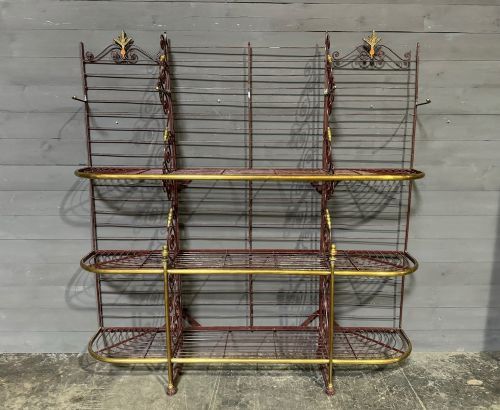
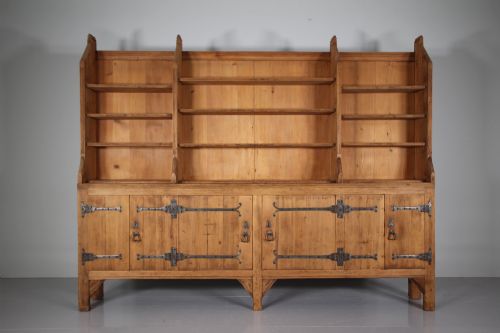
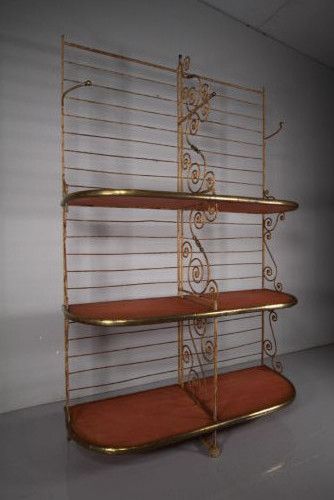
Wrought iron shelving encompasses robust baker's racks, patisserie racks, plant stands, and bookcases designed for heavy storage and display. When you search for wrought iron shelving, you encounter utilitarian pieces originating from French bakeries and English homes.
The pieces listed on this page span the Victorian era, the nineteenth century, and the early twentieth century. Forms range from large Parisian boulangerie bread racks to white-painted pot stands and scroll-work bakery racks.
French industrial and French country styles dominate the selection, alongside Gothic Revival influences and English pine bookcases with Godwinesque details. These items transition easily from commercial origins to domestic storage solutions.
How they were made
Makers shaped heavy wrought iron and steel into rigid support frames, often incorporating decorative scroll-work and stamped maker details. Structural integrity was paramount to hold heavy loaves, pastries, and pots in busy commercial environments.
Combinations of wrought iron, brass, and painted metal meet timber elements such as pine shelving. Surfaces received protective or decorative coats of paint, which now show age through historical wear and patination.
Wrought Iron Shelving Retail Price Guide 2026
Typical asking prices for wrought iron shelving among the pieces listed under this phrase on Sellingantiques today, from the lower quarter to the upper quarter. They describe what is for sale here now, not the wider market.
What varies in quality
Quality rests upon the fineness of the scroll-work and the structural weight of the iron frame. Heavier, stamped Parisian pieces demonstrate superior commercial provenance compared to lighter domestic alternatives.
The integrity of combined materials distinguishes finer examples, particularly where original pine boards or brass fittings remain intact alongside the iron framework. Surface preservation, including untouched painted finishes, marks the better survivors of the period.
Dubois of Lyon
The Wrought Iron Shelving Glossary
- Baker's rack
- A tall, multi-tiered metal shelving unit originally used in French bakeries for cooling bread and pastries. They feature open iron scroll-work and multiple shelves.
- Godwinesque
- A design style associated with the aesthetic movement and Godwin, characterised by slender structural framing and refined proportions. It appears on nineteenth-century bookcases.
- Boulangerie rack
- A French term for a baker's storage unit, constructed from wrought iron to hold heavy loads of bread. These frequently date from the nineteenth and early twentieth centuries.
- Pot stand
- A compact iron or metal stand designed to hold heavy plant pots or kitchen vessels. Victorian examples often feature white painted finishes.
- Patisserie rack
- A specialised shelving structure used for displaying pastries, sharing the open ironwork characteristic of baker's racks.
Wrought Iron Shelving: Frequently Asked Questions
What were wrought iron shelves originally used for?
These robust metal units served commercial purposes in French bakeries and patisseries, where bakers utilised them to cool and store fresh bread.
Over time, their sturdy construction and open design made them practical for domestic storage and display in kitchens and living spaces.
How do I identify a French baker's rack?
French baker's racks typically feature heavy wrought iron scroll-work frames combined with multiple tiers for storage. Large Parisian examples often bear stamps from makers such as Dubois of Lyon.
They span the nineteenth century and early twentieth century, showing industrial characteristics distinct from standard domestic shelving.
Are these shelves suitable for heavy books?
The original commercial purpose of these racks required them to bear heavy loads of bread and metal equipment. Their substantial wrought iron and steel frames provide exceptional structural strength.
When fitted with solid pine boards, these units easily support heavy book collections and large decorative objects.
How should I care for painted iron shelving?
Painted iron and metal surfaces benefit from gentle dusting with a dry cloth to preserve historical finishes. Avoid harsh chemical cleaners that might strip the aged patina.
Checking structural joints periodically ensures the iron and timber components remain stable under everyday use.