
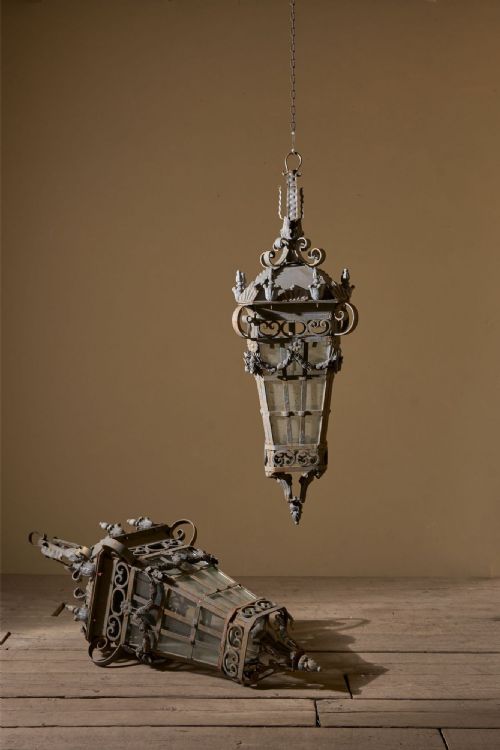
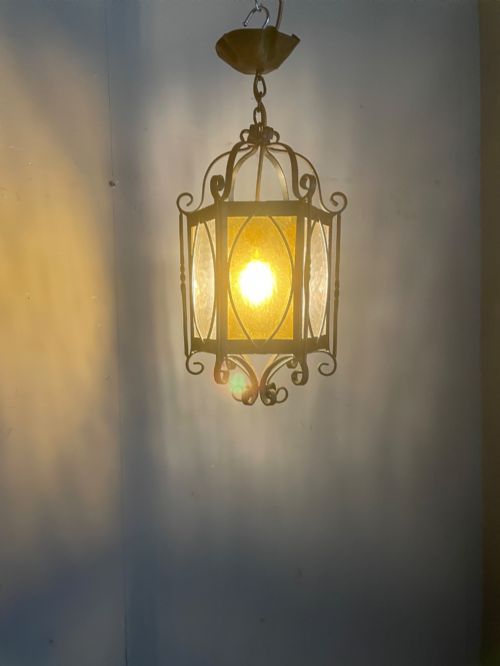
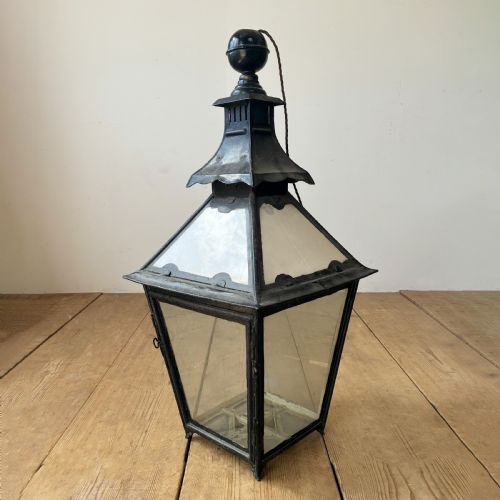


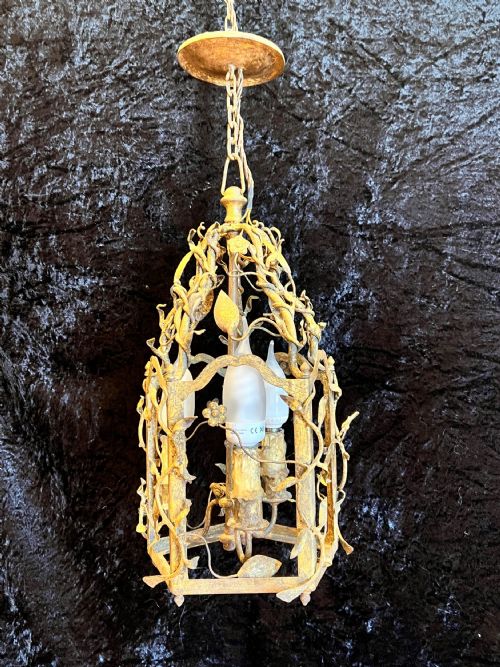


Wrought Iron Hanging Lantern
These wrought iron hanging lantern examples bring robust metalwork and period character to entranceways, hallways and porches.
Wrought Iron Hanging Lantern
A wrought iron hanging lantern provides architectural illumination for hallways, porches and larger rooms, drawing on designs from the Victorian and Edwardian eras through to the 1930s. Buyers searching for a wrought iron hanging lantern encounter pieces intended for both interior circulation spaces and exterior entrances, shaped by domestic traditions across Britain and France.
Materials and construction methods
Makers shaped the structural frames primarily from wrought iron and steel, sometimes combining them with copper, zinc or gilt metal to accent the metalwork. Blacksmiths forged these bars and scrolls by hand to create durable outdoor and indoor lighting cages.
Panels of glass complete the structure, incorporating clear glass, frosted glass, leaded glass or stained glass to diffuse the light source. These translucent elements are held securely within the metal framework using traditional glazing techniques.
Listings feature pieces from the 19th Century, Edwardian and 1930s eras, utilising wrought iron, copper, zinc and various types of glass.
Distinguishing finer examples
Quality rests in the dexterity of the blacksmith's handiwork, where fluid scrolls and clean joints distinguish finely executed ironwork from heavier, more rudimentary production. The articulation of decorative motifs, such as shamrocks or Gothic tracery, dictates the visual refinement of the piece.
The integration of secondary metals and the complexity of the glass panels also separate standard utility fixtures from ambitious decorative commissions. Original glazing, particularly leaded or stained glass, elevates the integrity of surviving lanterns.
The Wrought Iron Hanging Lantern Glossary
- Wrought iron
- Iron that has been heated and worked with tools by a blacksmith rather than cast in a mould. This material displays fibrous grain patterns and individual hammer marks from the forging process.
- Leaded glass
- Small panes of glass joined together in a decorative arrangement using narrow strips of lead called cames. It is frequently seen in Arts and Crafts and Gothic Revival lighting fixtures.
- Frosted glass
- Glass treated to diffuse light by scattering its rays, creating a soft, non-glare illumination. This finish gained popularity in the early twentieth century and Art Deco periods.
- Hall lantern
- A light fixture designed specifically to hang in an entrance hall or corridor, often enclosed with glass panels to protect the flame or bulb from drafts.
- Gothic Revival
- An architectural and decorative style drawing inspiration from medieval forms, featuring pointed arches, tracery and robust metal framing.
Wrought Iron Hanging Lantern: Frequently Asked Questions
Where should I hang these lanterns?
These lanterns suit high-ceilinged entrance halls, stairwells and covered porches where their proportions and metal frames can be viewed from multiple angles. They also anchor large reception rooms when wired as central ceiling lights.
Ensure the hanging height clears head height while placing the light source low enough to illuminate the circulation space effectively.
How do I date an antique lantern?
Dating relies on combining stylistic clues with construction methods, such as observing whether the iron is hand-forged or machine-rolled, and noting the type of glass used. Aesthetic indicators like Gothic Revival tracery or Art Deco geometry place pieces within specific decades.
Examining the wiring components and structural fixings also helps determine whether the piece originates from the Victorian era or the 1930s.
Can these lights be used outdoors?
Many of these pieces served originally as porch lights or outside fixtures, built with robust iron frames and protective glass panels designed to withstand the elements. However, surviving antique wiring and historic metal surfaces require professional assessment before exterior installation.
Consult an electrician to ensure the lantern meets modern safety standards for damp or exposed locations.
How do I clean historic wrought iron?
Dust the iron framework gently with a dry, soft cloth to remove surface particles without disturbing the protective wax or historic patina. Avoid harsh chemical cleaners or abrasive scouring pads that can strip the original surface finish.
Glass panels can be removed carefully or wiped in place using a mild glass cleaner applied to a cloth rather than sprayed directly onto the metal.