



Wrought Iron Glass Table
A wrought iron glass table balances sturdy metalwork with clear or opalescent glass surfaces, bringing industrial strength and refined domestic utility into a room.
Wrought Iron Glass Table
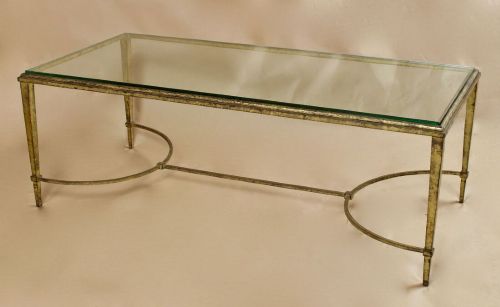
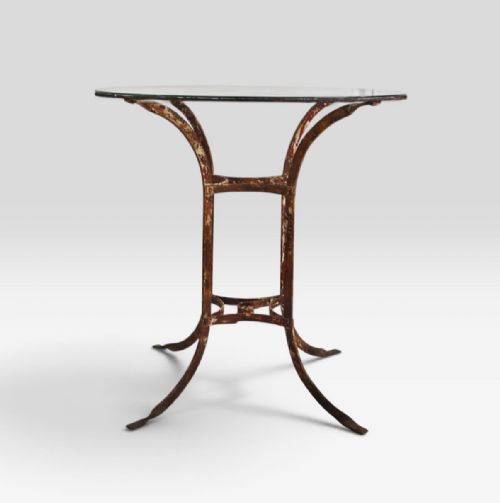
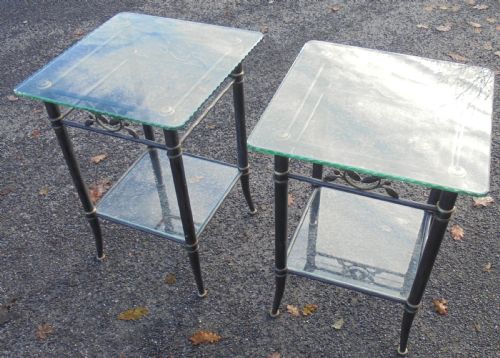
A wrought iron glass table combines heavy iron framing with fitted glass panels, often taking the form of coffee tables, console tables, and low tables. These pieces span the Victorian era, the early twentieth century, and the Art Deco period, demonstrating how metal and glass work together across domestic furniture.
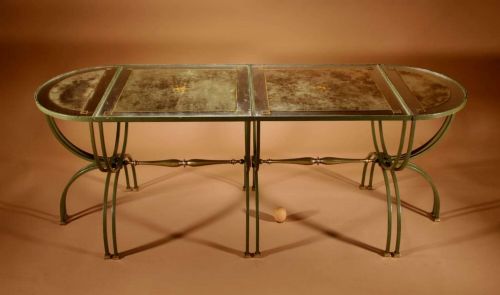
French design heavily influences the selection, with styles ranging from French Neoclassical and French Provincial to bold Art Deco interpretations. Buyers encounter curved green iron frames alongside gilded or brass-mounted structures that support clear, mirrored, or enamelled glass tops.
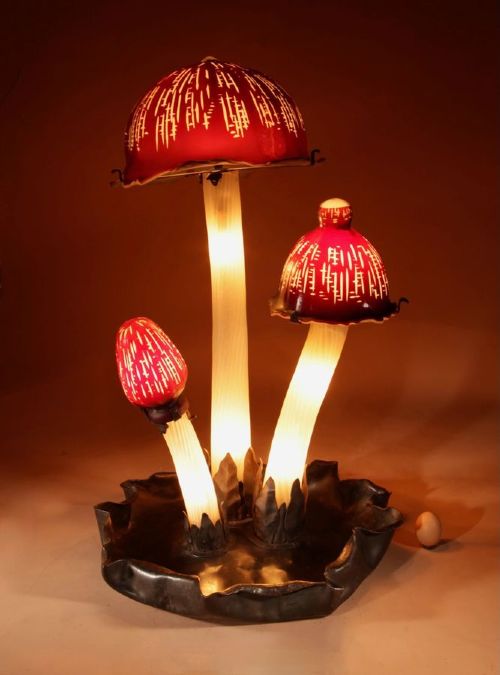
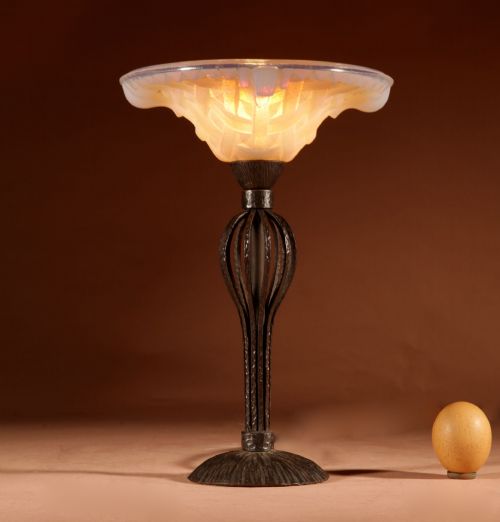
Beyond standard coffee and console forms, related lighting and decorative objects appear in iron and glass, including table lamps and vases with opalescent glass elements. The core selection remains focused on sturdy support tables designed for everyday interior display.
Construction and materials
Makers shaped wrought iron into curved profiles and structural supports, frequently enhancing the metal with applied paint, gold leaf, or brass fittings. This combination of forged iron and polished brass creates a distinct visual contrast between industrial framing and decorative detail.
Table surfaces and decorative inserts utilise various specialised glass techniques, including original glass panels, mirrored surfaces, and opalescent or enamelled finishes. Artisans integrated these fragile glass elements securely within heavy iron frames to ensure practical stability.
Wrought Iron Glass Table Retail Price Guide 2026
Typical asking prices for wrought iron glass table among the pieces listed under this phrase on Sellingantiques today, from the lower quarter to the upper quarter. They describe what is for sale here now, not the wider market.
French design styles ranging from Neoclassical Revival to Art Deco appear frequently across the twentieth century pieces.
Assessing quality and craftsmanship
Quality rests in the precision of the ironwork and the integration of specialised glass components, where complex forging and original decorative treatments elevate a piece. Finer examples display meticulous attention to detail in brass mounts, gilding, or enamel work.
The sophistication of the period style defines the upper tier of pieces, particularly when French Art Deco design influences the silhouette and glass selection. Simpler utility items offer straightforward iron framing without the artistic embellishments found in works associated with named glassmakers.
Maison Ramsay·Lacroix·Lalique·Schneider
The Wrought Iron Glass Table Glossary
- Wrought iron
- A tough, malleable form of iron that blacksmiths heat and hammer into custom shapes. This material allows for sturdy furniture framing and curved decorative motifs.
- Opalescent glass
- Glass that exhibits a milky, translucent appearance with pearlescent colour shifts. Makers utilised this material in decorative lamps and decorative table inserts.
- Art Deco
- A design style spanning the 1920s and 1930s characterised by geometric symmetry, stylised motifs, and sleek lines. Pieces from this period frequently combine forged iron with enamelled or moulded glass.
- Console table
- A long, narrow table designed to stand against a wall, often featuring a decorative iron base and a glass or mirrored top. These tables served functional display roles in nineteenth and twentieth century interiors.
- Enamelled glass
- Glass decorated with melted powdered glass colours fused to the surface through firing. This technique adds rich patterns and opaque colour to lamp shades and vessel inserts.
Wrought Iron Glass Table: Frequently Asked Questions
What periods do these tables represent?
The listings span from the nineteenth century through the 1920s, 1930s, and 1940s. Victorian pieces sit alongside French Neoclassical and Art Deco examples.
Art Deco items from the 1920s and 1930s dominate the selection, showing distinct modernist curves and specialist glasswork.
How do I clean a glass top on iron?
Use standard glass cleaner on the top surface while avoiding harsh chemicals that might strip paint, gold leaf, or patination from the surrounding iron.
Dry the metal framing promptly after dusting to protect the forged surface and any integrated brass mounts from moisture.
Where should I place a console table?
Console tables fit neatly against hallway or living room walls where surface space is needed without blocking circulation.
Their narrow footprint allows them to support lamps, vases, or decorative objects while displaying the ironwork and glass top clearly.
Are these tables purely decorative?
While visually striking, these tables were built for functional domestic use as coffee tables, side tables, and sturdy garden furniture.
The combination of wrought iron frames and fitted glass provides a stable surface for everyday items.