



Wrought Iron Console
Wrought iron console tables bring substantial metalwork and stone surfaces together, offering a sturdy yet decorative anchor for hallways and living spaces.
Wrought Iron Console
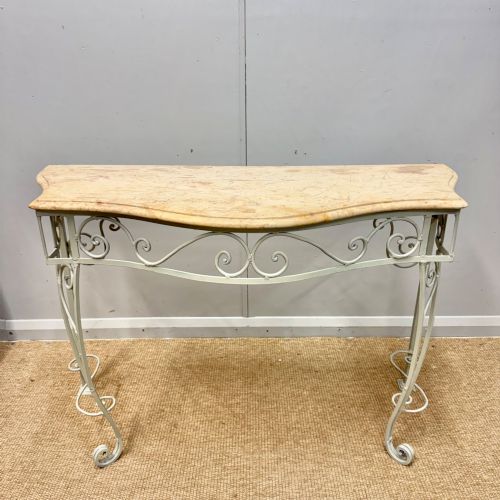
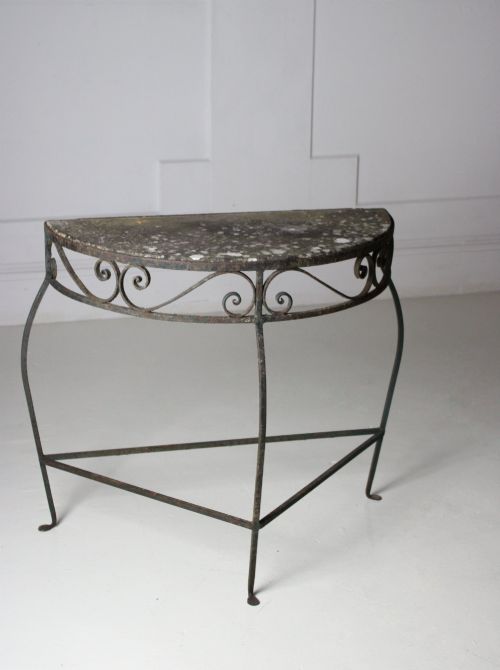
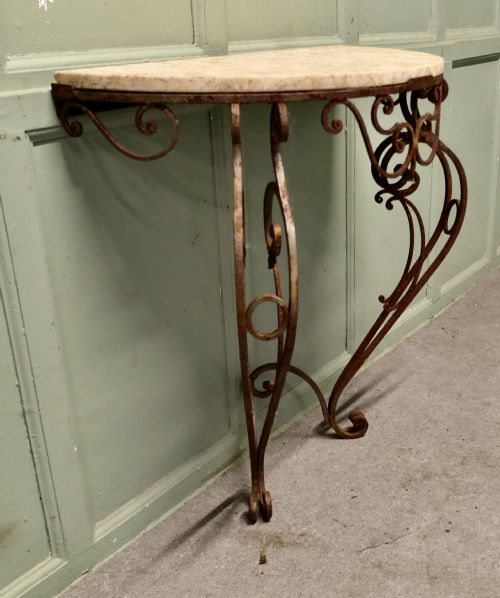
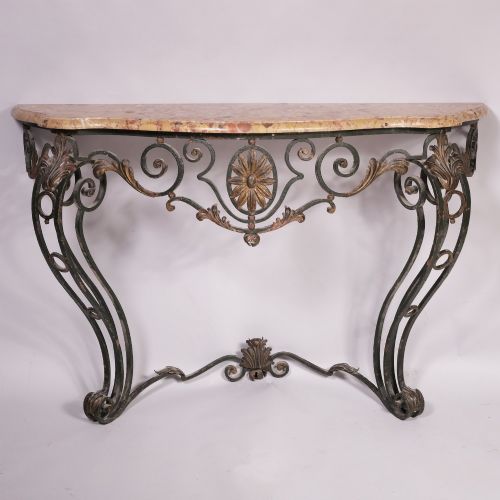
A wrought iron console represents a sturdy class of hall and side tables built primarily for utility and decorative presence against a wall. When you search for a wrought iron console, you encounter pieces shaped by French Country, Spanish Baroque, and Victorian traditions.
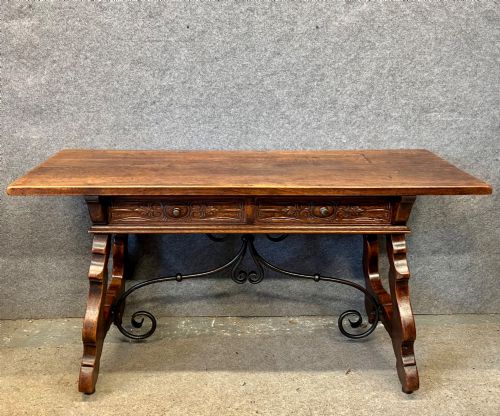
The majority of these tables pair heavy iron frames with smooth stone or timber surfaces. Marble tops predominate, alongside occasional timber boards in oak, walnut, or pine.
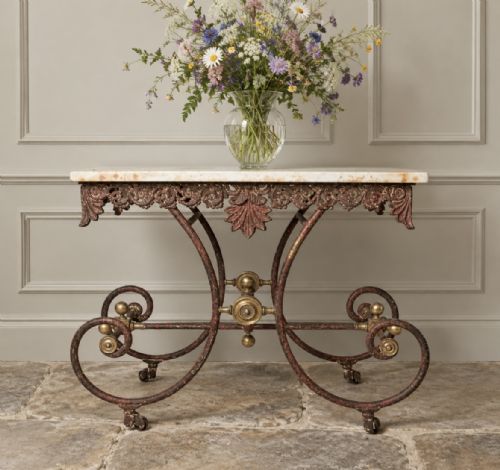
Origins stretch from the seventeenth century through the Edwardian era and the nineteen-twenties, incorporating both domestic hall furniture and heavy work tables adapted for domestic interiors.
Materials and construction methods
Makers utilised forged and cast iron to build rigid underframes capable of supporting heavy stone slabs. Wrought iron elements show hand-forged curves and structural joints, while cast iron components provide repetitive decorative motifs and robust legs.
Tops consist predominantly of thick marble, frequently featuring serpentine or rectangular cuts that rest directly upon the iron base. Timber surfaces in walnut, oak, and pine appear on related console forms and work tables, joined with traditional carpentry.
Surface treatments rely on the natural patination of aged metal and timber rather than heavy modern finishes. Brass accents sometimes appear alongside the iron framework to add subtle contrast.
Listings span from the seventeenth century to the nineteen-twenties, combining iron, marble, oak, walnut, and brass across French and Spanish regional styles.
Distinctions in quality and execution
Superior examples display hand-forged ironwork with fluid, confident lines and integrated structural support. Lesser pieces rely on simpler cast elements or heavier, less refined industrial framing.
The quality of the top surface defines much of the piece, with thick, well-figured marble slabs commanding greater presence than standard timber boards. Original surface patinas on both the metal and stone elevate the overall integrity of the console.
The Wrought Iron Console Glossary
- Wrought iron
- Iron that has been heated and hammered into shape by a blacksmith, known for its fibrous structure and durability. It bends rather than snaps under extreme stress.
- Console table
- A table designed to stand against a wall, often fixed or supported by brackets, serving as a decorative surface in a hall or reception room.
- Serpentine
- A furniture top or front edge curved in a wave-like shape, featuring a convex centre flanked by concave ends. This contour requires skilled stone-cutting or woodworking.
- Patina
- The surface sheen and colour acquired by materials through age, handling, and wear. A good patina indicates genuine historical use.
- Cast iron
- Iron poured into a mould to create complex shapes and decorative forms. It is harder and more brittle than wrought iron.
Wrought Iron Console: Frequently Asked Questions
Where should I place a console table?
These tables suit narrow circulation spaces such as hallways, corridors, and entrance lobbies where floor space is limited. Their narrow profile allows them to sit flush against a wall without obstructing movement.
They also function effectively in living rooms as decorative display surfaces beneath mirrors or artwork, providing a stable platform for lamps and ceramics.
How do I clean a marble top?
Wipe the marble surface regularly with a soft, damp cloth using mild, pH-neutral soap to prevent dust accumulation. Avoid acidic cleaners, vinegar, or citrus products, which etch and dull the polished stone.
Dry the surface thoroughly after cleaning to prevent water spots and maintain the natural lustre of the marble.
Can these tables support heavy objects?
The rigid iron underframes and heavy stone tops provide exceptional structural stability for daily household items. They easily support large lamps, heavy books, and decorative bronze or ceramic pieces.
Ensure the console rests evenly on the floor so the weight distributes properly across the iron legs and frame.
How do I identify a nineteenth-century piece?
Examine the ironwork for hand-forged irregularities and traditional joinery methods that distinguish older blacksmith work from modern reproductions. Look for natural wear patinas on the metal surfaces and the underside of the stone.
Check the timber or marble components for period-appropriate thickness, fixings, and edge profiles consistent with nineteenth-century workshop practices.