



Wrought Brass Light
Wrought brass light fixtures bring industrial strength and warmth into a room, combining heavy metalwork with functional illumination.
Wrought Brass Light
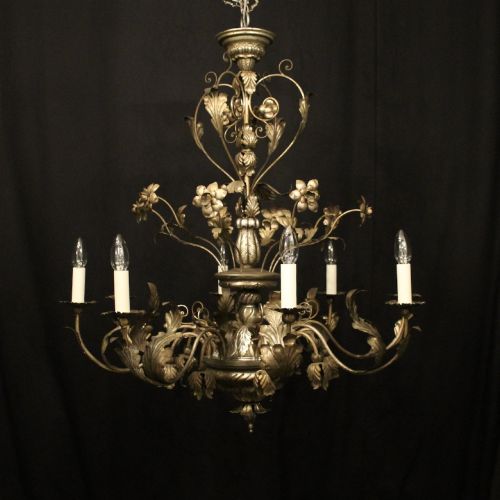
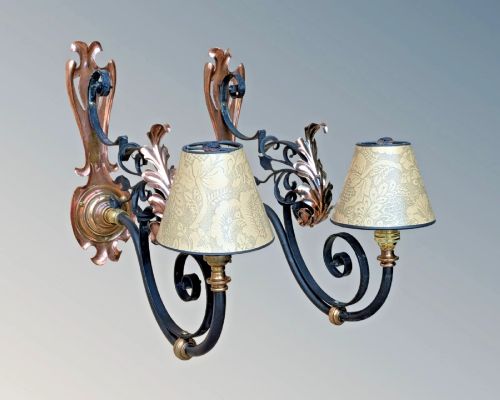
A wrought brass light combines hammered or shaped metal with functional illumination, spanning forms from chandeliers and floor lamps to wall lights and candlesticks. These pieces emerge across several periods, including the Victorian era, the Edwardian period, and the early decades of the twentieth century. Examples often reflect distinct design movements such as Arts and Crafts, Art Nouveau, Gothic Revival, and Amsterdam School aesthetics.
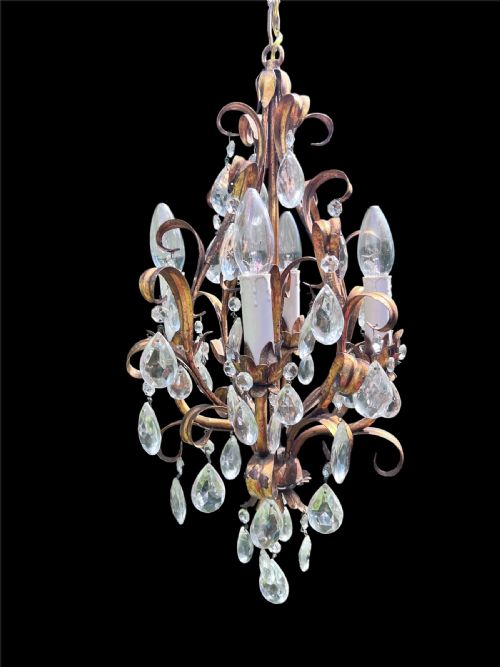
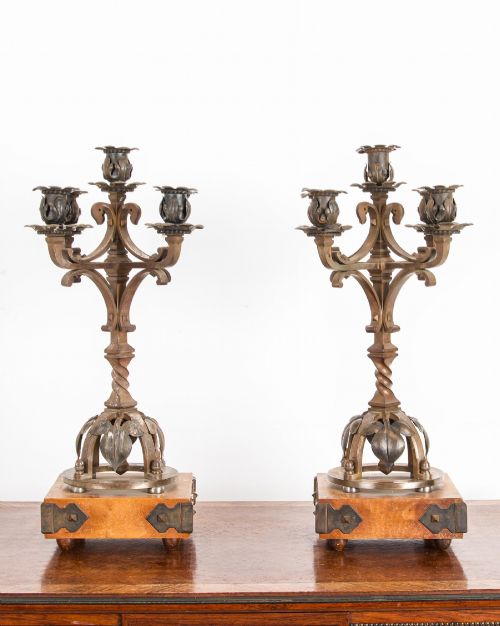
The most common forms encountered on this page range from multi-arm ceiling lights and chandeliers to adjustable standard lamps and pricket candlesticks. Materials frequently extend beyond plain brass to incorporate wrought iron, copper, glass, and fabric, sometimes accented with crystal or silvered metal. Origins span British workshop production alongside continental European pieces from Italy, France, and the Netherlands.
Judging quality in metalwork
Quality rests in the weight of the metal and the precision of the hand-wrought details, where clean hammer marks and purposeful shaping distinguish superior pieces from mass-produced items. The integrity of the joints and the balance of multi-arm frames dictate how well a heavy fixture hangs or stands.
Finer examples integrate complementary materials like cut glass, crystal, or coloured glass shades that harmonise with the brass and iron armature. The treatment of surface finishes, whether patinated brass or gilt leaf, reveals the original ambition of the maker.
Wrought Brass Light Retail Price Guide 2026
Typical asking prices for wrought brass light among the pieces listed under this phrase on Sellingantiques today, from the lower quarter to the upper quarter. They describe what is for sale here now, not the wider market.
Listings feature lighting from the Victorian period through the nineteen-thirties, incorporating brass, wrought iron, copper, and crystal elements.
Veritas Lamp Works·W A S Benson
The Wrought Brass Light Glossary
- Pricket candlestick
- A candleholder featuring a sharp metal spike, or pricket, designed to secure the base of a candle rather than a socket.
- Standard lamp
- A tall, free-standing floor lamp designed to provide ambient or reading light.
- Gothic Revival
- An architectural and decorative style drawing on medieval forms, frequently seen in pointed arches and heavy ecclesiastical metalwork.
- Amsterdam School
- An expressionist architectural and design movement from the early twentieth century characterised by rounded brickwork, expressive metal framing, and dynamic silhouettes.
- Boulle-work
- An elaborate form of marquetry inlay utilising materials such as tortoiseshell and brass, occasionally applied to decorative candlesticks.
Wrought Brass Light: Frequently Asked Questions
How do I date a brass floor lamp?
Dating a standard lamp involves looking at the weight of the base, the method of assembly, and any switch mechanisms. Heavy iron or brass weighted bases with telescopic adjustments often point to late nineteenth or early twentieth-century manufacture.
Stylistic cues such as Art Nouveau curves or Amsterdam School geometry further narrow the decade of production.
Are old brass lights safe to use?
Many older lamps were originally built for oil or candles and converted to electricity at a later date. Rewiring is frequently necessary to meet modern safety standards.
A qualified electrician can inspect internal wiring and ensure that sockets and cords match current electrical codes before installation.
How do I clean antique brass?
Antique brass accumulates a natural patina over decades of exposure to air and handling. Harsh chemical polishes strip this historical surface and diminish the character of the metal.
Gentle dusting with a dry cloth or cleaning with mild soap and water preserves the aged finish and protects the underlying material.