




Writing Desk with Glazed Top
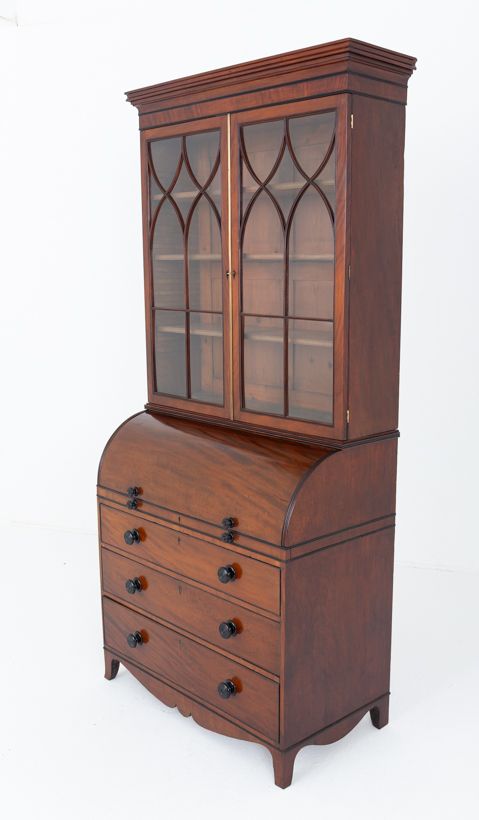
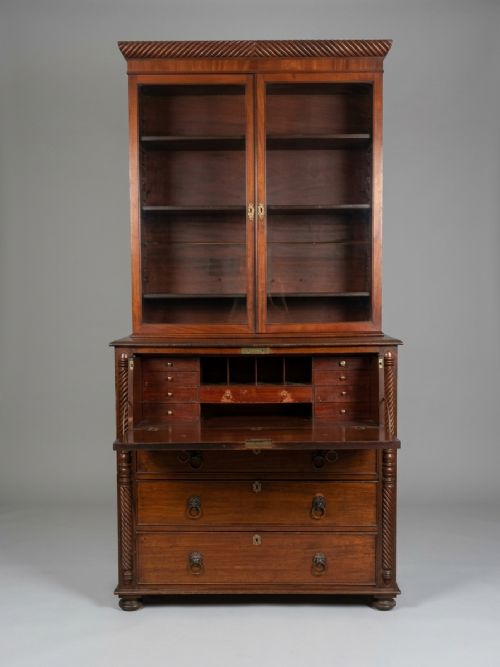
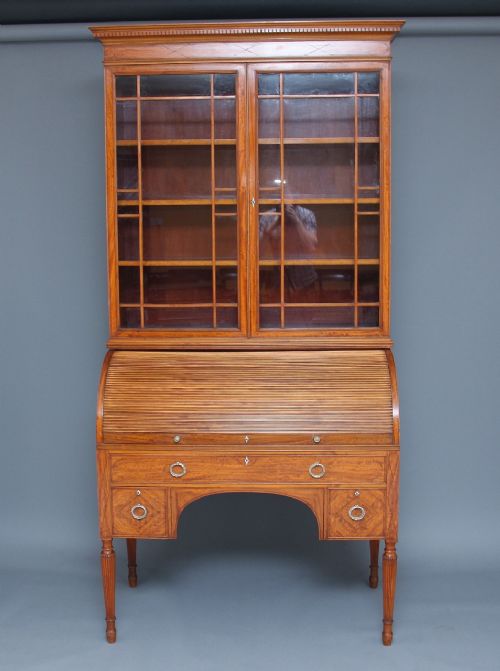
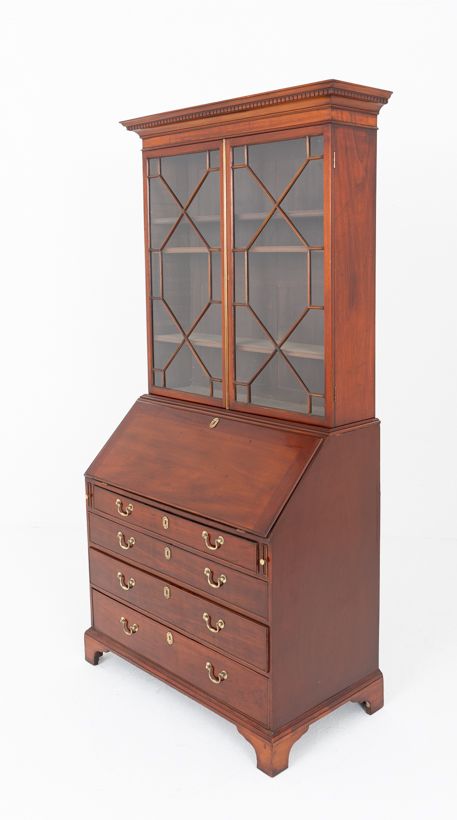
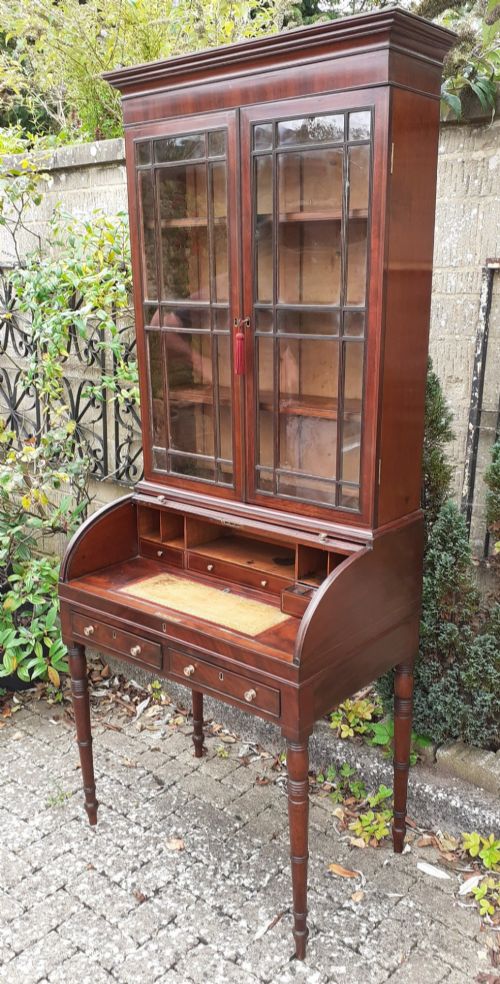
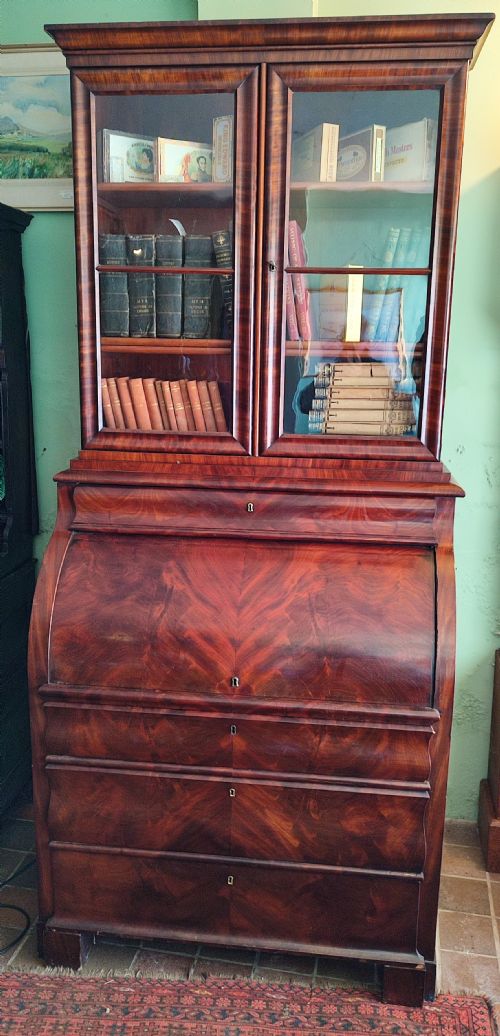
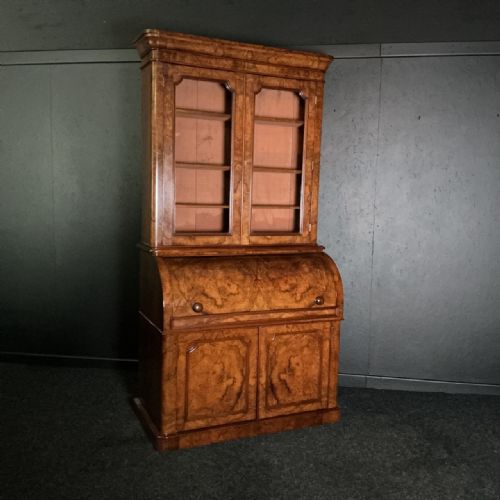
A writing desk with glazed top combines a cabinet for books and papers with a fitted writing surface, bringing together mahogany, satinwood, and walnut.
Writing Desk with Glazed Top
A writing desk with glazed top brings together a display cabinet and a writing surface, encompassing bureau bookcases, secretaire bookcases, and cylinder desks. These pieces span Georgian, Victorian, and Edwardian periods, appearing in mahogany, oak, walnut, and satinwood.
The form unites upper glass-fronted shelving with a lower writing compartment, often featuring drawers and pigeonholes behind a fall front or cylinder mechanism. Such combinations served domestic administration and library storage in homes of the eighteenth and nineteenth centuries.
The version most commonly met on this page is the mahogany bureau bookcase or cylinder desk, reflecting the prevailing styles of Georgian and Victorian makers. These examples range from straightforward oak utilitarian pieces to elaborate inlaid satinwood and Chinoiserie models.
Materials and construction
Makers constructed the primary carcasses from dense hardwoods such as mahogany, oak, and walnut, frequently incorporating secondary timbers like pine for internal drawer linings. Veneers of satinwood and burr walnut provided decorative surfaces, applied with animal glues over solid bases.
Glazing bars divided the upper glass panels into geometric or gothic panes, holding individual pieces of window glass. Brass fittings, including key escutcheons, hinges, and drop handles, secured doors and operated drawers.
Writing compartments utilised hinged fall fronts, cylinder rolls, or pull-out secretaire drawers containing small compartments and leather-lined writing surfaces. Dovetail joints secured the drawer construction, while hand-carved mahogany and applied mouldings defined the exterior styles.
Writing Desk with Glazed Top Retail Price Guide 2026
Typical asking prices for writing desk with glazed top among the pieces listed under this phrase on Sellingantiques today, from the lower quarter to the upper quarter. They describe what is for sale here now, not the wider market.
Listings feature pieces spanning the Georgian, Victorian, and Edwardian periods, constructed primarily in mahogany, oak, walnut, and satinwood.
Judging quality and craftsmanship
Quality rests on the selection of timber and the precision of the cabinetwork, seen in the choice of figured mahogany, burr walnut, or carefully matched satinwood veneers. Superior pieces display continuous grain patterns across drawer fronts and meticulously cut dovetails.
The refinement of the interior fittings distinguishes finer examples, where pigeonholes, secret drawers, and leather inserts receive the same attention as the exterior case. Carved details and inlaid stringing demonstrate the hand of a skilled workshop rather than standard production.
Proportion and the handling of the glazed upper section separate better-made pieces, where slim glazing bars maximise light and display. The integration of the cylinder or bureau mechanism should operate smoothly within the architectural lines of the cabinet.
Tudor and Burrey Shrewsbury·Edwards and Roberts
The Writing Desk with Glazed Top Glossary
- Bureau bookcase
- A combination of a sloping-front writing desk and a glazed upper bookcase. This form developed during the eighteenth century for home administration and library use.
- Secretaire bookcase
- A cabinet featuring a drawer that pulls down to reveal a writing surface and small compartments beneath a glazed bookcase. It maintains the external appearance of a chest of drawers or cabinet.
- Cylinder desk
- A desk with a curving quarter-circle wooden shutter that rolls back to reveal a sliding writing surface and interior fittings. It often supports a glazed bookcase section above.
- Satinwood
- A lustrous, hard timber native to Ceylon and the West Indies, displaying a golden-yellow colour. English cabinet makers utilised it extensively for inlay and veneering during the Georgian and Victorian periods.
- Glazing bars
- The narrow strips of wood or metal that hold individual panes of glass within a sash door. Their thickness and profile help date the cabinetwork.
Writing Desk with Glazed Top: Frequently Asked Questions
How do cylinder desks work?
Cylinder desks utilise a curved quarter-circle wooden shutter that slides back into the body of the desk.
Operating this mechanism usually causes the internal writing slide to extend forward simultaneously for ease of use.
Where were these desks placed?
These pieces sat in private libraries, drawing rooms, and studies of large houses for managing correspondence and personal accounts.
The upper glass doors allowed owners to display leather-bound volumes while keeping dust away from the books.
How are different periods identified?
Cabinet construction methods, timber choices, and decorative styles indicate the period of manufacture.
Georgian pieces often display straight-grained mahogany and simple glazing, while Victorian examples introduce burr walnut and heavier carved mouldings.