




Woven Rush Armchair
These woven rush armchair examples bring traditional country seating into the home, offering sturdy construction and tactile woven seats.
Woven Rush Armchair
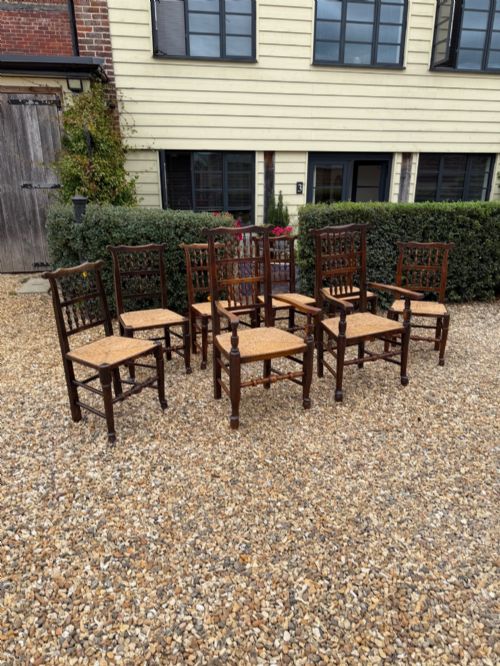
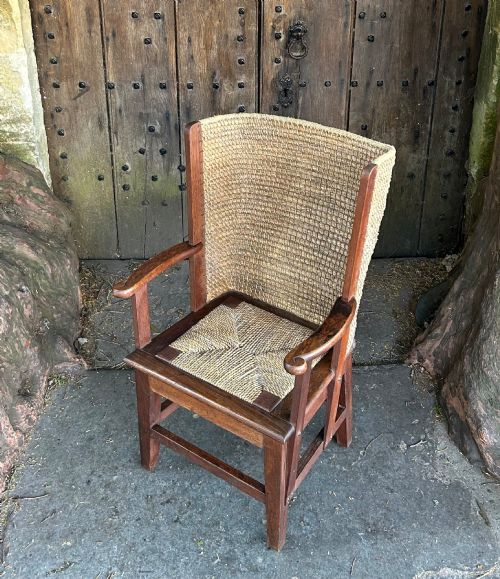
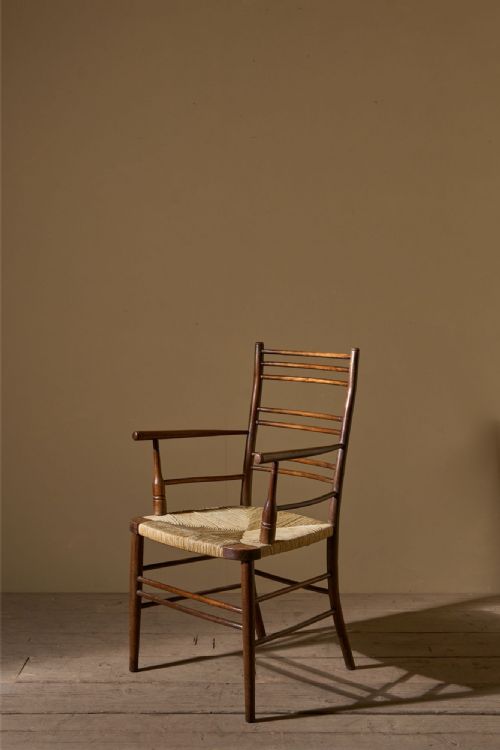
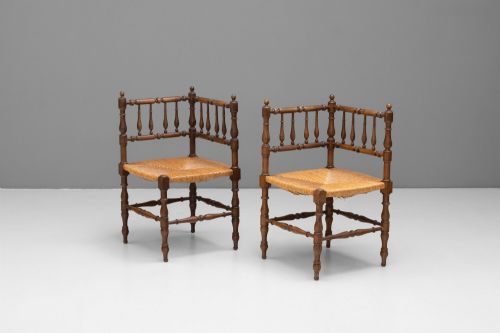
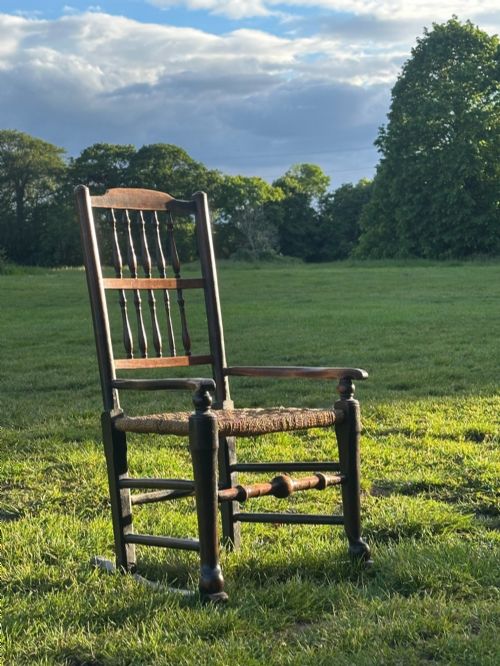
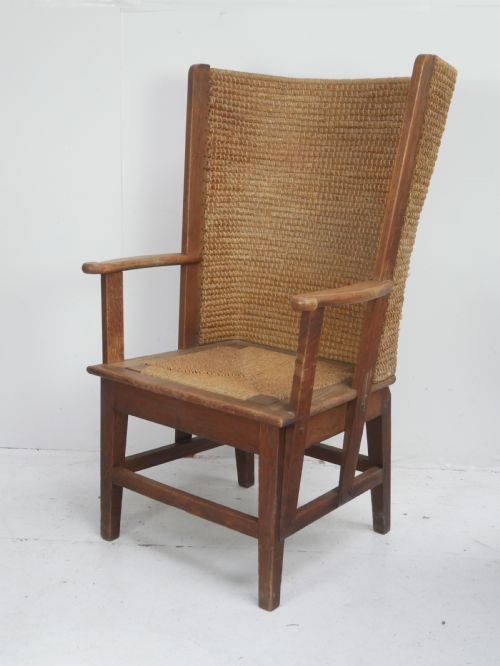
A woven rush armchair provides substantial vernacular seating, drawing on traditions from English, Scottish, and Victorian country workshops. These chairs appear across various forms, including low armchairs, rocking chairs, corner chairs, and ladderbacks.
The selection ranges from eighteenth-century provincial pieces to early twentieth-century Arts and Crafts designs, such as those associated with Liberty, Morris and Co, and regional makers. Buyers frequently encounter oak, elm, ash, and beech frameworks paired with woven rush, straw, or sea grass seating.
How they were made
Frames are constructed from native hardwoods like oak, elm, ash, beech, and mahogany, often shaped using traditional turning and joining techniques found in country vernacular furniture. Timber selection dictates the weight and rigidity of each chair.
Seats are hand-woven using natural materials such as rush, straw, or sea grass, tightly wound around wooden rungs to create a durable, supportive surface. This method distributes weight evenly across the open frame.
Even kitchen chairs deserve proper armrests so you can ponder dinner in absolute comfort.
What varies in quality
The integrity of the timber frame determines structural endurance, with tighter joints and well-seasoned woods holding up better over centuries of use. Provincial pieces show varying degrees of turning refinement and timber selection.
The tightness and uniformity of the rush or sea grass weaving define the seat condition. Original woven surfaces preserved in good state command greater interest among collectors of vernacular seating.
Morris and Co·Liberty & Co·E W Godwin·Dicon Nance
The Woven Rush Armchair Glossary
- Rush seat
- A seating surface created by twisting dried marsh rush into cords and weaving them tightly around the chair rails. This technique provides a resilient and comfortable pad.
- Ladderback
- A chair back featuring multiple horizontal wooden slats between the upright posts. This form is common in traditional country seating.
- Vernacular furniture
- Objects made by local craftsmen using regional styles and native materials rather than following metropolitan court fashions. These pieces reflect local domestic needs.
- Spindleback
- A chair design incorporating numerous thin turned wooden rods in the backrest. It offers light weight combined with structural support.
Woven Rush Armchair: Frequently Asked Questions
How do I clean a rush seat?
Keep woven rush seats dry and dust them gently with a soft brush. Avoid using water or liquid cleaners, which can cause the natural fibres to rot or snap.
Maintain humidity in the room to prevent the dried marsh rush from becoming brittle over time. A light application of beeswax can nourish exposed wooden frames without touching the woven seat.
Are these chairs comfortable for daily use?
Traditional country armchairs offer firm support through their upright wooden frames and taut woven seating. Their ergonomic shape suits reading or sitting at a desk.
Adding a simple loose cushion can adjust the seat height and softness if you plan to sit for long periods. The woven rush adapts slightly to the sitter's shape while retaining its overall tension.
How do I date an oak rush armchair?
Examine the tool marks on the wooden frame, the method of joinery, and the wear patterns on the arms and feet. Eighteenth-century and nineteenth-century provincial pieces often display hand-turned components that differ from later factory production.
Compare the style of the ladderback slats or spindle arrangements with known periods like the Arts and Crafts movement or the Georgian era. Subtle shifts in timber patination also help indicate age.
Can a damaged rush seat be repaired?
Woven rush seats can be entirely re-woven by a skilled artisan using traditional marsh rush or contemporary substitutes. The new cord is wrapped around the original frame rungs.
Professional re-weaving preserves the usability of historic chair frames without altering their wooden structure. Traditional workshops continue to practice these exact seating crafts.