


World War I Painting
World war i painting works as a primary record of conflict, featuring soldiers, officers, and wartime landscapes captured directly through contemporary hand. watercolour, oil, and pastel.
World War I Painting
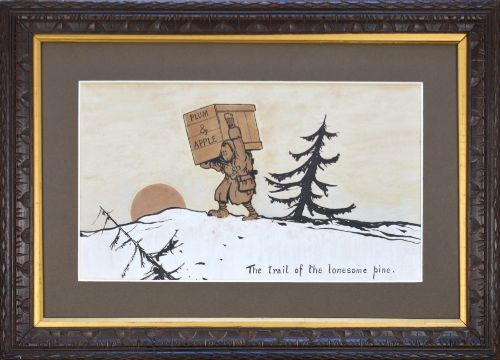
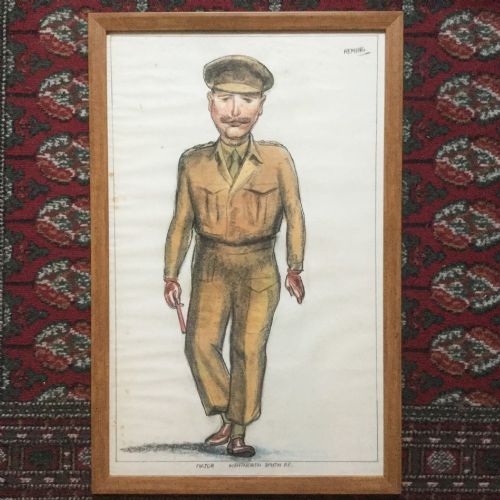
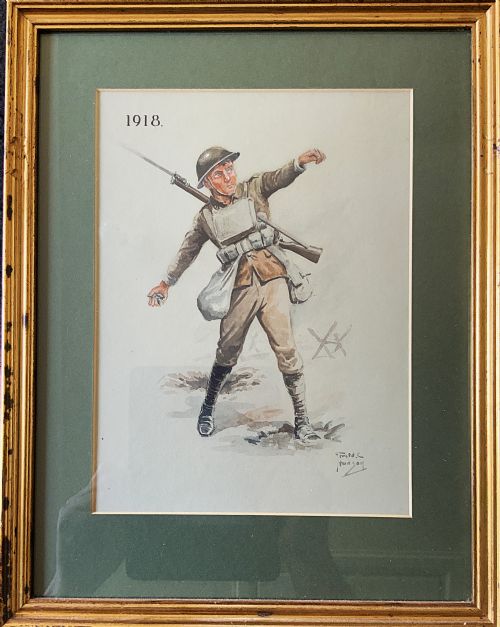
When you search for world war i painting, you encounter original artworks produced during or shortly after the conflict, recording military subjects, soldiers, and home fronts. The pieces on this page span watercolours, oils, pastels, and gouache, often framed under glass.
The selection includes portraiture of individual officers and enlisted men, battlefield scenes, and illustrative works created by contemporaries. Subjects range from named British soldiers and army engineers to general military portraiture and rural landscapes dated between nineteen ten and nineteen forty.
Distinctions in quality
Quality rests on the execution of the subject, the clarity of the composition, and the presence of documented artist signatures or historical attributions. Pieces by recognised illustrators or portraitists command stronger visual engagement.
Condition varies according to the preservation of paper, canvas, and original frames over time. Intact watercolours with strong, unblemished pigments differ significantly from faded or heavily restored examples.
The listings combine oil, watercolour, pastel, and gouache mediums across wood, paper, and canvas supports.
Bruce Bairnsfather·Paul Jean Anderbouhr·G Hindle·Sidney Riesenberg·Ruth Cecil Latter·Maurice Dagron·Jack Leigh Wardleworth·A Bryett
The World War I Painting Glossary
- Watercolour
- A paint consisting of pigment suspended in a water-based solution, frequently applied to paper in transparent washes. This medium allows for rapid sketching and delicate tonal shifts.
- Gouache
- An opaque water-based paint that includes a white pigment filler, producing heavier coverage than standard watercolour. It provides solid blocks of colour and sharp highlights.
- Pastel
- A dry painting medium in the form of a stick, composed of powdered pigment and a binder. It creates velvety textures that require glass protection.
- Canvas
- Heavy woven fabric stretched across a wooden frame to serve as a foundation for oil painting. It provides a durable surface for textured brushwork.
- Edwardian
- A period spanning from nineteen nought one to nineteen ten, influencing the artistic styles and portrait conventions of early military works.
World War I Painting: Frequently Asked Questions
How do I date a military painting?
Dating relies on visible inscriptions, artist signatures, and recorded periods associated with the maker. Many pieces bear explicit years painted into the composition or noted on the reverse.
Contextual clues such as uniform details, military equipment, and historical events also help narrow down the production window.
Were these painted during the war?
Some works were executed directly during the conflict years by soldier artists or official illustrators. Others were produced shortly after as retrospective pieces or formal portraits.
Signatures and dates within the evidence indicate production ranging from nineteen fourteen through to the nineteen forties.
How should I display watercolour works?
Watercolours and pastels require framing behind glass to protect the paper and pigments from atmospheric moisture and dust. Direct sunlight causes fading over time, so placement away from bright windows is essential.
Stable indoor humidity prevents warping of the paper and deterioration of the original mount boards.
What subjects appear most frequently?
Portraits of individual soldiers, army officers, and regiments form a major part of the surviving record. Battlefields, encampments, and wartime landscapes also appear regularly.
Narrative illustrations and patriotic scenes reflect the cultural output of the period.