



Wool Work Textile Art
These wool work textile art pieces bring tactile warmth to interiors through centuries of hand-stitched craft.
Wool Work Textile Art
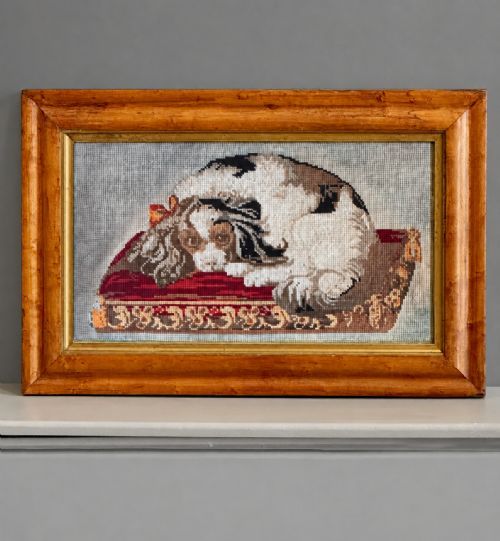
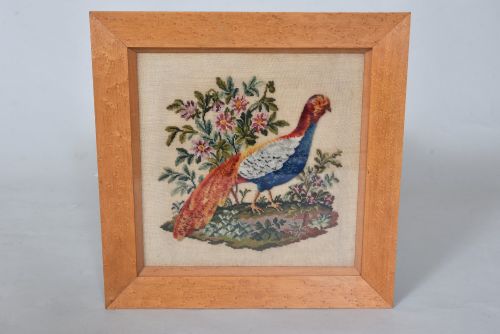
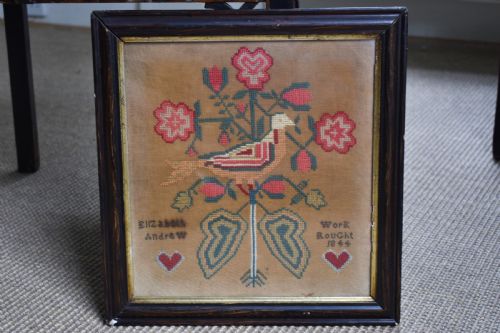
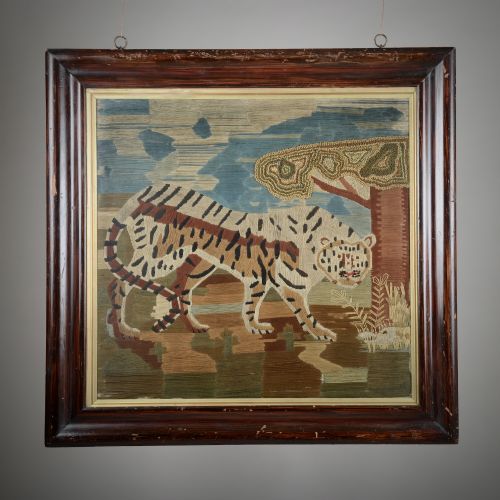
Wool work textile art encompasses framed pictures, wall hangings, and tribal bags created from the 1800s to the 1920s. These pieces include Victorian samplers, plushwork animals, and landscape copies.
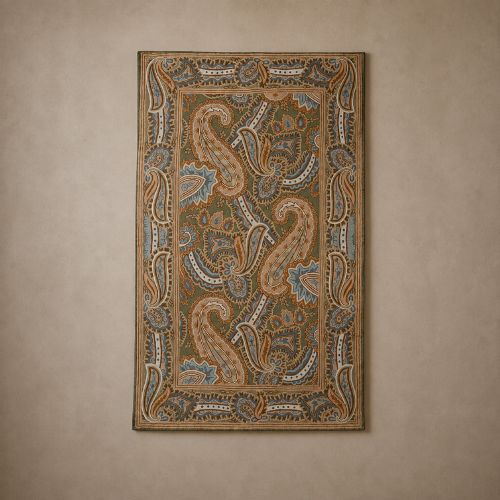
The selections here range from detailed Berlin work and Gros and Petit Point to Crewelwork embroidery and Persian Rasht applique. Buyers encounter both domestic European handiwork and tribal soumak weaving.
Framed wall art dominates the offerings, often preserved in original burr maple or rosewood frames. Larger wall hangings and tribal salt bags provide alternative forms for interior display.
Materials and construction methods
Materials span wool, cotton, linen, felt, and silk combined with canvas grounds. Wooden frames in giltwood, burr maple, and rosewood frequently house the textile panels alongside glass protection.
Techniques rely on needlework stitches like Gros and Petit Point, Berlin work, and plushwork, alongside applied felt and silk work. Tribal pieces utilise Soumak weaving methods on wool foundations.
Wool Work Textile Art Retail Price Guide 2026
Typical asking prices for wool work textile art among the pieces listed under this phrase on Sellingantiques today, from the lower quarter to the upper quarter. They describe what is for sale here now, not the wider market.
The inventory spans diverse cultural origins, incorporating European needlework alongside Persian tribal weaving and Afshar salt bags.
Distinctions in quality
Quality rests upon the intricacy of the needlework and the fidelity of pictorial representation, such as rendered animals and landscapes. Finer execution shows in tighter stitches and complex shading across Berlin work and petit point.
The preservation of original framing, including burr maple and rosewood surrounds, elevates the finished piece. Material integrity, especially concerning the stability of wool and felt grounds, determines long-term visual success.
The Wool Work Textile Art Glossary
- Berlin work
- A style of needlepoint popular in the nineteenth century that used charted patterns painted on squared paper. This method allowed makers to create highly detailed pictorial scenes using brightly coloured wools.
- Gros point
- A coarse needlepoint stitch executed on canvas, often paired with petit point for finer details. It provides a durable and textured surface for large pictorial compositions.
- Petit point
- A fine needlepoint stitch worked over a single thread of canvas, allowing for delicate facial expressions and subtle tonal shifts. It typically forms the central focus of Victorian framed pictures.
- Plushwork
- A needlework technique utilising cut pile loops to create a tactile, three-dimensional surface resembling velvet. It frequently appears in depictions of animals and botanical subjects.
- Soumak work
- A flat-weave textile technique where weft threads are wrapped around warp threads before being packed down. This method produces a durable fabric with a braided appearance on the face.
- Rasht embroidery
- A traditional form of textile decoration from northern Iran featuring chain-stitch embroidery combined with felt and fabric applique. These panels display intricate scrolling patterns and vibrant colour combinations.
Wool Work Textile Art: Frequently Asked Questions
How should I hang wool work?
Keep framed wool work and wall hangings away from direct sunlight to prevent the fading of natural wool and silk fibres. Use stable interior walls with steady humidity levels to protect backing canvases and wooden frames.
Ensure wall fixings match the weight of larger framed panels or hanging textiles. Professional framing with glass protection helps shield delicate needlework from dust and atmospheric grime.
What is Berlin work?
Berlin work is a type of needlepoint that emerged in the nineteenth century, characterised by printed pattern charts and vibrant wool threads. Makers followed these mapped grids to stitch elaborate floral motifs, animals, and narrative scenes onto canvas grounds.
This technique democratised needlework by providing accessible patterns for domestic makers. The resulting panels usually display symmetrical designs and strong chromatic contrasts.
Are these pieces framed?
Many examples on this page are preserved behind glass in period surrounds such as burr maple, rosewood, and giltwood. These original enclosures help secure the textile borders and maintain the historical integrity of the piece.
Larger wall hangings and tribal bags are typically unframed to allow the flexible textile structure to hang naturally. Check individual listings for specific framing details and hanging hardware.
How do I date needlework?
Dating relies on stylistic clues, framing materials, and material composition spanning the nineteenth and early twentieth centuries. Victorian pieces often feature specific wool types and needlepoint styles like Berlin work or plushwork.
Later works from around 1900 to 1920 introduce different aesthetic movements, while tribal bags reflect traditional weaving methods tied to regional practices. Comparing stitch density and canvas types helps narrow the period of creation.