




Wool Turkmen Camel Trapping
These wool turkmen camel trappings are striking tribal weavings that bring genuine nomadic history and rich geometric design into a modern interior.
Wool Turkmen Camel Trapping
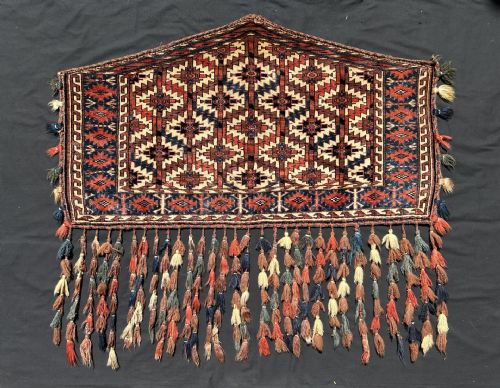
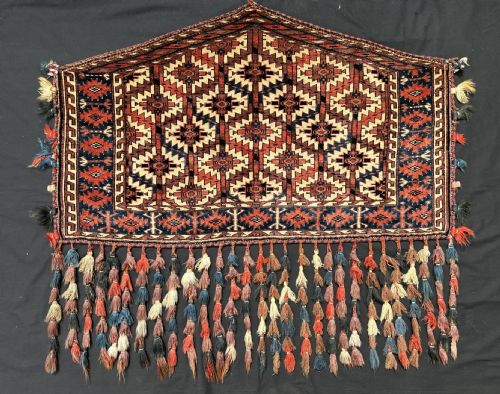
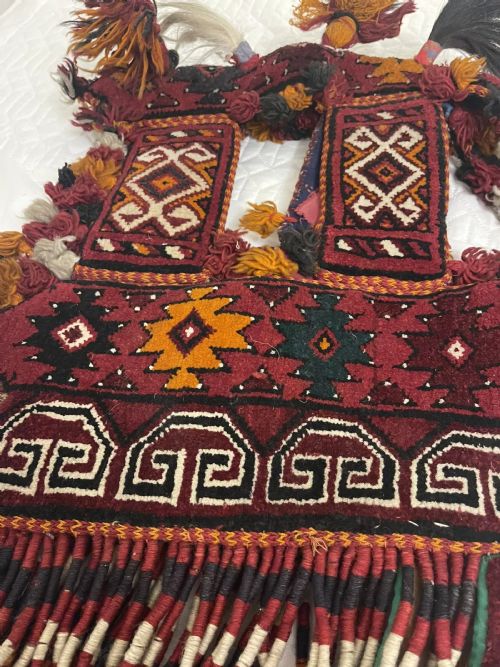
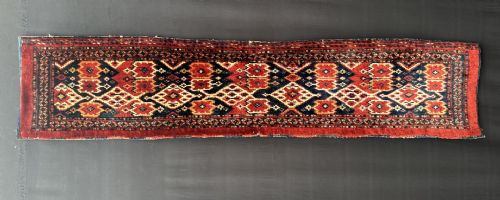
A wool turkmen camel trapping represents the traditional textile artistry of Central Asian tribes, fashioned for ceremonial and domestic use during the nineteenth century. These pieces encompass specific functional forms such as asmalyks, torbas, and dizlyks originating from regions like the Trans-Caspian Steppes and the Middle Amu Darya.
The buyer will frequently encounterasmalyks and torbas created by Yomut and Ersari weavers, often featuring characteristic tribal guls and geometric motifs. These textiles served practical and ceremonial roles in wedding processions and tribal life across Turkmenistan and Afghanistan.
Dating primarily from the middle to the late nineteenth century, these tribal weavings reflect distinct regional aesthetics passed down through generations. Each trapping demonstrates the specific visual vocabulary of groups such as the Yomut, Ersari, Karadashli, and Saryk.
Assessing quality
Quality rests upon the fineness of the weave, the clarity of the tribal motifs, and the depth achieved through natural dyes. Superior examples display precise execution of complex guls and balanced proportions across the field.
The condition of the pile and the integrity of the original structure significantly influence the stature of a trapping. Finely preserved details, such as silk highlights and original tassels, elevate the standing of the textile.
Wool Turkmen Camel Trapping Retail Price Guide 2026
Typical asking prices for wool turkmen camel trapping among the pieces listed under this phrase on Sellingantiques today, from the lower quarter to the upper quarter. They describe what is for sale here now, not the wider market.
Camels wore finer clothes to a wedding than most human guests.
The Wool Turkmen Camel Trapping Glossary
- Asmalyk
- A pentagonal or wedding trapping traditionally hung on the flanks of a bride's camel during Turkmen wedding processions. These pieces display elaborate geometric layouts.
- Torba
- A small storage bag woven by tribal groups for domestic use inside the yurt, featuring characteristic primary guls along the face. They were utilised to hold household possessions.
- Gul
- A repeating primary medallion or octagonal motif used in Turkmen carpet and trapping design to identify specific tribes and lineages. Each design carries traditional symbolic meaning.
- Dizlyk
- A specific form of knee-cover trapping placed on the legs of a ceremonial camel, representing the specialised weaving output of Yomut tribes.
Wool Turkmen Camel Trapping: Frequently Asked Questions
What is a wool turkmen camel trapping used for?
These textiles were originally created as ceremonial adornments for camels during traditional wedding processions and tribal migrations across Central Asia. They also served functional storage roles within nomadic dwellings.
Today, collectors typically display them as wall hangings or decorative tribal rugs to appreciate their historical geometry and textile craftsmanship.
How do I date a nineteenth-century trapping?
Dating relies on assessing the quality of the wool, the chemical composition or visual character of the natural dyes, and the structural style of the tribal motifs. Nineteenth-century pieces show characteristic handspun textures and traditional regional palettes.
Comparison with documented tribal weaving structures helps narrow down the period between eighteen-fifty and nineteen-hundred.
Which tribes made these camel trappings?
The primary makers include the Yomut, Ersari, Saryk, and Karadashli tribes inhabiting regions such as the Trans-Caspian Steppes and the Amu Darya basin. Each group utilised distinct structural formats and signature gul designs.
Recognising these tribal signatures allows collectors to trace the geographic origin of individual weavings.
How should I care for a wool trapping?
Protect the textile from direct sunlight to prevent natural dye fading and gently vacuum with a mesh screen covering to remove dust. Avoid placing them in areas of high humidity or heavy foot traffic.
Professional textile conservationists should be consulted for any deep cleaning or structural stabilisation.