


Wool Tapestry Throw
These wool tapestry throw pieces bring genuine historic textile work into your home, offering tactile warmth and classic pattern.
Wool Tapestry Throw
A wool tapestry throw or associated cushion brings historic textile craftsmanship directly into a modern interior. The selection here spans periods from the seventeenth century through to the twentieth century, with notable representation from French Aubusson and Flemish workshops alongside traditional Welsh and tribal origins.
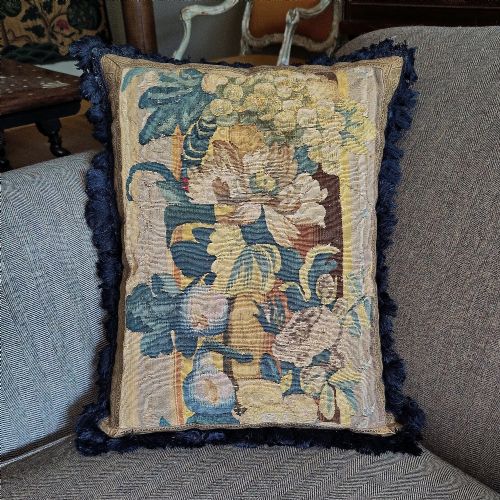
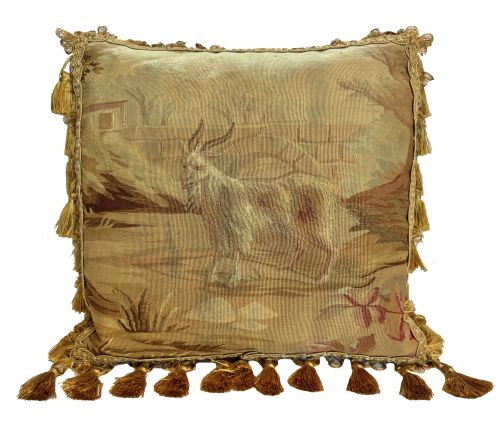
Buyers frequently encounter cushion covers fashioned from seventeenth-century Flemish tapestry borders or nineteenth-century French Aubusson fragments. Alongside these refined European pieces, the inventory includes heavy Welsh honeycomb wool blankets and Anatolian or Afghan kilim cushions.
The forms range from dedicated blankets and throws to smaller cushions and soft furnishings. Each item repurposes or preserves historic textile traditions, presenting varied regional techniques and decorative schemes within domestic objects.
What varies in quality
Quality rests upon the fineness of the weave, the complexity of the design, and the survival of the original materials. Pieces incorporating silk highlights alongside wool display greater intricacy than simpler utilitarian blankets.
The provenance and structural integrity of the textile fragment dictate its standing. Early seventeenth-century Flemish borders and mid-nineteenth-century Aubusson examples demonstrate sophisticated pictorial depth, whereas traditional Welsh and tribal works derive their distinction from robust regional patterns and hand-spun textures.
Even a humble seventeenth-century border fragment enjoys a second career keeping your sofa warm.
The Wool Tapestry Throw Glossary
- Aubusson
- A style of tapestry originating from the French town of Aubusson, known for floral and architectural motifs. These works were typically woven on horizontal looms without a warp-covering technique.
- Flemish tapestry
- Textile wall hangings or fragments produced in the Flanders region during periods such as the seventeenth century. They frequently depict dense foliage, figures, or historical scenes.
- Kilim
- A flatwoven carpet or rug made in regions including Anatolia and Afghanistan. When utilised in cushions, the flat weave offers a durable and geometric surface texture.
- Passementerie
- Elaborate trimmings, edgings, or borders woven from silk, wool, or cotton threads. This technique adds structural definition and decorative weight to cushions and soft furnishings.
- Honeycomb
- A textured weaving structure that creates small cell-like depressions in the fabric. This method is characteristic of traditional Welsh blankets designed for warmth.
Wool Tapestry Throw: Frequently Asked Questions
How do I care for a historic wool cushion?
Protect the natural wool and silk fibres by keeping them away from direct sunlight and moisture. Gentle surface cleaning preserves the delicate weave of older textiles.
Avoid heavy laundering to protect integrated elements like passementerie and hand-spun yarns. Professional textile conservation cleaning is recommended for fragile seventeenth-century or nineteenth-century fragments.
Where were these woven?
The pieces originate from diverse workshops and regional traditions across Europe and Asia. Evidence points to French Aubusson centres, seventeenth-century Flemish looms, and traditional Welsh weaving communities.
Other items reflect nomadic or village production through Anatolian and Afghan tribal kilims. Each geographic source imparts distinct materials and stylistic motifs to the finished textile.
Are these items made from original antique fragments?
Many cushions and soft furnishings incorporate genuine historic textile fragments repurposed from larger wall hangings or covers. This practice gives antique materials a functional domestic role.
Items range from seventeenth-century tapestry borders to nineteenth-century French panels and early twentieth-century tribal covers. The backing and construction methods support these preserved historic sections.
How do I distinguish between regional styles?
French Aubusson and Flemish pieces generally feature pastoral or floral pictorial designs executed in wool and silk. In contrast, traditional Welsh blankets rely on structural textures like honeycomb patterns.
Tribal pieces from Anatolia and Afghanistan display geometric flatwoven kilim designs and embroidered details. Examining the specific weave and fibre composition clarifies the item's origin.