
Wool Tapestry Art
Wool tapestry art brings centuries of woven and embroidered texture indoors, offering large-scale wall hangings and detailed needlework panels.
Wool Tapestry Art
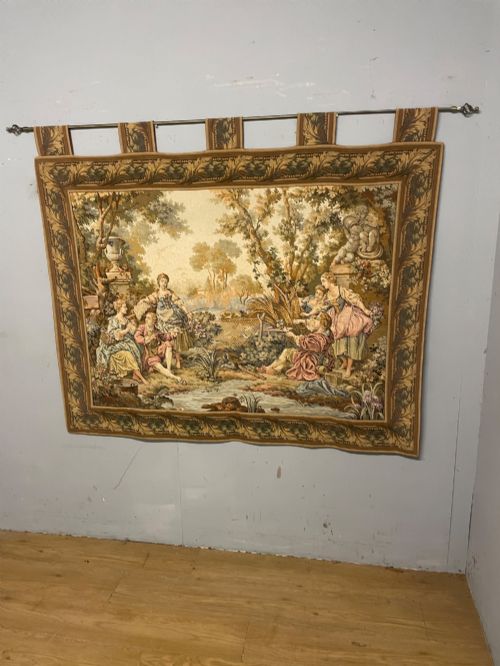
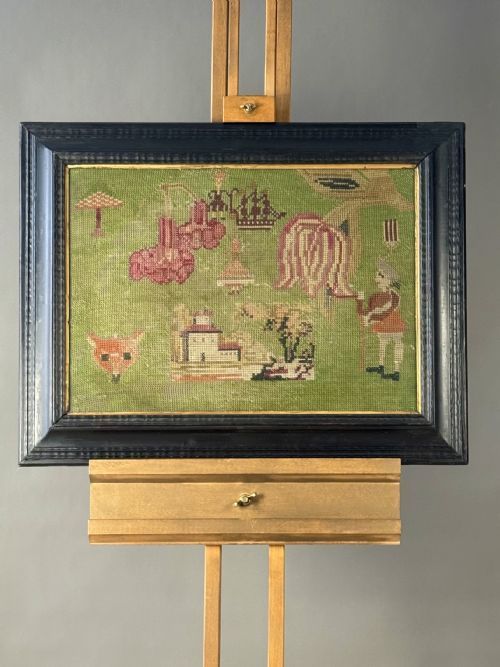
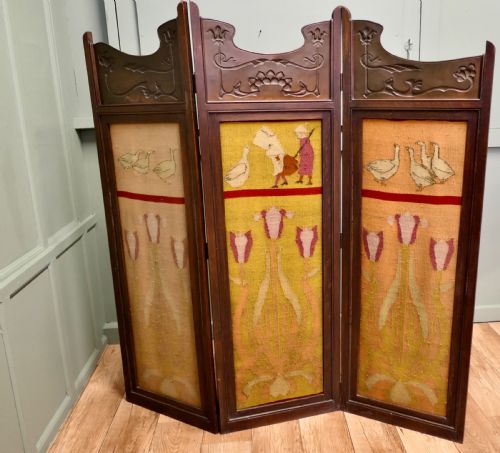
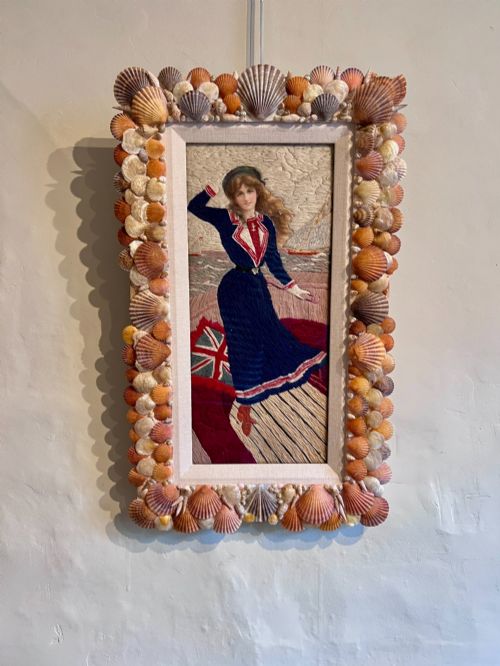
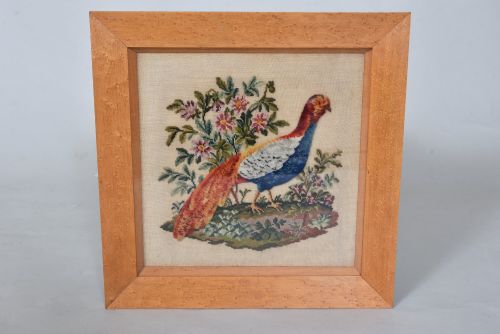
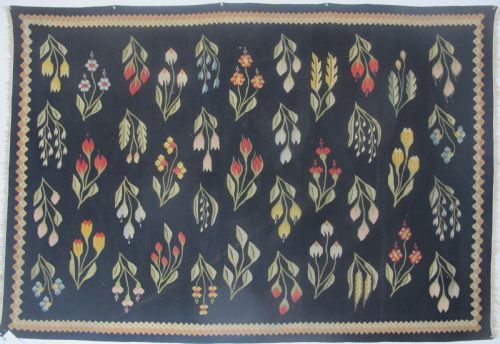
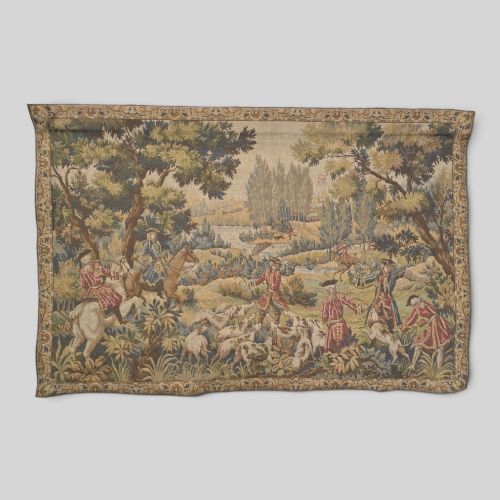
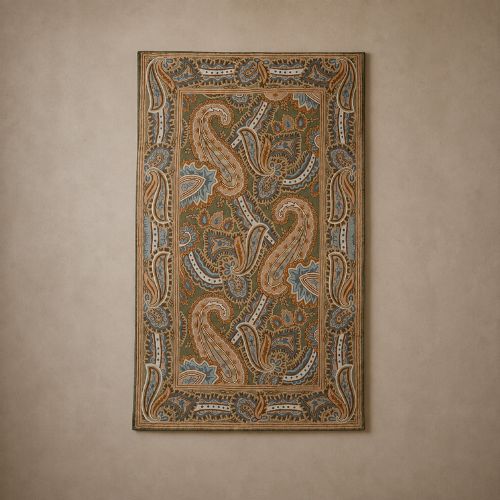
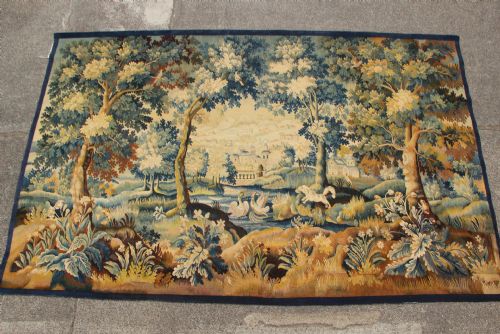
Wool tapestry art encompasses heavy woven wall hangings, embroidered panels, and framed needlework pictures produced across Europe and Asia from the seventeenth century onward. Buyers exploring this category encounter monumental Flemish verdure scenes alongside domestic Victorian Berlin woolwork and tribal flatweaves.
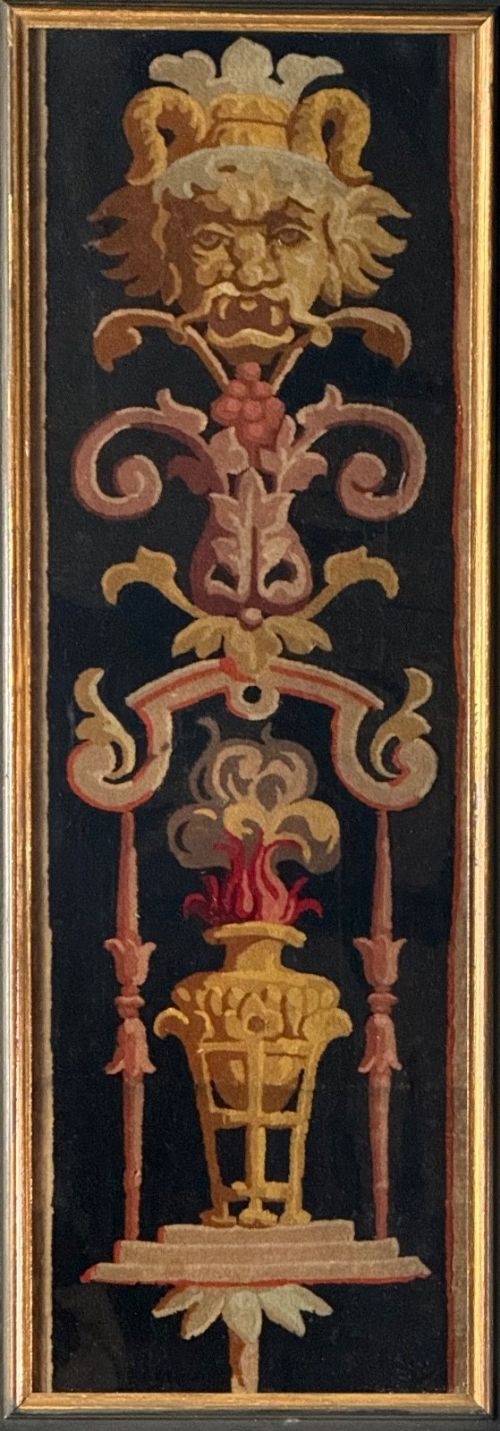
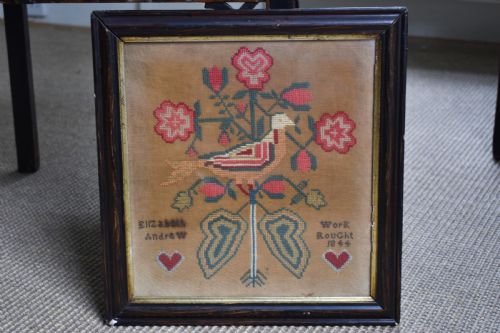
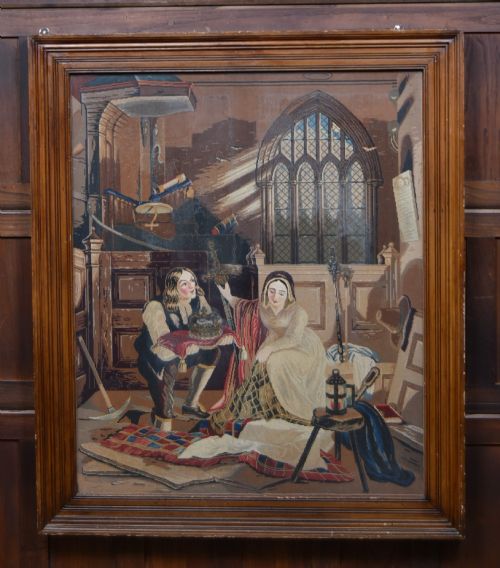
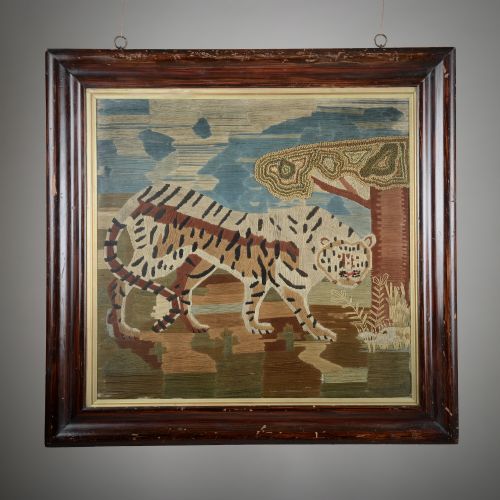
The selections span grand French Aubusson landscapes, intimate needlework samplers, and detailed pictorial works depicting figures, animals, and classical motifs. These textiles function primarily as architectural wall coverings or framed focal points within traditional interiors.
How they were made
The foundational structures rely heavily on durable natural fibres, combining wool and cotton yarns with linen foundations, canvas backings, and occasional silk highlights. Frames utilise traditional materials such as oak, burr maple, and giltwood to support and display the textiles.
Techniques range from hand-weaving on vertical looms for large verdure panels to intricate needlepoint, gros-point embroidery, and plushwork executed by hand. Artisans integrated dyed wools to build complex pictorial depth, foliage, and mythological narratives.
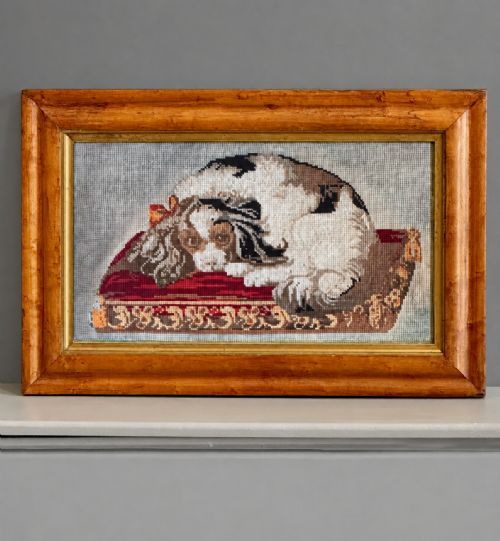
King Charles Spaniels make frequent appearances in nineteenth-century woolwork, proving that historical interior decorators were equally devoted to small dogs.
What varies in quality
Quality rests upon the precision of the needlework or the complexity of the weave, distinguishing ambitious grand-scale mythological compositions from simpler naive domestic pieces. The richness of the dye palette and the survival of original framing elements also elevate individual examples.
An integrated design coherence, such as balanced foliage in a verdure landscape or anatomical accuracy in human and animal portraits, separates standard decorative textiles from superior historical works.
The Wool Tapestry Art Glossary
- Verdure tapestry
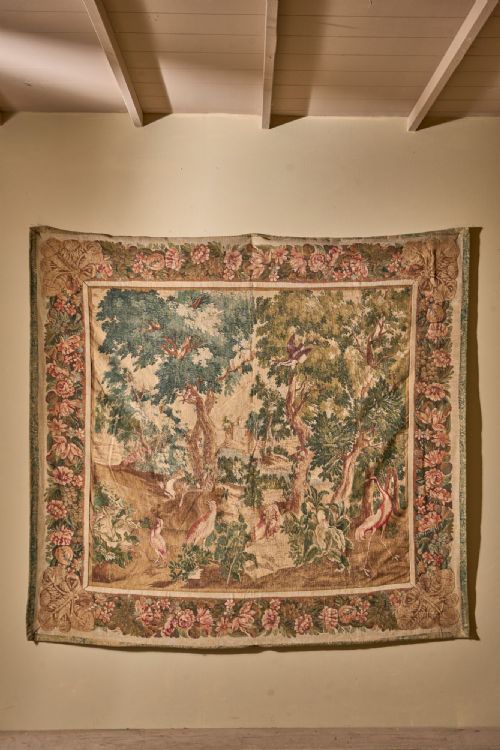
- A woven wall hanging dominated by landscape and botanical foliage motifs, particularly trees, leaves, and plants. These scenes frequently incorporate subtle animal life or distant architectural elements.
- Berlin woolwork
- A type of counted-thread embroidery popular during the nineteenth century, worked in wool on canvas from printed grid patterns. It yielded brightly coloured pictorial subjects ranging from animals to biblical scenes.
- Aubusson
- A town in France renowned for producing hand-woven tapestries and carpets since the seventeenth century. Works originating here typically feature pastoral landscapes or classical architectural framing.
- Asmalyk
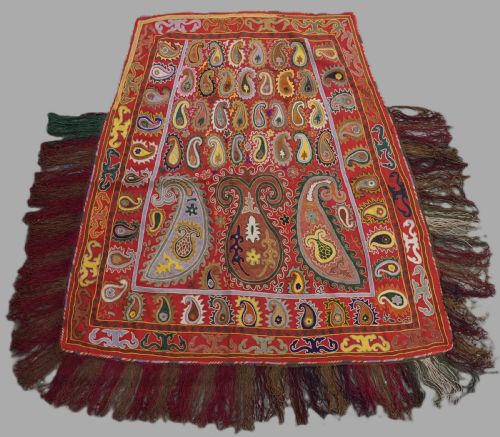
- A decorated camel caparison produced by Turkmen tribes in Central Asia, featuring geometric or symbolic flatweave and pile designs. They were traditionally used during wedding processions.
- Needlework
- General term for decorative stitching executed with a needle on a textile ground, encompassing canvas work, samplers, and pictorial panels.
Wool Tapestry Art: Frequently Asked Questions
How do I hang a heavy wool tapestry?
Large wall hangings require even weight distribution, typically achieved by stitching a sturdy fabric sleeve along the top reverse edge and sliding a flat wooden batten through it.
The batten is then secured directly to the wall studs, preventing the textile from sagging or pulling at individual attachment points over time.
Can I clean antique wool tapestries?
Surface dust can be gently removed using a low-suction vacuum cleaner applied through a protective mesh screen to safeguard fragile historical fibres.
Water washing or chemical cleaning should be avoided unless handled by a professional textile conservator to prevent dye bleeding or structural shrinkage.
How do I identify a Flemish verdure panel?
Flemish verdure panels from the seventeenth and eighteenth centuries are characterised by dense green-dominant leaf foliage, woodland canopies, and hidden rivers.
They often depict stylized trees and occasional wildlife, reflecting the landscape traditions of workshops operating in Flanders during that period.
What is the difference between tapestry and needlework?
Tapestries are woven directly on a loom where the design is created by interweaving warp and weft threads simultaneously as the fabric forms.
Needlework is stitched by hand onto an existing woven foundation fabric or canvas mesh after that textile has already been manufactured.