



Wool Saddle Cover
A wool saddle cover brings authentic tribal weaving into a room, offering dense wool and rich regional patterns.
Wool Saddle Cover
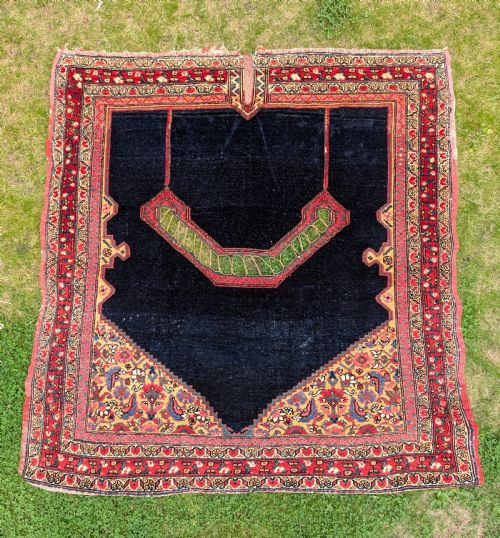
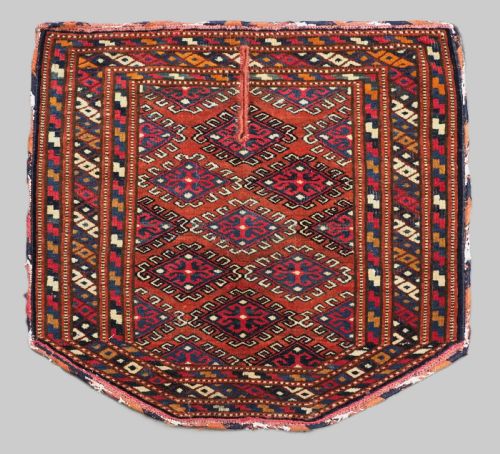
A wool saddle cover is a practical utility textile turned decorative furnishing, originating from nomadic and tribal cultures across Central Asia, Persia, and Anatolia. These pieces served as functional equestrian gear, designed to be draped over riding animals during transport or ceremonies, before later finding a place in domestic interiors.
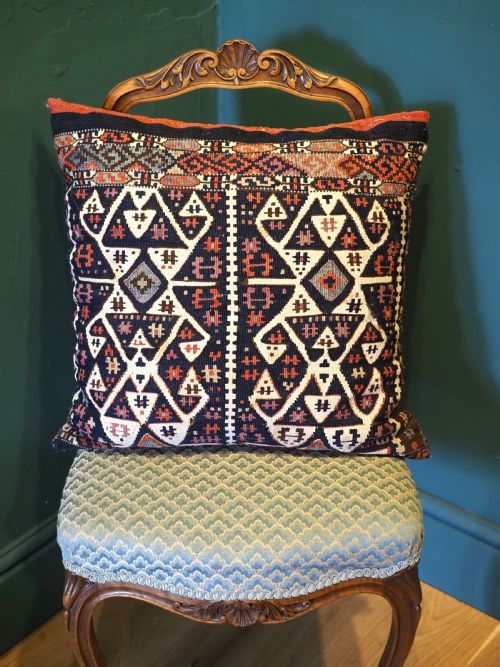
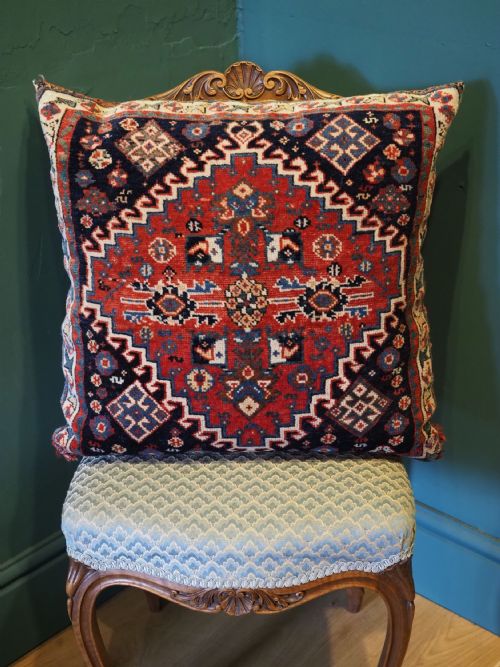
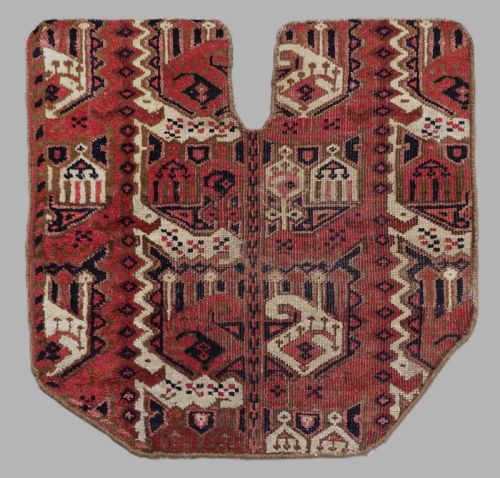
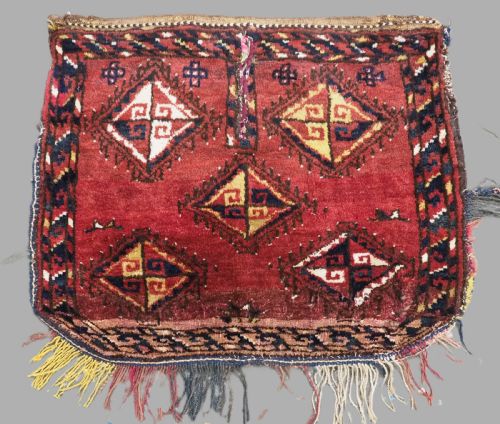
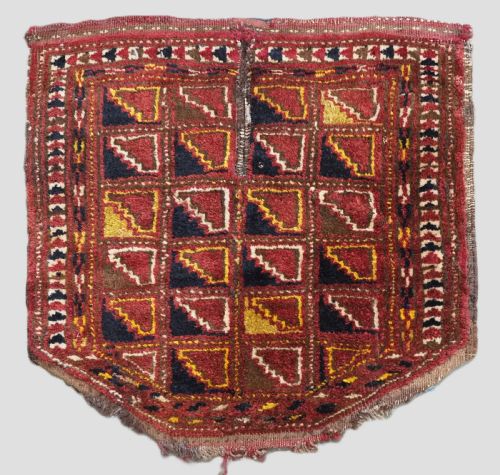
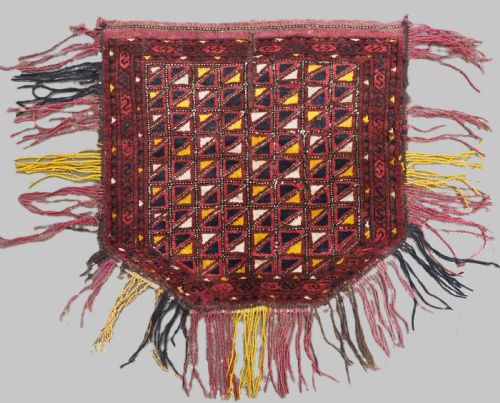
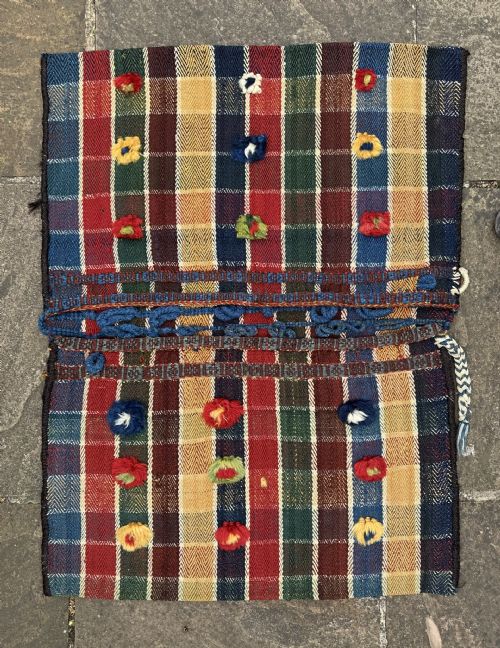
Buyers encountering this selection will find examples spanning the nineteenth century through the early twentieth century, including pieces attributed to the Yomut, Ersari, and Lakai tribes. The forms range from complete pairs of saddlebags to flat-woven kilim cushions and pile-woven ceremonial rugs.
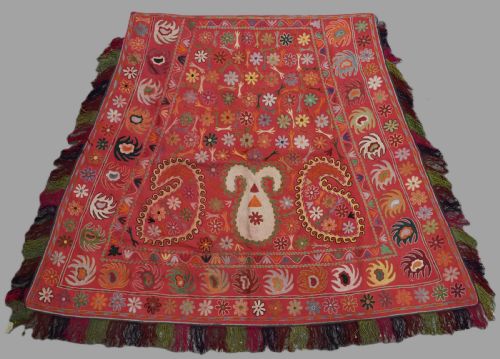
Originating from regions such as Uzbekistan, Fars Province, and Azerbaijan, these textiles reflect the distinct nomadic weaving traditions of their makers. They survive today as compact, durable examples of tribal folk art suitable for display as small rugs or wall hangings.
How They Were Made
These textiles rely primarily on wool, cotton, and silk, spun and knotted or embroidered by hand. Natural dyes provide the palette, yielding stable, deep tones that mature with age.
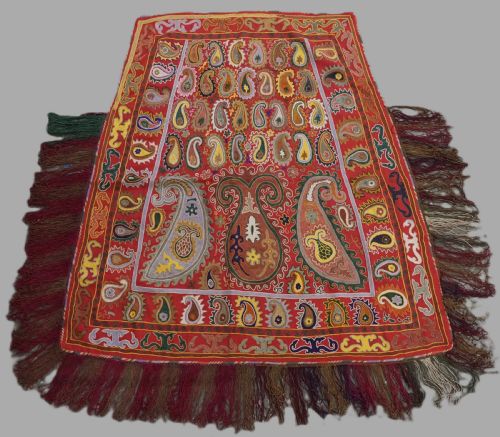
Nomadic weavers utilised both pile-weaving techniques and flat-weave structures such as kilim. Many examples incorporate supplementary embroidery, particularly in pieces originating from Uzbekistan.
Structural integrity often includes plain weave backs, original tassels, and leather reinforcements, built to withstand the demanding conditions of nomadic equestrian use.
Wool Saddle Cover Retail Price Guide 2026
Typical asking prices for wool saddle cover among the pieces listed under this phrase on Sellingantiques today, from the lower quarter to the upper quarter. They describe what is for sale here now, not the wider market.
Some covers retain their original tassels, having survived both nomadic treks and subsequent decades of quiet domestic retirement.
What Varies in Quality
Quality rests upon the fineness of the spin and the handling of the wool, where lustrous, luminous fleece dictates a higher grade of manufacture. Tightly packed knots and precise structural construction separate utilitarian items from finer ceremonial pieces.
The sophistication of the tribal design and the depth of the natural dye palette determine visual success. Intact elements such as original tassels and complete plain weave backs preserve the historical integrity of the piece.
The Wool Saddle Cover Glossary
- Kilim
- A flat-woven textile produced without a pile, created by tightly interweaving warp and weft threads. This technique results in a lightweight, durable fabric with geometric patterns visible on both sides.
- Khorjin
- The traditional Persian term for a double saddlebag, typically woven as a single unit designed to be thrown across an animal's back. These pieces often feature matching bag faces that can be separated or kept intact.
- Boteh
- A stylised almond or paisley motif with a curved upper end, frequently found in Persian tribal weaving. It represents a floral cluster or cypress tree and symbolises life and eternity.
- Pile
- The upright yarn loops or knots that form the plush surface of a woven rug or cover. A dense pile provides physical cushioning and protects the structural foundation beneath.
- Warp
- The stationary lengthwise threads stretched on a loom that form the structural foundation of the textile. Weft threads are passed through these warp threads to lock the design into place.
Wool Saddle Cover: Frequently Asked Questions
How were wool saddle covers originally used?
These items functioned as practical equestrian equipment, draped over horses or pack animals for transport, comfort, and ceremonial display during tribal migrations.
Nomads utilised them as saddlebags for carrying belongings or as protective covers beneath a rider, subjecting them to heavy daily wear.
How do I care for an antique saddle cover?
Gentle vacuuming without a beater bar removes surface dust safely. Professional textile cleaning is recommended for deeper maintenance.
Keep these pieces out of direct sunlight to protect natural dyes from fading over time.
Where should I place a saddle cover at home?
Their compact size makes them ideal for display over small benches, tables, or used flat as floor rugs in low-traffic areas. Many collectors also mount them on walls as textile art.
They fit well in study rooms or hallways where their rich tribal patterns can be appreciated up close.
How do I distinguish between tribal groups?
Tribal attribution relies on specific colour palettes, structural weaves, and characteristic geometric motifs unique to regions like Turkmenistan, Fars, or Uzbekistan.
Examining the border patterns and handling of the wool often reveals the specific weaving traditions of groups such as the Qashqai or Yomut.