




Wool Needlepoint Cushion
These wool needlepoint cushion pieces bring rich historical texture and period pattern directly into modern interiors through tactile historic needlework.
Wool Needlepoint Cushion
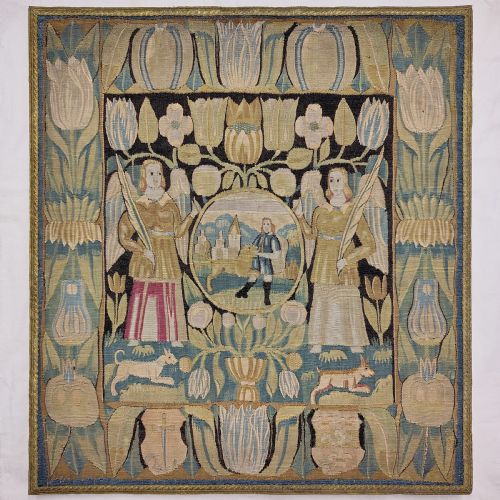
A wool needlepoint cushion represents an intersection of historic textile craft and functional home furnishing, drawing from centuries of decorative traditions. When exploring this selection, buyers encounter everything from early seventeenth-century tapestry cushion covers to mid-nineteenth-century Aubusson examples and Victorian Berlin work.
Forms span from traditional cushions and tapestry cushion covers to framed textiles and wall art. Buyers are most likely to meet seventeenth-century tapestry cushion covers alongside nineteenth-century French Aubusson designs.
How they were made
Makers constructed these pieces using foundational textiles such as canvas, linen, and cotton as a base for intricate stitching with wool and silk threads. The tactile quality relies entirely on the interplay between these durable ground fabrics and dense, piled or flat needlework.
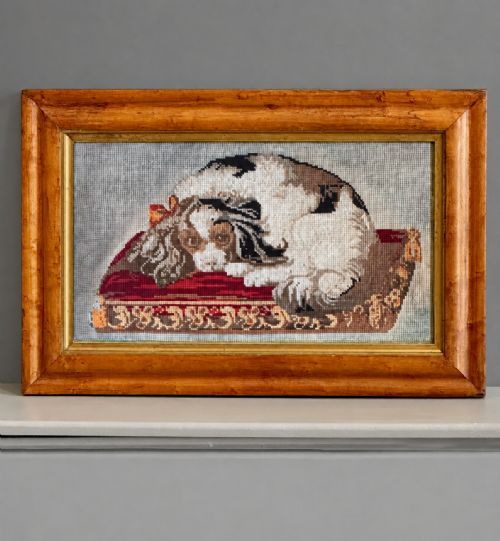
Framed iterations incorporate timber elements like burr maple alongside glass to protect the delicate needlework surfaces. Artisans applied precise counting and stitching techniques to achieve complex pictorial and floral motifs across various European workshops.
The listings here encompass materials including wool, silk, wood, glass, linen, cotton, canvas, and burr maple.
What varies in quality
Quality in these textiles rests upon the density of the stitching, the intricacy of the pictorial design, and the survival state of the fibres. Superior examples maintain rich colour saturation in the wool and silk threads without extensive thread loss.
The distinction between ordinary and exceptional pieces also involves the provenance of the mounting, particularly when retained in original timber frames such as burr maple. Intact historical integrity and clarity of regional style elevate the standing of a textile.
The Wool Needlepoint Cushion Glossary
- Berlin work
- A style of nineteenth-century needlepoint worked in coloured wools on canvas from charted patterns. This method gained immense popularity across Europe during the Victorian era.
- Aubusson
- A traditional tapestry weave originating from the French town of Aubusson, noted for pictorial floral designs. These textiles were frequently adapted into decorative cushions during the nineteenth century.
- Tapestry cushion cover
- A decorative textile panel specifically shaped or utilised to cover a cushion, often salvaged from larger wall hangings or woven explicitly for seating. They frequently date to the seventeenth century.
- Burr maple
- A highly figured timber veneer prized for its mottled grain pattern, often utilised in nineteenth-century decorative frames. It provides a warm, organic border for needlework art.
- Swedish pillow embroidery
- A distinct regional textile tradition characterised by geometric or folk-art motifs executed on linen or canvas foundations. These pieces often bear dates or initials.
Wool Needlepoint Cushion: Frequently Asked Questions
How old are these cushions?
The pieces span from the seventeenth century through the mid-nineteenth century, encompassing seventeenth-century covers and Victorian examples.
Each period exhibits distinct stylistic markers, from Baroque tapestry fragments to mid-nineteenth-century Aubusson weaving.
Are they meant for daily use?
Historic textile cushions require careful handling because fragile wool and silk threads degrade under heavy friction or direct pressure.
Many collectors prefer to display them primarily as decorative interior elements or mount them behind glass as textile art.
How do I identify seventeenth-century covers?
Seventeenth-century tapestry cushion covers typically feature characteristic verdure or classical motifs woven in muted wool palettes.
They often show distinct structural wear and hand-spun backing materials appropriate to early European workshops.
What is Victorian Berlin work?
Berlin work is a nineteenth-century needlepoint style utilising brightly dyed wools stitched onto canvas from printed gridded guides.
Subject matter often includes animals, such as the King Charles spaniel, rendered with notable depth and shading.