

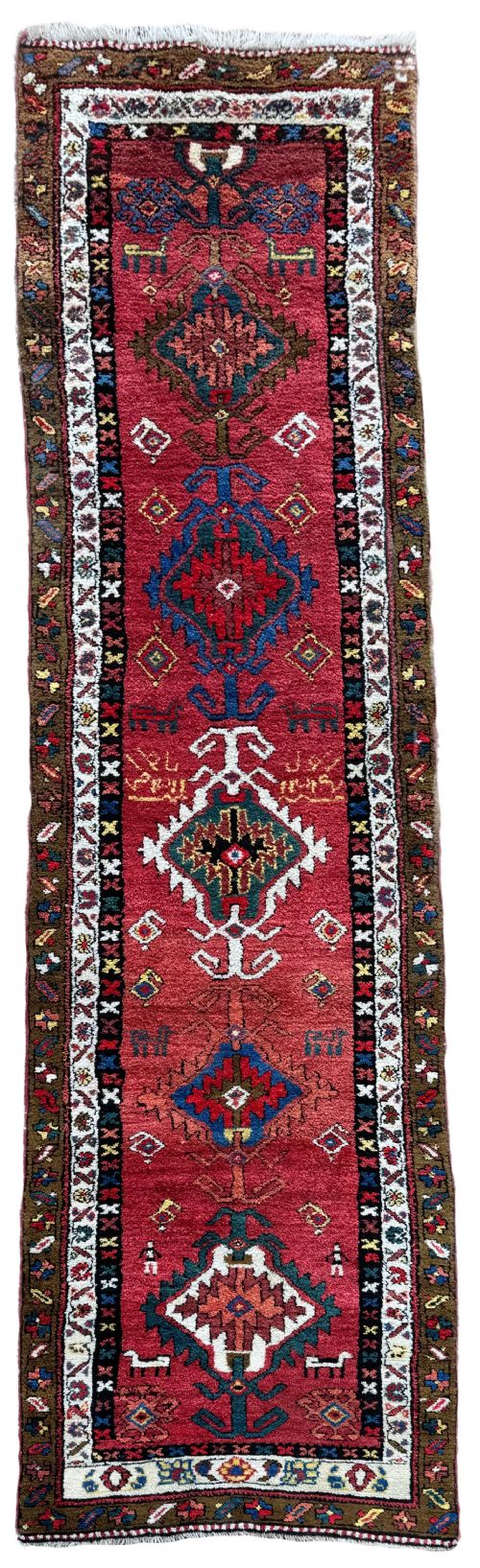
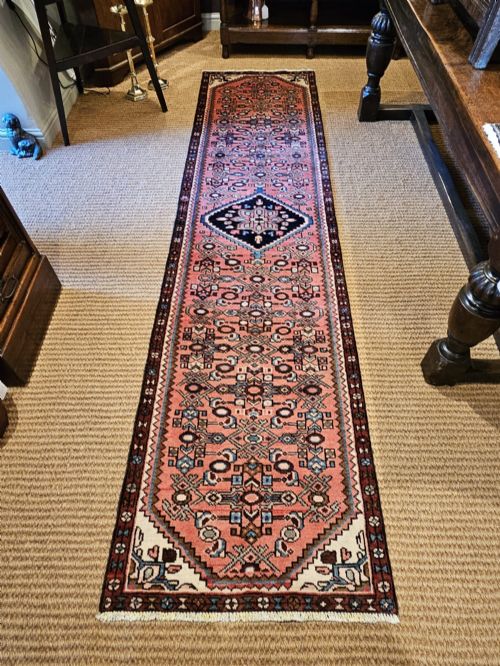
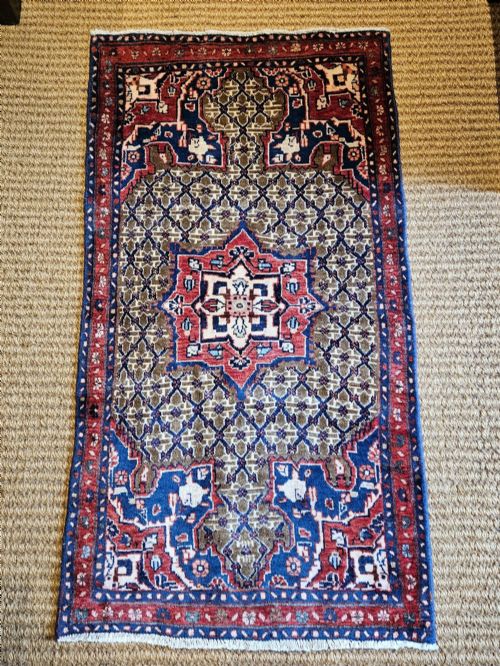
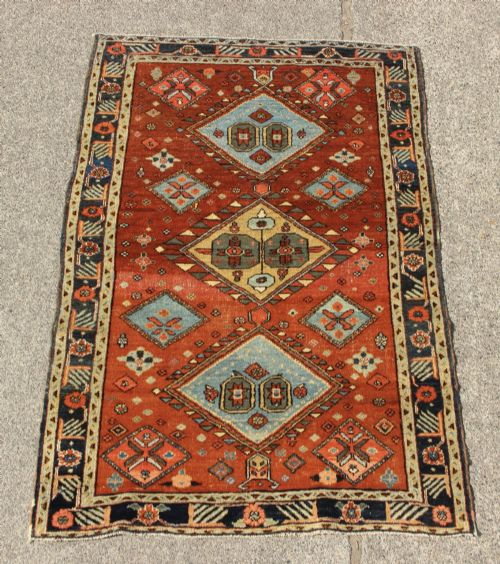
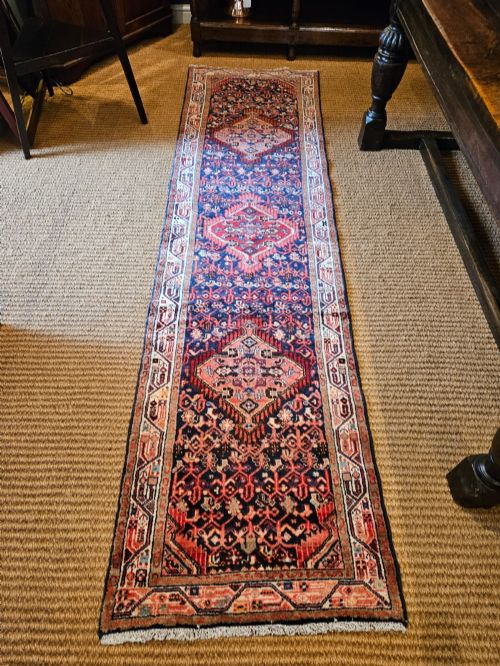
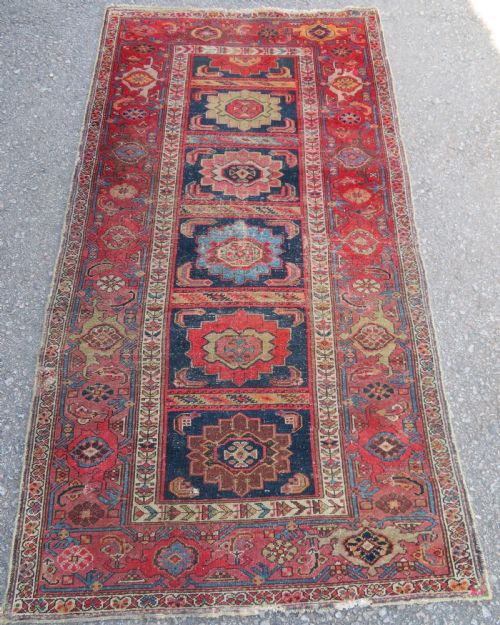
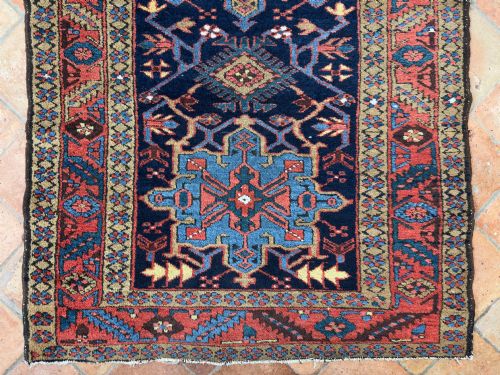
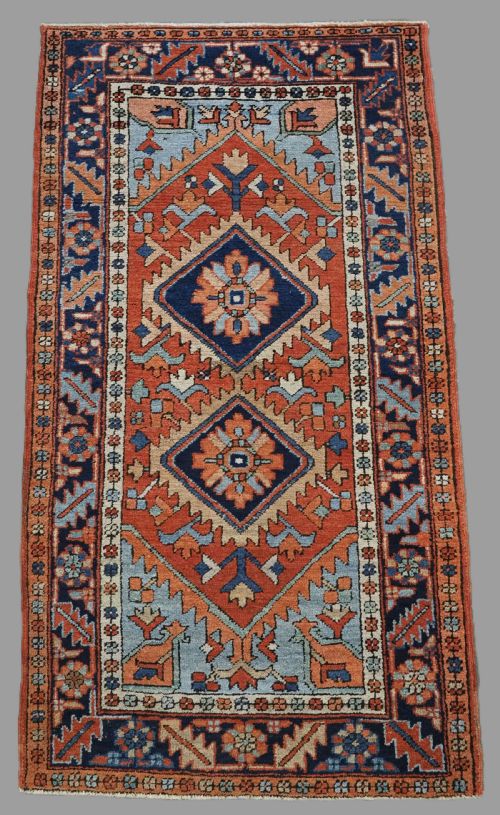
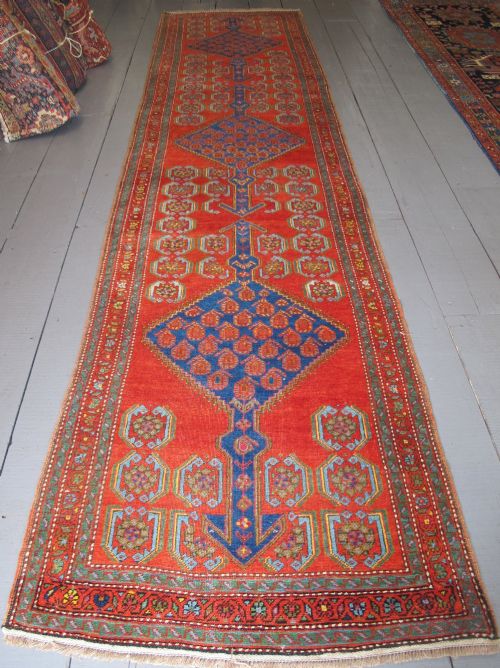


Wool Heriz Runner Rug
A wool heriz runner rug brings enduring Persian craftsmanship and resilient wool pile to a hallway or long interior space.
Wool Heriz Runner Rug
A wool heriz runner rug embodies the traditional weaving styles of north-west Persia, often appearing in elongated formats suited for corridors and hallways. When you search for this phrase, you encounter pieces originating from distinct periods spanning the late nineteenth century through to the early decades of the twentieth century.
The selection includes specific regional variants associated with the wider Heriz production area, such as Karaja, Serapi, Gorevan, Bakshaish, and Sarab. These formats range from narrow, room-length runners to compact gallery carpets, all sharing a foundation rooted in Persian tribal and traditional methods.
Materials and construction
These floor coverings utilise natural wool pile knotted firmly onto sturdy cotton foundations, yielding a durable structure designed to withstand heavy foot traffic. Artisans sourced local materials from north-west Persia, employing traditional hand-knotting techniques passed down through generations.
The structural integrity relies on dense knotting and robust edge finishes, which help maintain the straight, narrow proportions typical of hallway runners over decades of use.
Listings span production dates from the 1870s through the 1930s, constructed primarily from wool and cotton.
Distinguishing quality factors
Quality rests in the crispness of the geometric drawing, the balance of the central medallion design against the field, and the depth of natural coloration. Finer examples display precise knot density and harmonious dye saturation that age gracefully into a softened patina.
The condition of the wool pile and the integrity of the cotton foundation determine the longevity of the piece, separating heavily worn utility runners from exceptionally preserved decorative examples.
Waring and Gillow
The Wool Heriz Runner Rug Glossary
- Heriz
- A region in north-west Persia renowned for durable carpets featuring bold geometric medallions and robust wool construction. These pieces typically display large-scale motifs executed with distinctive rectilinear precision.
- Runner
- A long, narrow carpet format specifically proportioned for hallways, corridors, and narrow passageways. They provide floor covering without overwhelming restricted spaces.
- Serapi
- An older sub-category of Heriz carpet characterised by open field designs and refined, spacious geometric compositions. They generally date to the nineteenth century.
- Karaja
- A style originating from a village near Heriz, known for distinctive tribal geometric designs and repeating medallion formats. These runners often incorporate playful village motifs.
- Pile
- The vertical or inclined loop of yarn that forms the textured surface of the rug. In these pieces, the wool pile provides both comfort underfoot and protection for the foundation.
Wool Heriz Runner Rug: Frequently Asked Questions
Where should I place a wool heriz runner rug?
These elongated floor coverings suit narrow corridors, hallways, and gallery spaces where length matters more than width.
Their sturdy wool construction handles regular foot traffic while adding traditional Persian character to transitional interior areas.
How do I care for an antique wool runner?
Regular gentle vacuuming without a rotating brush roll keeps dust from settling into the wool pile.
Professional cleaning by specialists in antique textiles ensures the natural fibres and dyes remain protected.
What is the difference between Heriz and Serapi?
Serapi rugs represent an earlier, often more spacious style associated with the Heriz region, typically featuring open fields and relaxed geometry.
Standard Heriz pieces from later periods tend to exhibit denser, more structured medallion designs with heavier outlines.
How do I identify a Karaja runner?
Karaja pieces from north-west Persia usually display distinct geometric medallion sequences rather than the large single centrepiece common in classical Heriz designs.
They share the same durable wool materials but often present a more whimsical tribal aesthetic.